Value Stocks vs. Low Volatility Stocks

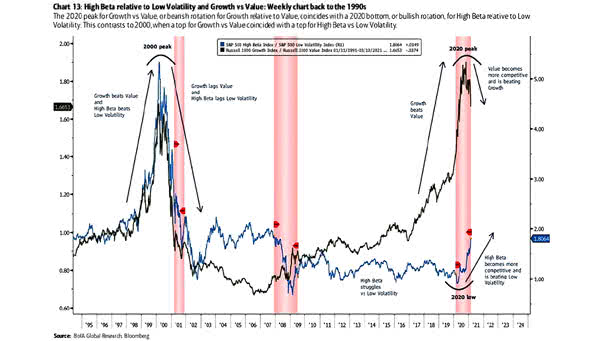
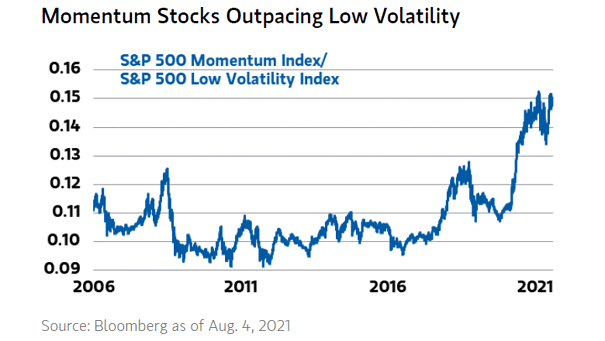
Value Stocks vs. Low Volatility Stocks Chart showing the large divergence between value stocks and low volatility stocks, like never before. Image: J.P. Morgan

S&P 500 Low Volatility Stocks Are the Best Performing Asset YTD

S&P 500 Low Volatility Stocks Are the Best Performing Asset YTD This chart shows that S&P 500 low volatility stocks are the best performing asset year-to-date (outside of GSCI energy). Actually, high-quality stocks are a good way to protect against a weak economy. Image: Goldman Sachs Global Investment Research

Monthly U.S. Equity Mutual Fund and ETF Flows

Monthly U.S. Equity Mutual Fund and ETF Flows Weak U.S. equity fund flows indicate investor concerns about trade policy uncertainty, which is dampening economic growth and increasing market volatility, alongside a cautious near-term outlook for U.S. equities. Image: Goldman Sachs Global Investment Research

VIX – Volatility Index

VIX – Volatility Index Market confidence and complacency, spurred by expectations of Fed rate cuts and strong economic data, have pushed the VIX to its lowest level in 2025; yet, volatility may resurface before year-end. Image: The Daily Chartbook

VIX – Volatility Indexes

S&P 500 and VIX Although U.S. stocks are rallying and volatility remains low—reflecting market confidence—significant underlying threats from rising trade frictions and policy uncertainty persist. Image: Bloomberg