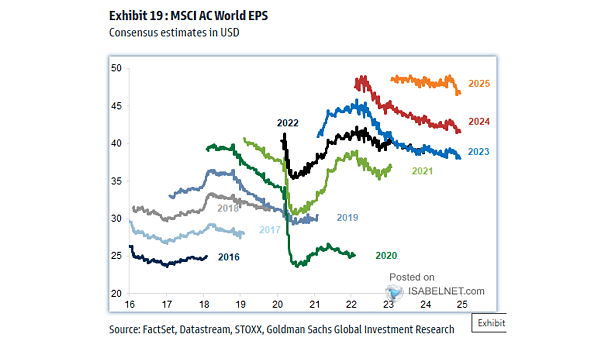
MSCI World EPS
MSCI World EPS With faith in global growth firming, analysts are lifting MSCI AC World EPS forecasts for 2026, betting on stronger productivity from technology and AI. Image: Goldman Sachs Global Investment Research
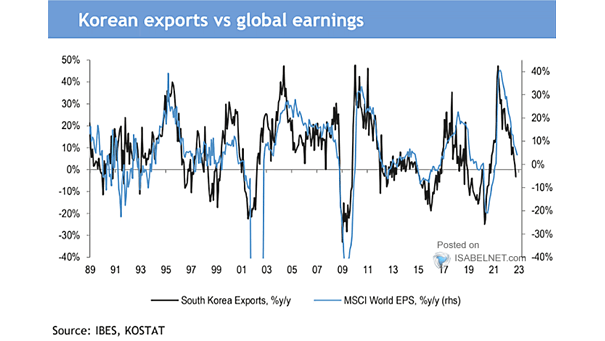
South Korea Exports vs. MSCI World EPS South Korea’s exports tend to lead global earnings. Image: J.P. Morgan
Global Semiconductor Sales vs. MSCI World EPS Growth Chart suggesting that global semiconductor sales may have bottomed. That’s good news for global EPS growth. Image: Jeroen Blokland
Japan Corporate Profits Leads MSCI World EPS This chart suggests that Japan corporate profits leads MSCI World EPS by 7 months. Image: Nordea and Macrobond
Earnings – Global Manufacturing PMI New Orders vs. World Trailing 12-Month EPS (Leading Indicator) Global manufacturing PMI new orders tend to lead world EPS growth by 12 months. Image: BofA Global Research
Trailing 12 Month EPS Growth: S&P 500 vs. MSCI AC World ex U.S. Chart suggesting that the “fundamental” advantage of U.S. stocks is diminishing. Image: Morgan Stanley Research
S&P 500 Forward EPS and World Trade Growth The chart shows a pretty good correlation between the S&P 500 forward 12-month EPS and the CPB World Trade Index. Image: Oxford Economics, Macrobond
World Semiconductor Sales and S&P 500 EPS Tight relationship between world semiconductor sales and S&P 500 earnings per share. You may also like “Semiconductor Sales vs. Global Earnings per Share.” Image: Oxford Economics
Earnings – Peak to Trough Decline in LTM S&P 500 EPS During Recessions Historically, recessions since World War II have caused a median 13% decline in S&P 500 EPS, often leading to substantial index losses. Image: Goldman Sachs Global Investment Research
MSCI World Fwd PE and EPS Revisions Downward revisions in global EPS raise concerns, suggesting that the global economic landscape is precarious, prompting central banks to adopt more aggressive strategies to stimulate growth. Image: J.P. Morgan
Aggregate EPS Growth U.S. earnings are outperforming the rest of the world in Q1:2020, because the U.S. was the slowest to lock down its economy. Image: Deutsche Bank Asset Allocation