Global Monetary Policy Stimulus and Global Manufacturing PMI

Global Monetary Policy Stimulus and Global Manufacturing PMI The strongest macro theme for 2026 appears to be global growth reacceleration fueled by the massive easing of monetary policy in the prior two years, setting the stage for improved economic momentum worldwide. Image: Topdown Charts

Global Manufacturing PMI

Global Manufacturing PMI Leading indicators and supportive fiscal policies suggest potential upside risks to global manufacturing PMI in the near term. Image: Deutsche Bank

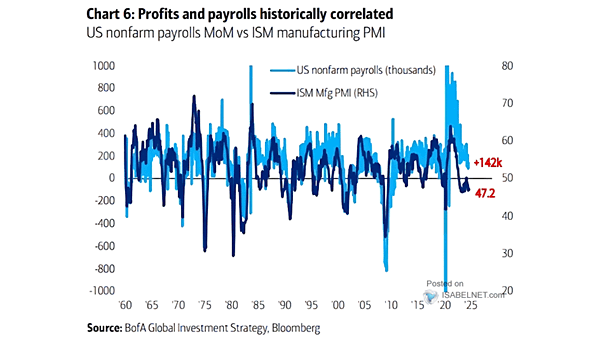
U.S. Nonfarm Payrolls vs. U.S. ISM Manufacturing PMI

U.S. Nonfarm Payrolls vs. U.S. ISM Manufacturing PMI The U.S. ISM manufacturing index reading below 50 signals a contraction in manufacturing activity, which may impact payroll numbers. However, the relationship between the index and actual payroll figures is not straightforward. Image: BofA Global Investment Strategy
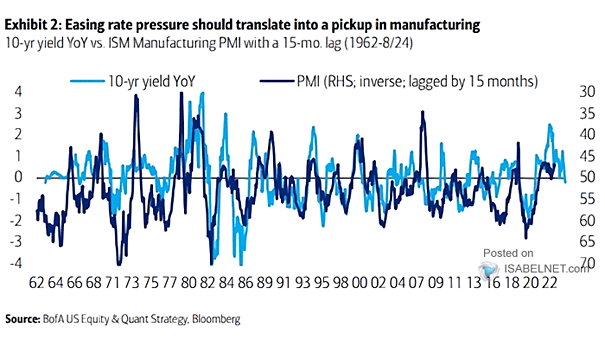
U.S. ISM Manufacturing PMI vs. 10-Year U.S. Treasury Yield

U.S. ISM Manufacturing PMI vs. 10-Year U.S. Treasury Yield Easing rate pressure is projected to facilitate a recovery in U.S. manufacturing as financial conditions improve, inflation declines, and both domestic and foreign demand strengthen. Image: BofA US Equity & Quant Strategy

ISM Manufacturing PMI and ISM New Orders – Inventories

ISM Manufacturing PMI and ISM New Orders – Inventories The spread between U.S. ISM New Orders and Inventories suggests a positive upward trend in the ISM manufacturing PMI, with new orders increasing at a more rapid pace than inventories. Image: BofA Global Investment Strategy

Percentage of Countries with Manufacturing PMI Above 50

Percentage of Countries with Manufacturing PMI Above 50 While the global manufacturing sector faced headwinds in mid-2023, the latest data suggest a gradual recovery is underway, with the percentage of countries in expansion nearly doubling from September 2023 to the present. Image: BofA Predictive Analytics

ISM Manufacturing PMI and U.S. Recessions

ISM Manufacturing PMI and U.S. Recessions A drop in the U.S. ISM Manufacturing PMI below 45 signals significantly heightened recession risks, indicating a severe contraction in the manufacturing sector. Image: BofA Global Research

ISM Manufacturing PMI and Global Stocks vs. Government Bonds

ISM Manufacturing PMI and Global Stocks vs. Government Bonds In a potential shift from a “no” to a “hard” landing scenario, government bonds may outperform due to increased risk aversion, interest rate cuts, lower inflation expectations, and their historical performance during economic downturns. Image: BofA Global Investment Strategy

U.S. ISM Manufacturing PMI vs. S&P 500 EPS Growth

U.S. ISM Manufacturing PMI vs. S&P 500 EPS Growth A rise in the U.S. ISM manufacturing PMI is suggesting positive growth in 1Q EPS, with expectations of outperforming the initial projections. Image: BofA US Equity & Quant Strategy

ISM Manufacturing PMI vs. ISM New Orders – Inventories

ISM Manufacturing PMI vs. ISM New Orders – Inventories The U.S. ISM New Orders less Inventories spread continues to suggest a higher ISM Manufacturing PMI. This correlation points towards a positive outlook for the manufacturing sector. Image: The Daily Shot

Big 4 Asia Imports vs. ISM Manufacturing PMI

Big 4 Asia Imports vs. ISM Manufacturing PMI The weak demand in Asian markets is affecting various industries and economies worldwide. Image: BofA Global Investment Strategy