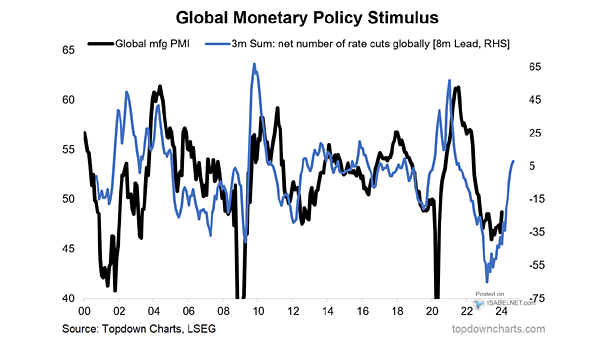
Global Monetary Policy Stimulus and Global Manufacturing PMI

Global Monetary Policy Stimulus and Global Manufacturing PMI The strongest macro theme for 2026 appears to be global growth reacceleration fueled by the massive easing of monetary policy in the prior two years, setting the stage for improved economic momentum worldwide. Image: Topdown Charts

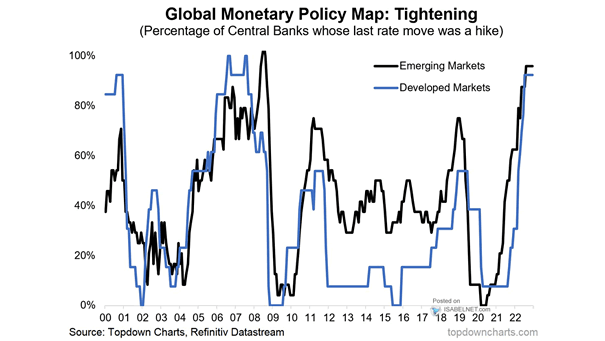
Global Monetary Policy Map

Global Monetary Policy Map So far, global central banks remain firmly in a tightening mode. Image: Topdown Charts

Global Monetary Policy Rates

Global Monetary Policy Rates Will inflation cause central banks to tighten monetary policy quicker than expected? Image: Topdown Charts

Global Financial Conditions Index

Global Financial Conditions Index Global financial conditions have eased to a 12-month low, supported by expectations of monetary policy easing, improved investor sentiment, tightening credit spreads, and a more stable economic outlook. Image: Goldman Sachs Global Investment Research

Global Policy Rate Hikes

Global Policy Rate Hikes In June 2024, for the first time since October 2020, no major central banks around the world raised interest rates, marking a significant shift in global monetary policies. Image: BofA Global Investment Strategy

Interest Rates – Central Bank Policy Rate Hikes vs. Cuts

Interest Rates – Central Bank Policy Rate Hikes vs. Cuts Emerging market central banks typically take the lead in initiating monetary tightening and easing cycles. In 2024, their approach has shifted away from aggressive easing. Image: BofA Global Investment Strategy

Median Policy Rate Projections in the Fed’s Summary of Economic Projections

Median Policy Rate Projections in the Fed’s Summary of Economic Projections The anticipation of rate cuts in 2024 and beyond is generally viewed as bullish for equity markets, as it signals a potential easing of monetary policy that can support economic growth and stock prices. Image: BofA Global Research

Global Central Bank Balance Sheets

Global Central Bank Balance Sheets The ongoing trend of central banks purchasing global debt since 2008, will depend on dynamic economic conditions, inflationary forces, and the specific monetary policy goals of each individual central bank. Image: Real Investment Advice

Global Negative Yielding Debt

Global Negative Yielding Debt The transition from $18 trillion to zero in negative-yielding debt over the past few years reflects a broader shift away from the era of ultra-low interest rates and easy monetary policy. Image: BofA Global Investment Strategy