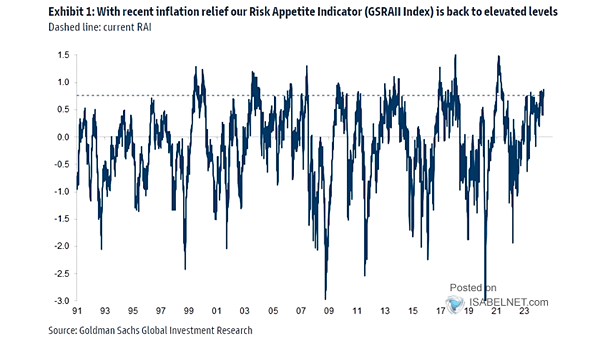
Risk Appetite Indicator Level and Momentum Factors

Risk Appetite Indicator Level and Momentum Factors Goldman Sachs’ Risk Appetite Indicator has climbed and is approaching stretched territory as investors pile into higher‑risk trades. Riding the upside can pay off, until the crowd is in the same trade. Image: Goldman Sachs Global Investment Research
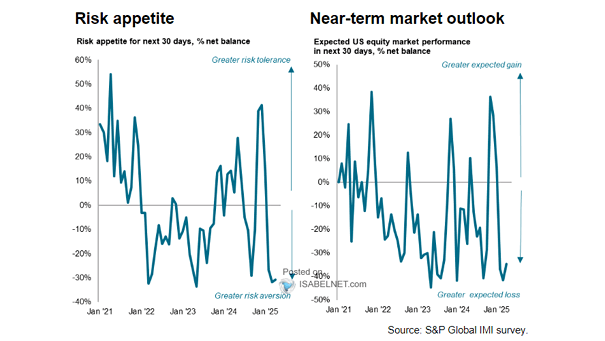
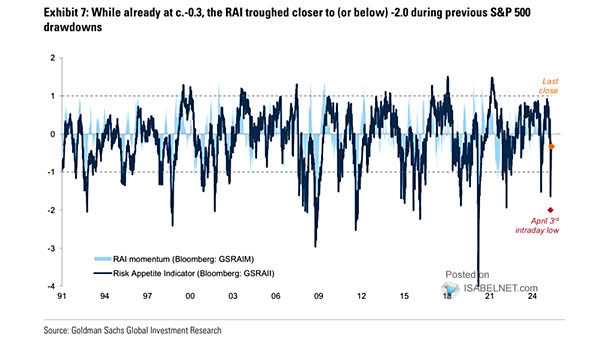
Sentiment – Risk Appetite and Expected U.S. Equity Market Performance

Sentiment – Risk Appetite and Expected U.S. Equity Market Performance Risk appetite among U.S. equity fund managers has taken a sharp hit in September, as the conflict in the Middle East fuels concerns about its economic fallout and the outlook for monetary and fiscal policy. Image: S&P Global Market Intelligence

Risk Appetite Indicator for Different Asset Classes

Risk Appetite Indicator for Different Asset Classes Investors’ risk appetite for equities has cooled recently but stays in positive territory amid ongoing market swings. Sentiment has definitely softened, but bulls haven’t left the room. Image: Goldman Sachs Global Investment Research
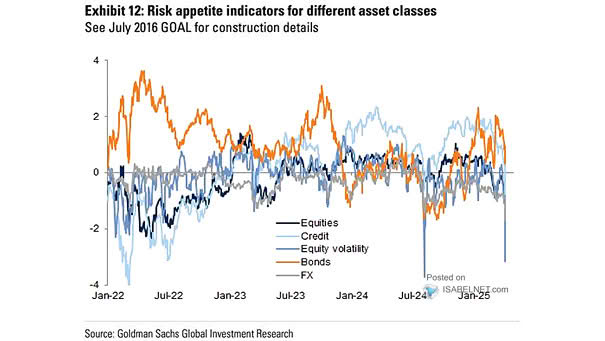
Sentiment – Global PMI and Risk Appetite Indicator

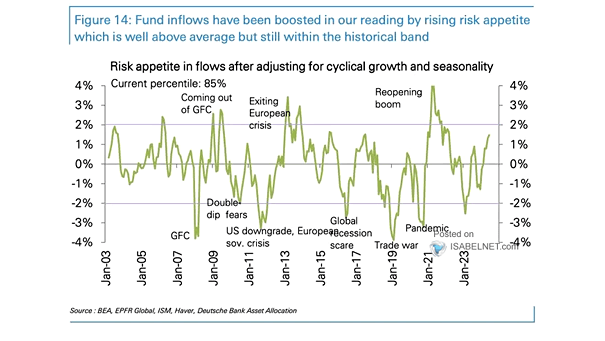
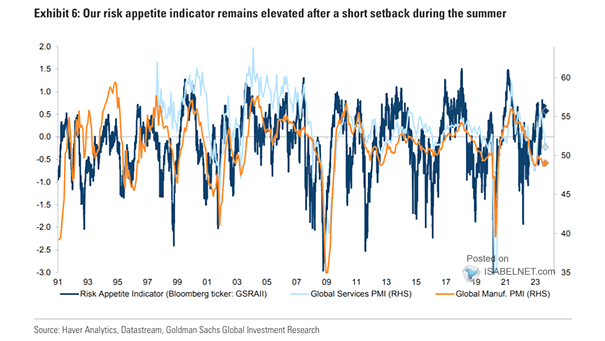
Sentiment – Global PMI and Risk Appetite Indicator The GS risk appetite indicator remaining elevated suggests that investors have a high appetite for risk in the financial markets. Image: Goldman Sachs Global Investment Research
Bitcoin and Risk Appetite Indicator

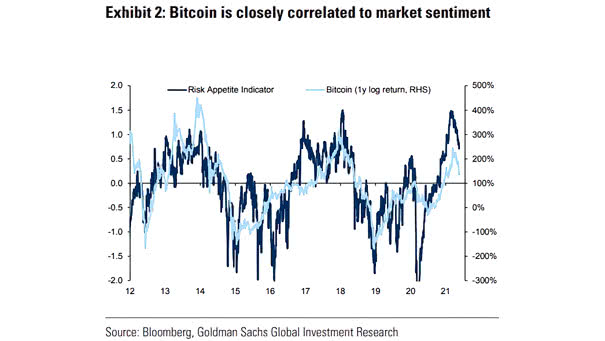
Bitcoin and Risk Appetite Indicator Bitcoin and market sentiment tend to move in tandem. Image: Goldman Sachs Global Investment Research
Risk Appetite Indicator Level – Drawdowns and Up Moves

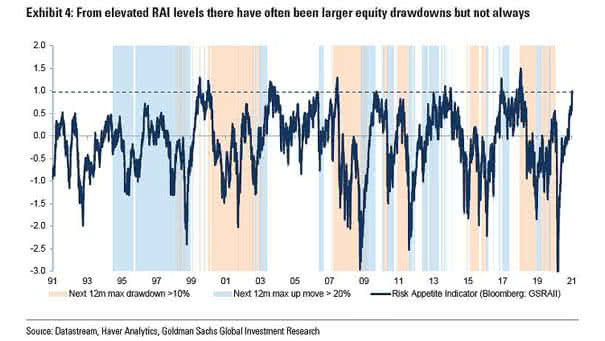
Risk Appetite Indicator Level – Drawdowns and Up Moves Time to reduce risk? When the Risk Appetite Indicator (RAI) level is above 1, near-term returns tend to be lower on average, with larger drawdowns. Image: Goldman Sachs Global Investment Research