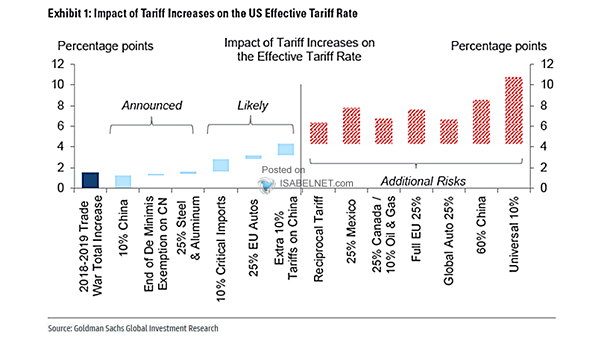
U.S. Effective Tariff Rate
U.S. Effective Tariff Rate The consensus is that tariffs typically exert upward pressure on prices, dampen retail sales, and reduce business confidence. Image: Bloomberg
U.S. Effective Tariff Rate The consensus is that tariffs typically exert upward pressure on prices, dampen retail sales, and reduce business confidence. Image: Bloomberg
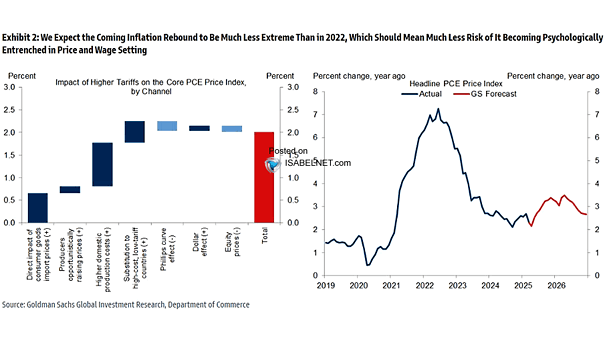
Impact of Higher Tariffs on the U.S. Core PCE Price Index The coming inflation rebound is expected be limited in scope and duration, meaning it is unlikely to trigger the kind of persistent inflation psychology that can drive a sustained wage-price spiral. Image: Goldman Sachs Global Investment Research

Historical U.S. Tariff Rate and Implied Rate Based on Latest Announcements With the U.S. and China’s temporary tariff pause, the average effective tariff rate is about 17%. An increase of 1 percentage point in the average effective tariff rate is estimated to reduce growth by around 0.1 percentage point. Image: Deutsche Bank
S&P 500 2025 EPS Estimate After Tariff Impact Deutsche Bank slashed its 2025 S&P 500 EPS estimate to $240 (from $282) due to tariffs’ outsized burden on U.S. companies. The S&P 500 index could rally to 6,150 if trade tensions meaningfully abate. Image: Deutsche Bank Asset Allocation
Tariffs Impact on YoY U.S. GDP Growth Goldman Sachs forecasts that tariffs will reduce U.S. GDP growth by approximately 0.8 percentage points over the next year, with tax cuts and regulatory easing only offsetting 0.1 to 0.2 percentage points of this decline. Image: Goldman Sachs Global Investment Research
Number of S&P 500 Constituents Mentioning Tariffs on Earnings Calls “Tariff Man’s” return has sparked a surge in tariff discussions during S&P 500 earnings calls, potentially exceeding Q2 2018 levels. Image: Fundstrat Global Advisors, LLC
Tariffs and U.S. Government Revenues Tariffs played a crucial role in the early industrialization of the United States, but their effectiveness in today’s global economy are potentially detrimental as they act as an economic drag, hurting more industries than they help. Image: Deutsche Bank
Which Countries Would Be Most Hit by Tariffs? Mexico, Vietnam, and Canada stand to lose the most if the United States implements new tariffs, given their strong economic relationships with the U.S.. Image: Deutsche Bank
How Much Tariffs Could Cost Each State? This chart shows how much each state would be affected by China’s export tariffs. Image: howmuch.net
Chinese Yuan (USD/CNY) and Tariffs Trade-sensitive Chinese yuan could move lower with tariffs headlines. Image: Wells Fargo Investment Institute
Estimated Tariff Impact on Core Inflation President Trump’s decision to increase the tariff rate will lead to a greater boost to U.S. consumer prices. Image: Goldman Sachs Global Investment Research