S&P 500 Intraday Returns – NY Cash Trading Hours vs. Overnight Trading

S&P 500 Intraday Returns – NY Cash Trading Hours vs. Overnight Trading U.S.-daytime volatility’s resurgence reflects renewed market focus on American macro developments, with global investors avoiding illiquid overnight hours—a behavior typically seen after major geopolitical or policy events. Image: Deutsche Bank Asset Allocation

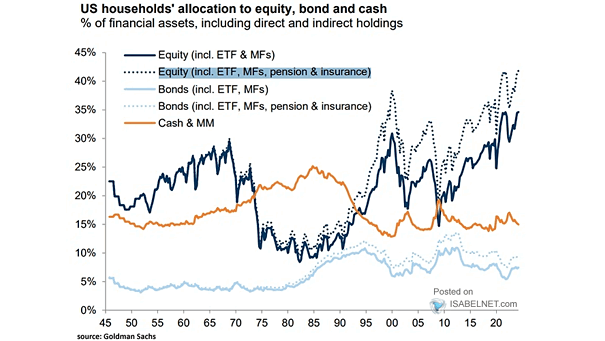
U.S. Households’ Allocation to Equity, Bond and Cash

U.S. Households’ Allocation to Equity, Bond and Cash Americans have never been so invested—literally—in the market, with household equity allocations at all-time highs, a boom shadowed by warnings of how sentiment can sour overnight. Image: Goldman Sachs Global Investment Research
Cash Allocation by Non-Bank Investors Globally

Cash Allocation by Non-Bank Investors Globally The age-old adage “cash is king” looks increasingly dated. Non-bank investors have slashed their cash holdings to the lowest levels since at least 1999, leaving financial markets more exposed to shocks. Image: J.P. Morgan

S&P 500 Cash Spending Relative to Cash Flows

S&P 500 Cash Spending Relative to Cash Flows Many S&P 500 companies devote substantial cash flow to stock buybacks, a practice that benefits shareholders in the short term but sparks concerns about favoring short-term gains over long-term growth. Image: Goldman Sachs Global Investment Research

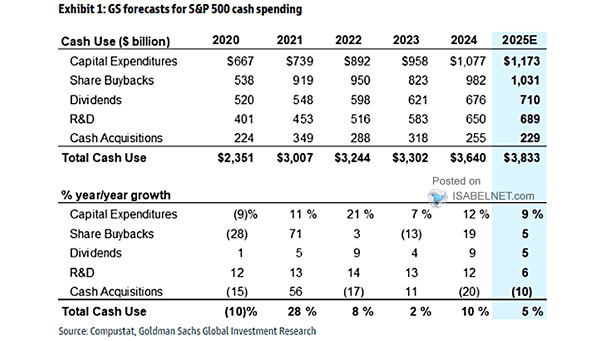
S&P 500 Use of Cash

S&P 500 Use of Cash The S&P 500’s capex growth in 2025 reflects a broad-based rise, driven by AI-related tech investments and strategic shifts in production and automation, underpinned by expectations of strong returns. Image: Goldman Sachs Global Investment Research

U.S. Stock Market – Margin Debt and Free Cash Balances

U.S. Stock Market – Margin Debt and Free Cash Balances The current record margin debt, exceeding $1 trillion, signals heightened investor risk-taking and confidence; however, if the market falters, this elevated leverage could amplify volatility and losses. Image: Real Investment Advice

AAII – U.S. Retail Investors Allocation to Stocks, Bonds and Cash

AAII – U.S. Retail Investors Allocation to Stocks, Bonds and Cash High equity allocations and low cash positions don’t always mean a market reversal is near. However, they suggest that much of the market’s potential gains may already be priced in, as investors have heavily committed to equities. Image: Real Investment Advice

FMS Average Cash Balance

FMS Average Cash Balance The FMS cash level’s recent decline to 3.9% has generated a contrarian sell signal for global equities. Historically, these signals often precede market corrections, prompting investors to reassess their strategies. Image: BofA Global Fund Manager Survey

GWIM Cash Allocation as % Asset Under Management

GWIM Cash Allocation as % Asset Under Management BofA’s private clients have reduced their cash allocation, remaining below the long-term average, while increasing their equity exposure. Image: BofA Global Investment Strategy