Fed Funds Rate vs. Gasoline Price / Core CPI

Fed Funds Rate vs. Gasoline Price / Core CPI When gasoline prices rise faster than inflation and move in step with growth, the Fed tends to lift rates. But what is the determining factor this time: strong demand or deep strain? It’s clearly the latter. Image: TS Lombard

U.S. Core CPI Inflation

U.S. Core CPI Inflation U.S. inflation cooled in February as core CPI rose 0.22%, right on expectations. The annual rate slowed to 2.5%, marking steady disinflation progress but still short of the Fed’s 2% target. Image: Goldman Sachs Global Investment Research

U.S. Core CPI and Headline Inflation

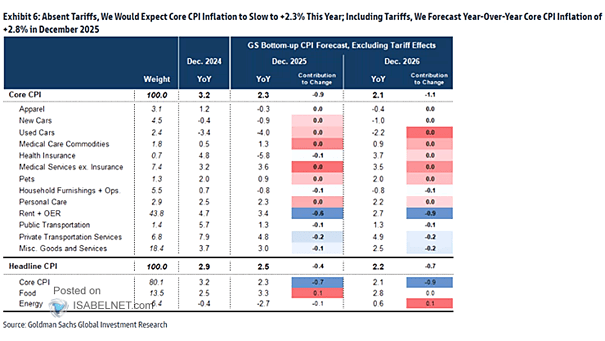
U.S. Core CPI and Headline Inflation Goldman Sachs projects U.S. core CPI inflation at 3.3% year-over-year by the end of 2025, factoring in tariffs, and expects it to gradually ease to 2.6% in 2026 despite ongoing inflationary pressures. Image: Goldman Sachs Global Investment Research

U.S. Headline and Core CPI Inflation

U.S. Headline and Core CPI Inflation The latest inflation data for October 2024 indicates that U.S. inflation has remained firm, showing a slight uptick rather than continuing its irregular descent, suggesting that the Fed’s battle against inflation is not yet over. Image: Bloomberg

U.S. Core CPI Inflation

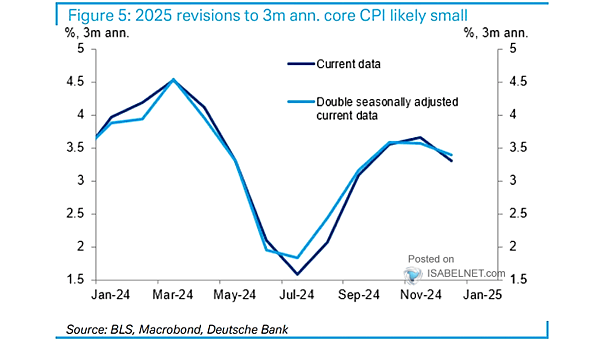
U.S. Core CPI Inflation In September, U.S. core CPI inflation showed a modest increase of 0.312% month-over-month, indicating that inflation pressures are not significantly escalating. Image: Nomura

Inflation – U.S. Core PCE and Core CPI

Inflation – U.S. Core PCE and Core CPI Goldman Sachs’ forecast of a continuous decline in U.S. core PCE and core CPI suggests a potential slowdown in inflationary pressures, which could have significant implications for the overall economic outlook. Image: Goldman Sachs Global Investment Research

U.S. Inflation – Core PCE and Core CPI

U.S. Inflation – Core PCE and Core CPI Inflation is trending downward towards the Fed’s 2% target, a crucial aspect of its monetary policy aimed at maintaining price stability and anchoring inflation expectations at a moderate level. Image: BofA Global Research

Inflation – Potential Paths for U.S. Core CPI

Inflation – Potential Paths for U.S. Core CPI If the Fed cuts rates in June, U.S. core CPI is expected to exceed the Fed’s 2% inflation target, which could pose challenges for the central bank in maintaining price stability. Image: BofA Global Investment Strategy

U.S. Core CPI vs. Unemployment Rate When Fed First Cut Rates

U.S. Core CPI vs. Unemployment Rate When Fed First Cut Rates It is rare for the Fed to cut rates when core CPI exceeds the unemployment rate, signaling the central bank’s concern about potential inflationary pressures and its emphasis on maintaining price stability. Image: BofA Global Investment Strategy

U.S. Core CPI Minus Unemployement Rate % vs. Fed Funds Rate

U.S. Core CPI Minus Unemployement Rate % vs. Fed Funds Rate The Fed rarely cuts rates when core CPI exceeds the unemployment rate, reflecting the central bank’s concern about potential inflationary pressures in the economy and its emphasis on price stability. Image: BofA Global Investment Strategy

Inflation – U.S. Core CPI

Inflation – U.S. Core CPI Goldman Sachs forecasts that U.S. core CPI will be 3.0% in December 2024. Image: Goldman Sachs Global Investment Research