U.S. IG Credit Spread

U.S. IG Credit Spread IG credit spreads in the U.S. have widened lately, particularly across tech, as the market demands a higher premium for AI-driven capex, heavy debt supply, rising leverage, and uncertain returns. Image: Goldman Sachs Global Investment Research

Margin Debt and Net Investor Credit Balance

Margin Debt and Net Investor Credit Balance NYSE margin debt just blew past $1.5 trillion. Investors are piling into leverage with both hands, leaving little room for error. The market has gotten riskier, more fragile, but that doesn’t mean a crash is guaranteed. Image: Real Investment Advice

U.S. High Yield Credit Spreads vs. VIX

U.S. High Yield Credit Spreads vs. VIX High-yield spreads are pricing in a smooth ride. Spreads are tight, balance sheets look solid, and the risk is that confidence slips into complacency. Active monitoring helps catch early signs of stress.Image: Topdown Charts

Valuation Percentile for Equity, Credit and Bond

Valuation Percentile for Equity, Credit and Bond Valuations matter more over the medium term than in the moment. In years like 2025, robust growth let markets climb anyway, powered by rising profits despite high price tags. Image: Goldman Sachs Global Investment Research

U.S. Equity Volatility vs. Credit Volatility

U.S. Equity Volatility vs. Credit Volatility Credit markets are calm, with volatility running below its long-term average, but equity volatility tells a different story, pointing to a more anxious tone in stocks. Image: Fundstrat Global Advisors, LLC

Rolling 90-Day Correlation Between the S&P 500 and U.S. IG Credit Spreads

Rolling 90-Day Correlation Between the S&P 500 and U.S. IG Credit Spreads Credit and equities are back in sync: the 90‑day correlation between U.S. IG credit spreads and the S&P 500 has spiked, a sign that macro forces and market mood now bind the two tighter than before. Image: Deutsche Bank

U.S. High Yield Credit Spreads

U.S. High Yield Credit Spreads Tight high-yield spreads signal strong market confidence, but they also raise red flags by potentially masking underlying vulnerabilities and feeding investor complacency by making risks seem less significant than they are. Image: Topdown Charts

U.S. Credit Card Debt

U.S. Credit Card Debt Rising credit card debt shows weakened repayment discipline and financial strain from inflation in basic living costs, creating a feedback loop where increased debt and fees further hinder consumers’ ability to restore financial stability. Image: Yahoo Finance

U.S. High Yield Credit Spreads and Recessions

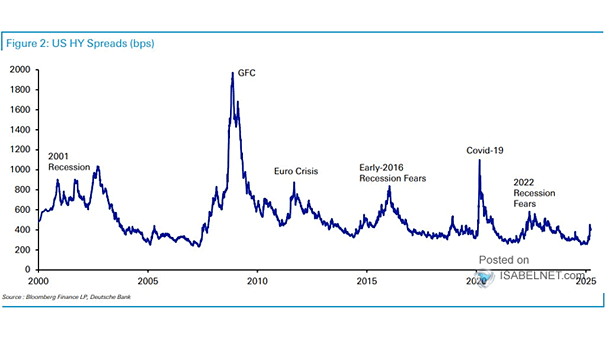
U.S. High Yield Credit Spreads and Recessions U.S. high-yield credit spreads in May 2025 show little evidence of recession fears, remaining well below the levels seen during previous downturns. Image: Deutsche Bank
Junk and Investment Grade Credit Spreads

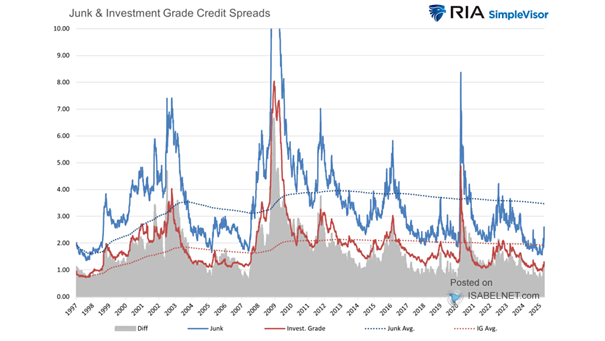
Junk and Investment Grade Credit Spreads Corporate bond yield spreads are often used as a gauge of financial market stress. They can provide insights into the likelihood of an economic downturn, but they are not foolproof predictors. Image: Real Investment Advice

Survey – Credit Investors: What Are Your Biggest Concerns?

Survey – Credit Investors: What Are Your Biggest Concerns? The 2024 U.S. election outcome could significantly impact fiscal policy, debt, interest rates, inflation, and economic growth, which are key concerns for U.S. credit investors. Image: BofA Credit Investor Survey