U.S. Budget Deficit and Current Account
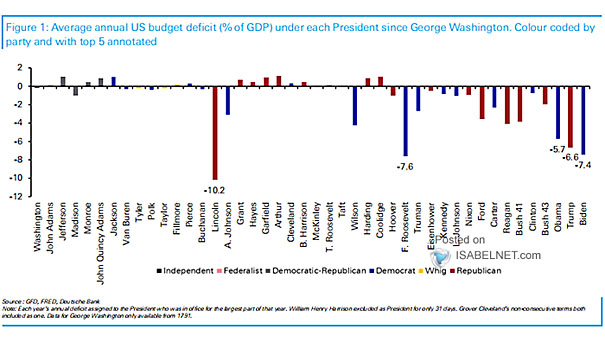
U.S. Budget Deficit While higher deficits can provide short-term economic stimulus and potentially extend business cycles, they also pose risks to long-term economic stability. Image: Deutsche Bank
U.S. Budget Deficit While higher deficits can provide short-term economic stimulus and potentially extend business cycles, they also pose risks to long-term economic stability. Image: Deutsche Bank
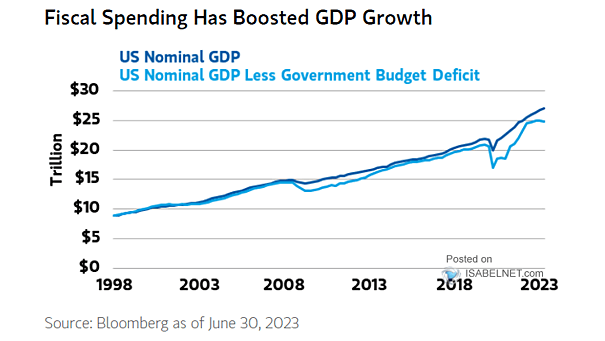
U.S. Nominal GDP Less Government Budget Deficit While fiscal spending in the United States has the potential to boost GDP growth, it is important to carefully consider the long-term implications and trade-offs associated with such policies. Image: Morgan Stanley Wealth Management

U.S. Budget Deficit as a % of GDP The trend of elevated deficits and increasing debt can have potential long-term implications for the U.S. economy. Image: BofA Global Investment Strategy
U.S. Unemployment Rate and U.S. Federal Government Budget Deficit This chart shows the unprecedented divergence between the U.S. unemployment rate and the U.S. federal government budget deficit. Image: Alpine Macro
U.S. Federal Budget Deficit by Month U.S. federal budget deficit surges to $134.5 billion in October. Image: Oxford Economics
U.S. Budget Deficit Government spending increases despite President Trump’s promise to eliminate debt. Image: Financial Times
Federal Budget Deficit Since 1948 The federal budget deficit is unusually large compared to the state of the U.S. economy. Image: Goldman Sachs
U.S. Budget Deficits and the U.S. Dollar Pretty good correlation between U.S. budget deficits and the U.S. dollar over the past 30 years. The chart suggests that the U.S. dollar should weaken over time. You may also like “U.S. Twin Deficits (% of GDP) Lead Real Trade Weighted Dollar Index by Two Years” and “U.S. Dollar…
U.S. Twin Deficits: Budget & Trade May Trump’s fiscal gamble not pay off? Meanwhile, the U.S. twin deficits continue to grow. Image: LPL Research
U.S. Treasury Federal Deficit or Surplus The federal government’s budget deficit continues to grow at a rapid pace. Image: The Daily Shot
U.S. 10-Year TIPS Yield and Federal Budget Balance A larger U.S. budget deficit tends to lead to a lower TIPS yield. Image: Alpine Macro