S&P 500 Around Major Geopolitical Events Since 1939

S&P 500 Around Major Geopolitical Events Since 1939 U.S. equities have once again behaved in line with the historical playbook during geopolitical shocks: a burst of panic, then a quick return to business as usual. Image: Deutsche Bank Asset Allocation

S&P 500 Returns Following Major Geopolitical Events

S&P 500 Returns Following Major Geopolitical Events History shows the same script in over 20 major events since WWII: markets snap back quicker than feared, and those who hold their nerve often win. Panic usually hurts more than the shock itself. Image: Real Investment Advice

S&P 500 Return Around 7 Major Geopolitical Risk Events

S&P 500 Return Around 7 Major Geopolitical Risk Events The S&P 500’s 5% slide from its January peak mirrors the market’s typical pullback after major geopolitical shocks. Many investors see the turbulence as temporary, betting that history’s pattern of quick recoveries will hold. Image: Goldman Sachs Global Investment Research

S&P 500 Around Major Geopolitical Events

S&P 500 Around Major Geopolitical Events U.S. stocks have a habit of looking past turbulence in oil. After past geopolitical flare-ups, the S&P 500 has usually pushed higher, and this episode could follow the same script. Image: TS Lombard

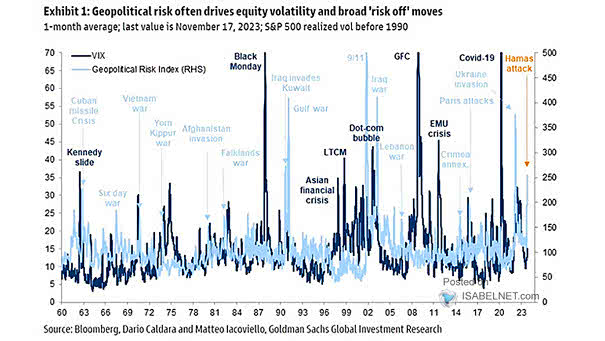
Geopolitical Risk Index

Geopolitical Risk Index Geopolitical risk has risen sharply and this often coincides with higher equity volatility and risk‑off behavior in markets. Markets hate uncertainty, and geopolitics never fail to deliver it. Image: Goldman Sachs Global Investment Research

S&P 500 Return Around Geopolitical Risk Events

S&P 500 Return Around Geopolitical Risk Events The latest moves in the S&P 500 recall how markets have historically absorbed geopolitical risks: brief pullbacks followed by rebounds, often back to pre-shock levels in roughly a month. Image: Goldman Sachs Global Investment Research

Peak to Trough in the S&P 500 Around Spikes in the Geopolitical Risk Index

Peak to Trough in the S&P 500 Around Spikes in the Geopolitical Risk Index Most geopolitical shocks haven’t caused lasting market impacts. Oil tends to surge when tensions rise in the Middle East, gold gets a lift, Treasuries draw buyers unless energy prices spiral, and equities typically retreat. Image: Goldman Sachs Global Investment Research

S&P 500 Index Performance After Geopolitical and Major Historical Events

S&P 500 Index Performance After Geopolitical and Major Historical Events Major geopolitical shocks can rattle investors, but U.S. stocks have a long track record of bouncing back, with median six‑month gains over 5% since World War II. Staying invested often pays off after the dust settles. Image: Carson Investment Research

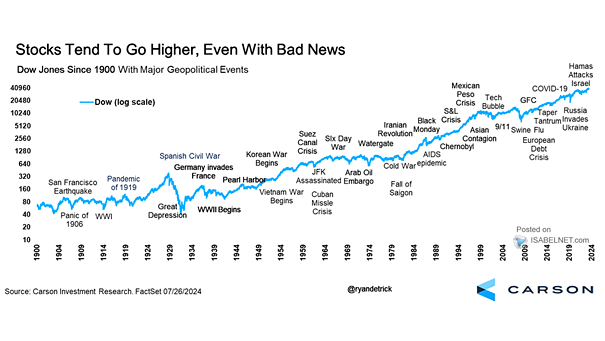
Stocks – Dow Jones with Major Geopolitical Events

Stocks – Dow Jones with Major Geopolitical Events Major geopolitical events often rattle markets, but history shows U.S. stocks usually bounce back and push higher as investors look beyond the turmoil, showing that patience remains the winning trade. Image: Carson Investment Research

Average Performance on Major Geopolitical Events

Average Performance on Major Geopolitical Events Investors regard gold as both a hedge against inflation and a strategic asset during geopolitical uncertainty, having proven to be the most effective safeguard against major geopolitical events since 1973. Image: Alpine Macro