EUR/USD and 10-Year Rates Differential

EUR/USD and 10-Year Rates Differential The chart shows the Euro vs. US Dollar (EUR/USD) and how a 10-year rates differential corresponds to a stronger or weaker US dollar. Image: Oxford Economics, Macrobond

Share of Market Value in Bloomberg Barclays USD IG

Share of Market Value in Bloomberg Barclays USD IG Since 1990, the amount of BBB-rated bonds has doubled. This is only one step away from junk bonds.  Keep in mind that many investment grade investors own BBB-rated bonds, but they are not allowed to hold junk-rated bonds. So, any drop in the credit ratings could…

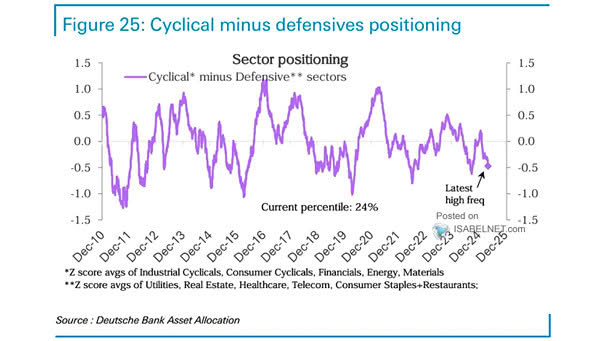
Cyclical Minus Defensive Sectors Positioning

Cyclical Minus Defensive Sectors Positioning At the 52nd percentile, sector positioning shows a market in balance, with no meaningful shift toward either cyclicals or defensives, pointing to a lack of strong conviction. Image: Deutsche Bank Asset Allocation
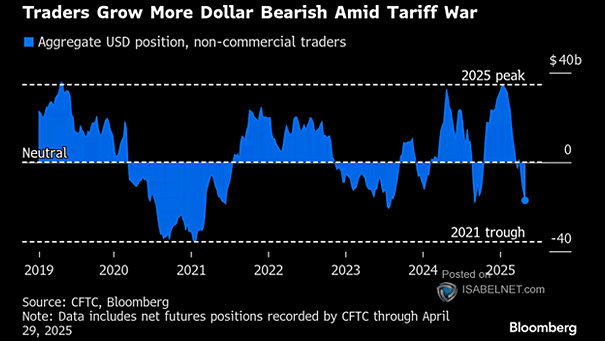
Aggregate U.S. Dollar Position, Non-Commercial Traders

Aggregate U.S. Dollar Position, Non-Commercial Traders Rising Middle East tensions and a jump in energy prices have pushed speculators back into the U.S. dollar, marking their first net-long position of the year. No surprise there: the greenback usually shines when global risks rise. Image: Bloomberg

MSCI AC World: 10-Year Annualized Total Return

MSCI AC World: 10-Year Annualized Total Return Goldman Sachs forecasts a 10-year annual return of 7.7% in USD for global stocks — a solid long-term outlook, though shy of the boom years’ pace. Image: Goldman Sachs Global Investment Research

Reserves in Different Currencies

Reserves in Different Currencies While the USD share of global FX reserves has slipped somewhat, it remains close to 60% and continues to be the leading global reserve currency by a wide margin. Image: Deutsche Bank

Net U.S. Dollar Positioning

Net U.S. Dollar Positioning When USD postioning is very light, USD tended to move higher. Image: J.P. Morgan

$11 Trillion Bonds Globally Trade At Negative Interest Rates

$11 Trillion Bonds Globally Trade At Negative Interest Rates The total amount of negative interest rates climbed to USD 11 trillion. Investors are paying governments for the privilege of holding their bonds and are losing so much money in real terms. Image: Deutsche Bank Global Research