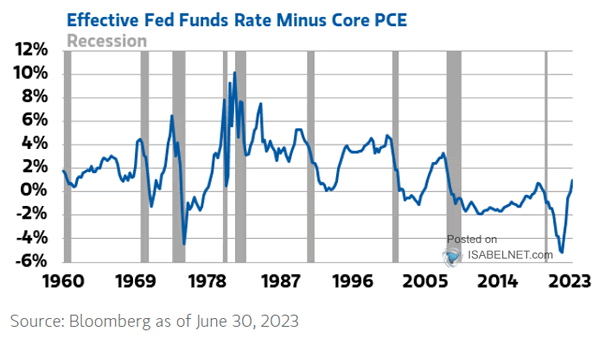
Fed Funds Rate Less U.S. Core PCE
Fed Funds Rate Less U.S. Core PCE Is the Federal Reserve’s monetary policy really restrictive in order to return inflation to 2%? Image: Morgan Stanley Wealth Management
Fed Funds Rate Less U.S. Core PCE Is the Federal Reserve’s monetary policy really restrictive in order to return inflation to 2%? Image: Morgan Stanley Wealth Management
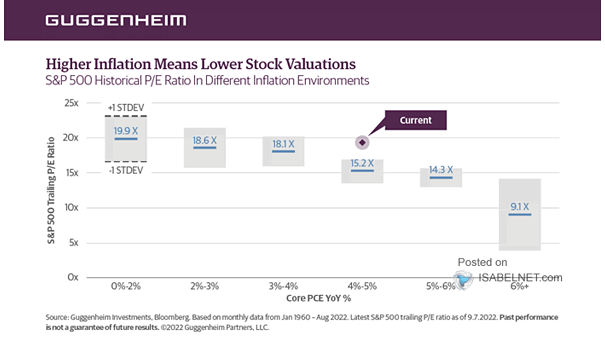
Valuation – S&P 500 Historical P/E Ratio in Different Inflation Environments Should U.S. equity investors expect lower stock valuations, as U.S. core PCE remains elevated? Image: Guggenheim Partners

Euro Area and U.S. Inflation and Central Bank Forecasts The Fed projects U.S. inflation well above 2% into 2023. Image: BlackRock Investment Institute
U.S. Transitory Inflation Meter Is U.S. inflation transitory? The BofA US transitory inflation meter remains at 100. BofA expects core PCE inflation will settle down to 2.1% by the end of 2022. Image: BofA Global Research
U.S. Output Gap (% of potential GDP) and Inflation U.S. output gap (% of potential GDP) tends to lead underlying core PCE by 12 months. Image: Pictet Asset Management
PCE Inflation vs. Output Gap (Leading Indicator) Positive output gap suggests higher core inflation next year. Image: NBF Economics and Strategy
U.S. Core PCE vs. Fed Target The U.S. core personal consumption expenditures price index, which excludes food and energy, rises to 1.6% in June. Inflation trending back up toward the Fed’s 2% target is good news. You may also like “U.S. Core Inflation Expected Over the Next 21 Months.”
How to Get Inflation? Mainly, inflation comes from excess money supply growth. There is too much money in the system chasing too few goods and services. Nominal GDP = M x V = P x T M = quantity of money V = velocity of circulation of money P = level of prices T =…
Where Does Inflation Come From? Mainly inflation comes from excess money supply growth. There is too much money in the system chasing too few goods and services. Over the long term, Nominal GDP = Money Supply x Velocity of Money = Inflation + Real Economic Growth “Inflation is always and everywhere a monetary phenomenon.” –Milton Friedman. You…
ISABELNET Cartoon of the Day The S&P 500 index surged 1.83% yesterday after U.S. core inflation came in weaker than expected, prompting bears to check their pulse: are they still alive? Have a Great Day, Everyone! 😎
U.S. Misery Index and Average Forward Returns The U.S. misery index (core inflation + unemployment) is approaching all-time low, because both inflation and unemployment are very low. Historically, average forward returns have been higher than the overall S&P 500 average.