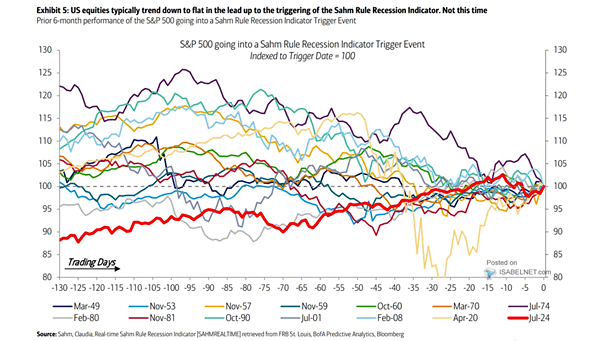
S&P 500 Going into a Sahm Rule Recession Indicator Trigger Event

S&P 500 Going into a Sahm Rule Recession Indicator Trigger Event The recent triggering of the Sahm Rule indicator has diverged from the typical behavior of U.S. equities seen in the lead-up to a recession. Investors should be cautious before drawing conclusions about a potential U.S. recession. Image: BofA Predictive Analytics
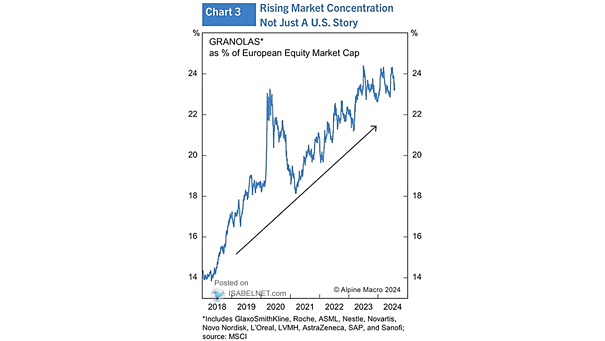
Europe’s GRANOLAS Stocks and Market Capitalization

Europe’s GRANOLAS Stocks and Market Capitalization While Europe may not have the Magnificent Seven, it does have the GRANOLAS, which represents Glaxosmithkline, Roche, ASML, Nestle, Novartis, Novo Nordisk, L’Oreal, LVMH, Astrazeneca, SAP, and Sanofi. Image: Alpine Macro

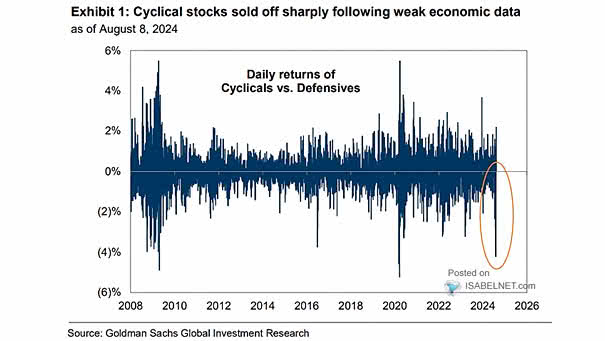
Stocks – Cyclicals vs. Defensives

Stocks – Cyclicals vs. Defensives Cyclicals and defensives are useful indicators of investor sentiment. As investors expect economic contractions, they often shift towards defensives, resulting in their outperformance compared to cyclicals. Image: Goldman Sachs Global Investment Research

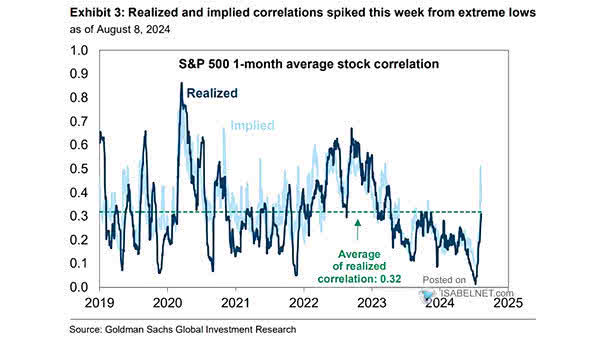
U.S. Stocks – Average Stock Correlation in the S&P 500

U.S. Stocks – Average Stock Correlation in the S&P 500 The current trend in the S&P 500 indicates a significant rise in stock correlation, suggesting a more homogenous market behavior that could pose risks for investors relying on diversification strategies. Image: Goldman Sachs Global Investment Research

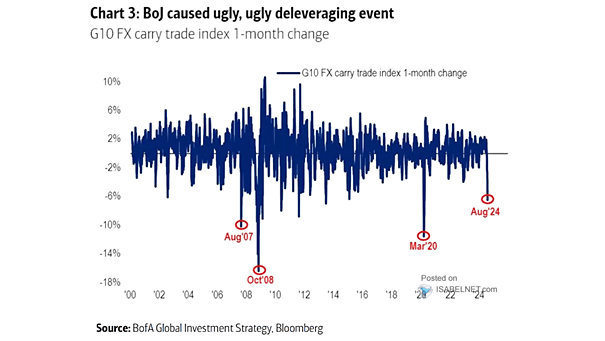
G10 FX Carry Trade Index

G10 FX Carry Trade Index The Bank of Japan’s recent actions caused market turmoil termed an “ugly deleveraging event,” reflecting ongoing economic challenges in Japan. Navigating a post-deflationary landscape adds complexity to the situation. Image: BofA Global Investment Strategy

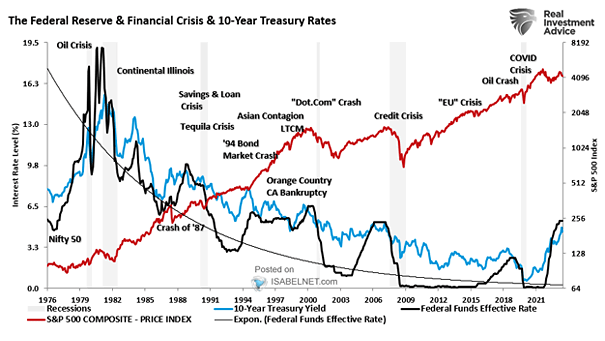
The Federal Reserve and Financial Crisis

The Federal Reserve and Financial Crisis While the current rate hiking cycle hasn’t caused widespread financial crises yet, it’s premature to say it’s entirely different. The Fed must carefully balance controlling inflation, achieving maximum employment, and ensuring financial stability. Image: Real Investment Advice

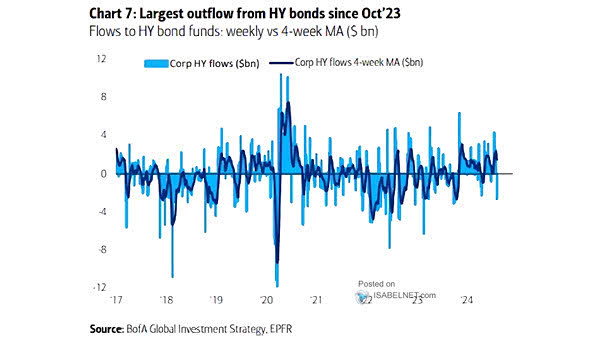
High Yield Bond Flows

High Yield Bond Flows Persistence outflows from high yield bonds could signal a lack of confidence in the underlying companies and their capacity to fulfill debt obligations, making it a crucial indicator to monitor closely. Image: BofA Global Investment Strategy

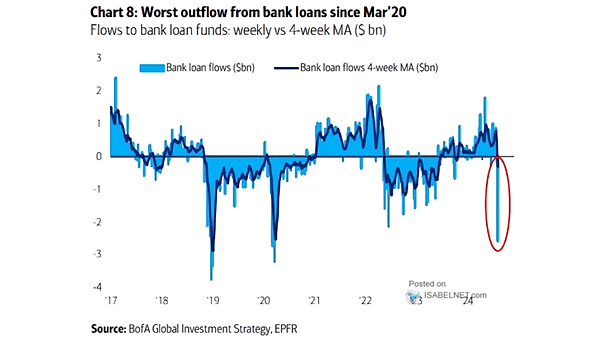
Bank Loan Flows

Bank Loan Flows The largest outflow from bank loan funds since March 2020 can be seen as a negative development and reflects negative investor sentiment. Image: BofA Global Investment Strategy

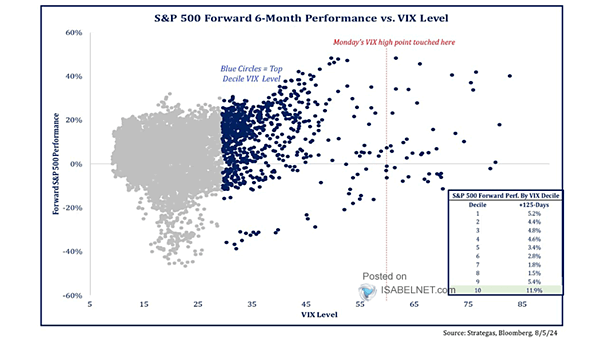
S&P 500 Forward 6-Month Performance vs. VIX Level

S&P 500 Forward 6-Month Performance vs. VIX Level Very high VIX readings may actually precede periods of strong market performance over the subsequent 6 months, as investor sentiment stabilizes and confidence returns. Image: Strategas Research Partners

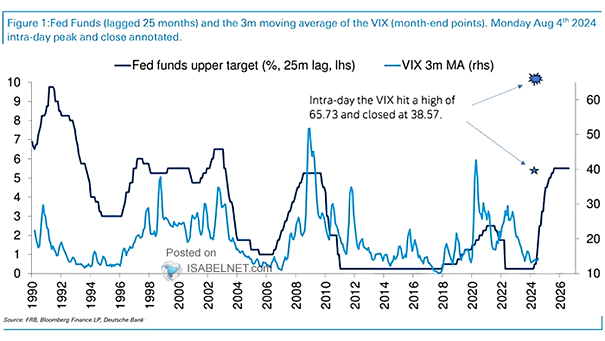
Fed Funds vs. VIX

Fed Funds vs. VIX Taking into account the lag effect of Fed rate hikes on the U.S. economy, should investors expect the VIX to continue being elevated? Image: Deutsche Bank

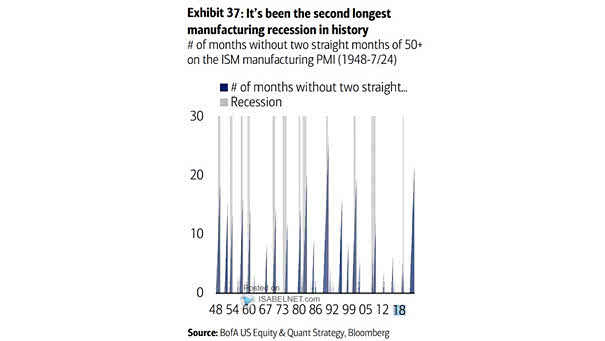
U.S. ISM Manufacturing Index and Recessions

U.S. ISM Manufacturing Index and Recessions The U.S. manufacturing sector is currently experiencing its second longest downturn in modern history, attributed to various factors, including elevated interest rates that have suppressed demand. Image: BofA US Equity & Quant Strategy