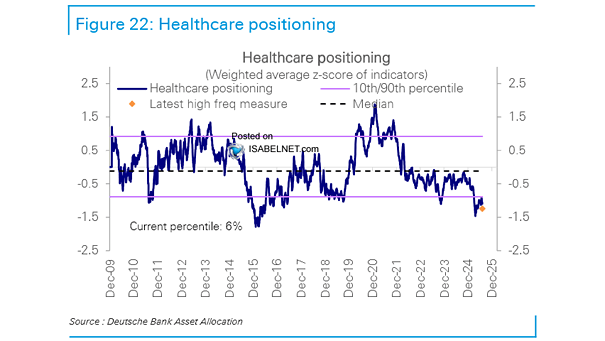
Large Cap Equity Positioning

Large Cap Equity Positioning Markets overall are far from stretched, but in large-cap equities, positioning has climbed to the 82nd percentile, where momentum in big-name stocks is clearly picking up. Image: Deutsche Bank Asset Allocation

S&P 500 Index and Barclays Equity Timing Indicator

S&P 500 Index and Barclays Equity Timing Indicator Barclays’ Equity Timing Indicator—a gauge of 19 market and economic signals—is tilting bullish, implying an 82% chance the S&P 500 rises over the next two months, with past setups since 2015 delivering roughly 4% on average. Image: Bloomberg

S&P 500 Returns when New Highs Are Made in August, September, and October

S&P 500 Returns when New Highs Are Made in August, September, and October History is on the bulls’ side: whenever the S&P 500 has hit new highs in August, September, and October, the fourth quarter has never finished in the red since 1950—a track record market participants can’t ignore. Image: Carson Investment Research

Equities – MSCI U.S. vs. MSCI ACWI ex-U.S.

Equities – MSCI U.S. vs. MSCI ACWI ex-U.S. American equities are falling out of step with their global peers, lagging by roughly 9%—the biggest divide since 2009—amid currency shifts and a revival of interest in foreign markets. Image: Bloomberg

S&P 500 Returns When New Highs Are Made In October

S&P 500 Returns When New Highs Are Made In October Bulls welcome October’s new highs, knowing the fourth quarter has been kind: markets have risen more than 90% of the time, with average gains of 4.9% going back to 1950. Image: Carson Investment Research

Gold ETF Holdings

Gold ETF Holdings The surge in Western gold ETF holdings tells a story of fragile nerves and strong convictions—uncertain macro signals, anticipated rate cuts, and a search for safety pushing both private investors and central banks deeper into bullion. Image: Goldman Sachs Global Investment Research

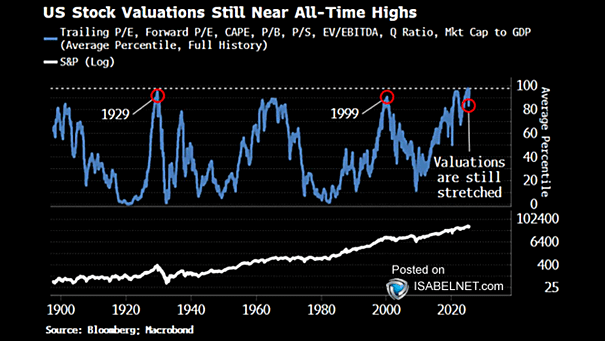
Valuation – S&P 500 CAPE Ratio

Valuation – S&P 500 CAPE Ratio For a while, valuations look irrelevant—until they dictate everything. Over the past 150 years, stretched multiples have reliably led to leaner returns, with the last three peaks leaving investors underwater in real terms over the next ten years. Image: Deutsche Bank

S&P 500 Earnings

S&P 500 Earnings Unlike some past bull runs, this year’s rally in U.S. stocks has been driven more by solid earnings growth than by rising valuation multiples. Image: Goldman Sachs Global Investment Research

Inflation – Fed Funds Rate and CPI

Inflation – Fed Funds Rate and CPI With the Fed funds rate still running well above inflation, policy looks overly tight—and investors are betting on deeper rate cuts to follow. Image: Real Investment Advice

S&P 500 Returns After The Top 15 September Returns Ever

S&P 500 Returns After The Top 15 September Returns Ever Bears expecting a rough September were left flat-footed. Instead, the S&P 500 posted its 14th-strongest monthly rally since 1950, giving bulls fresh reason to hope for momentum into the fourth quarter. Image: Carson Investment Research

Approximate Lifespan of Historical Bubbles, from Run-Up to Peak

Approximate Lifespan of Historical Bubbles, from Run-Up to Peak Financial bubbles rarely pop overnight. They typically build for years, fueled by speculative mania, until late-arriving investors rush in at the top—only to see their gains wiped out when the bubble bursts. Image: Deutsche Bank Research