Average Post-Election Year for S&P 500

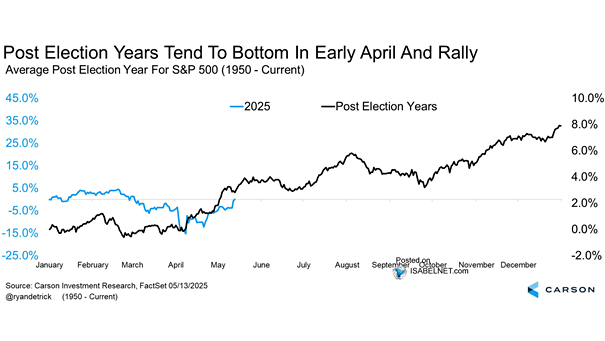
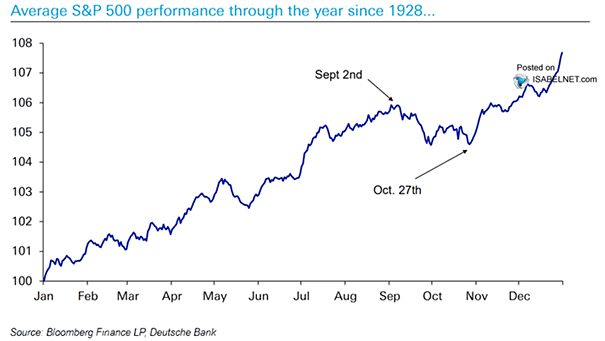
Average Post-Election Year for S&P 500 In post-election years, U.S. stocks often hit bottom by late October — before ripping higher into year-end, a seasonal gift Wall Street can’t resist. Image: Carson Investment Research
Seasonality – Average Daily Performance of the S&P 500

Seasonality – Average Daily Performance of the S&P 500 After October 27, retail optimism, corporate buybacks, and institutional repositioning can inject fresh energy into U.S. markets. For many traders, it’s the unofficial start of the year-end run. Image: Deutsche Bank

Nasdaq 100 Index and 200-Day Moving Average

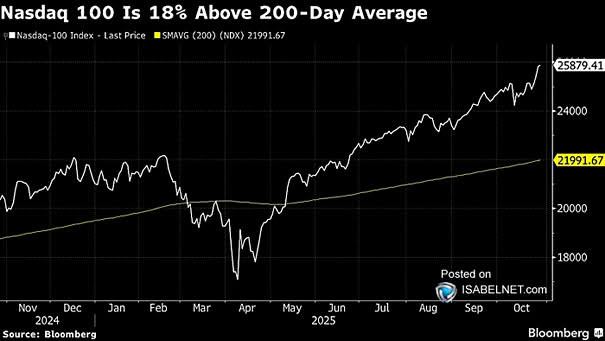
Nasdaq 100 Index and 200-Day Moving Average The Nasdaq 100 keeps ripping higher, but its widening gap from the 200-day average is starting to blink red for a possible 5%–10% pullback. Image: Bloomberg

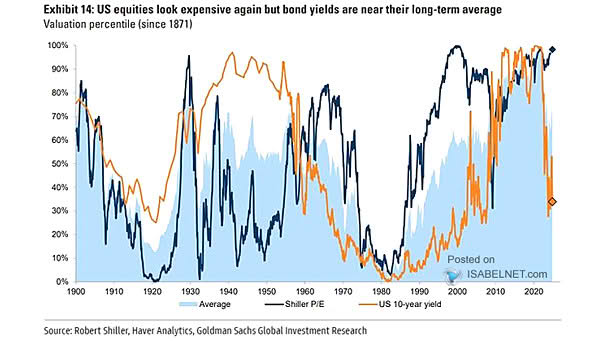
Valuation – Shiller P/E and U.S. 10-Year Yield

Valuation – Shiller P/E and U.S. 10-Year Yield Sure, U.S. equities are expensive, but inflation and debt worries make bonds no easy refuge either. The smart move now? Stay selective, not scared. Image: Goldman Sachs Global Investment Research

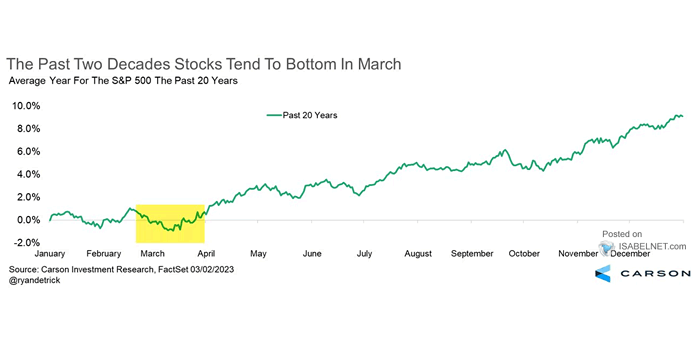
Returns – Average Year for the S&P 500

Returns – Average Year for the S&P 500 October 27 has a curious pull on markets — a date when U.S. stocks often find a floor before seasonal inflows spark a late‑year surge. Image: Carson Investment Research
Median Global Real Return in USD by Asset Class

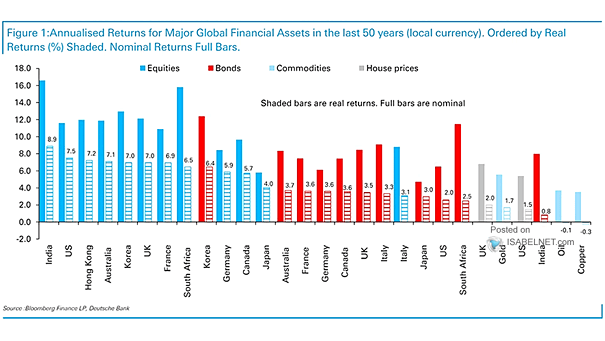
Median Global Real Return in USD by Asset Class While the 60/40 portfolio can’t match stocks in full bull mode, its long-run performance comes surprisingly close — a reminder that bonds still ground both risk and reward in a disciplined portfolio. Image: Deutsche Bank

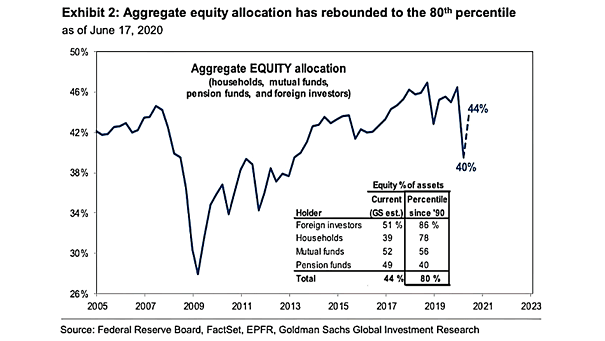
Equity Allocation as % of Household Financial Assets

Equity Allocation as % of Household Financial Assets Equities dominate household portfolios in the U.S., Australia, and Sweden, but caution still rules in Europe and Japan, where cash and liquid assets remain king. Image: Goldman Sachs Global Investment Research

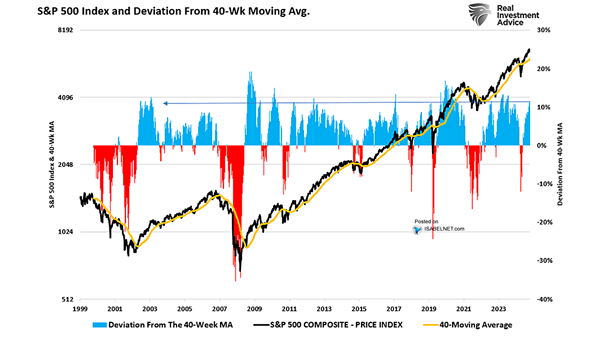
S&P 500 Index and Deviation from 40-Week Moving Average

S&P 500 Index and Deviation from 40-Week Moving Average The further the S&P 500 drifts from its 40-week moving average, the harder the reversion’s likely to be. It’s not a bear market call — just a reminder that momentum cuts both ways. Image: Real Investment Advice

S&P 500 Index – Seasonal 3-Month Forward Return

S&P 500 Index – Seasonal 3-Month Forward Return Historically, this is go-time for the S&P 500. If past trends hold, the next three months could deliver some of the index’s strongest cumulative gains. Image: Renaissance Macro Research

Buyback Aristocrats vs. Dividend Aristocrats

Buyback Aristocrats vs. Dividend Aristocrats Fueled by growth momentum and turbo‑charged buybacks, Buyback Aristocrats have left Dividend Aristocrats in the dust, as investors chase upside over income stability. Image: Goldman Sachs Global Investment Research

Total Holdings of U.S. Long-Term Securities

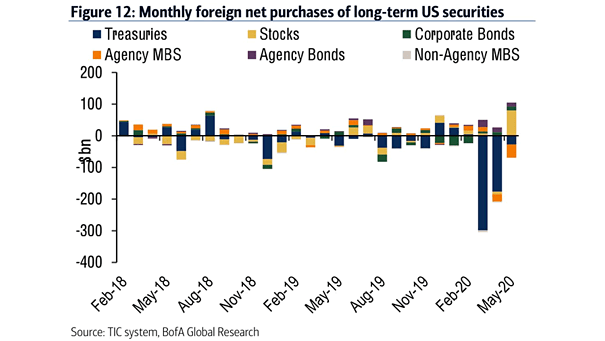
Monthly Foreign Net Purchases of Long-Term U.S. Securities Record foreign holdings of U.S. assets in 2025 point to lasting investor confidence, even in the face of global economic and geopolitical risks. Image: Bloomberg