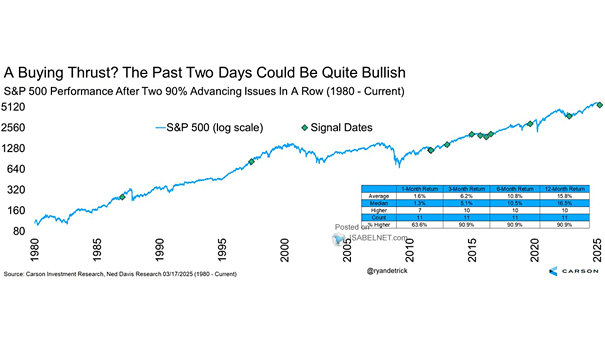
S&P 500 Performance After Two 90% Advancing Issues in a Row

S&P 500 Performance After Two 90% Advancing Issues in a Row Since 1980, two consecutive days with 90% advancing issues in the S&P 500 have delivered a median return of 16.5% over the following 12 months, with positive returns occurring 90.9% of the time—giving bulls reason to rejoice! Image: Carson Investment Research
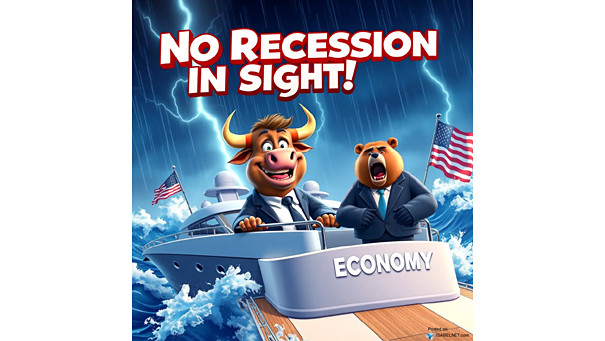
ISABELNET Cartoon of the Day

ISABELNET Cartoon of the Day Bears are preparing for the apocalypse, while bulls are partying like it’s 1999, convinced the U.S. economy is recession-proof—until it isn’t! Have a Great Day, Everyone! 😎

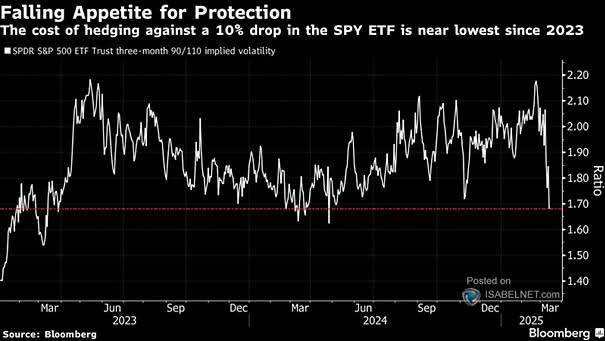
SPDR S&P 500 ETF Trust Three-Month 90/110 Implied Volatility

SPDR S&P 500 ETF Trust Three-Month 90/110 Implied Volatility Signs of stability are emerging in the S&P 500 Index after the sharp correction, as traders abandon bets on further significant declines, reflecting growing confidence in the market. Image: Bloomberg

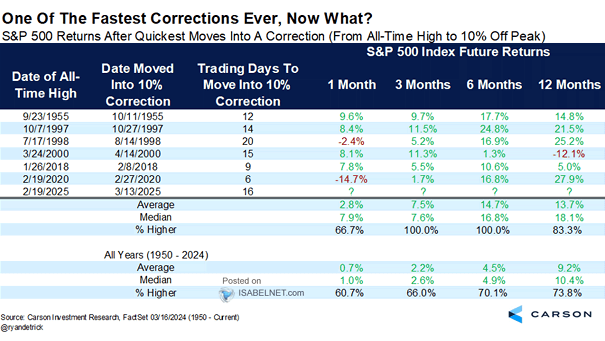
S&P 500 Returns After Quickest Moves into a Correction

S&P 500 Returns After Quickest Moves into a Correction The S&P 500 experienced one of its fastest 10% corrections from an all-time high within a month. Since 1950, it has always been higher 3 and 6 months later, with a median 6-month return of 16.8%, giving bulls reason to smile. Image: Carson Investment Research
ISABELNET Cartoon of the Day

ISABELNET Cartoon of the Day Saint Patrick’s Day brings smiles to bulls as it’s not only one of the greenest days of the year but also historically the best day for U.S. stocks in March—leaving bears feeling unlucky! Happy Saint Patrick’s Day! 😎

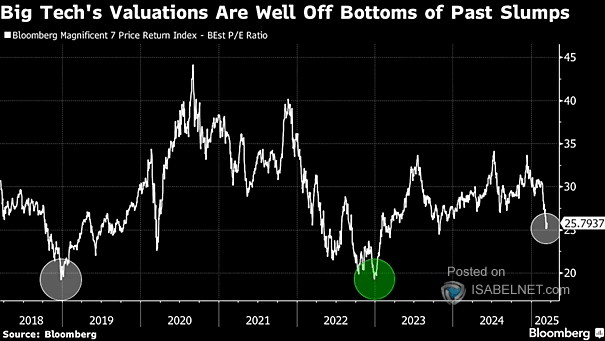
Valuation – Bloomberg Magnificent Seven Price Return Index – BEst P/E Ratio

Valuation – Bloomberg Magnificent Seven Price Return Index – BEst P/E Ratio During the recent market selloff, valuations of major tech companies have plummeted from their previous highs. Many traders believe the downward trend may continue, a sentiment supported by recent historical patterns. Image: Bloomberg

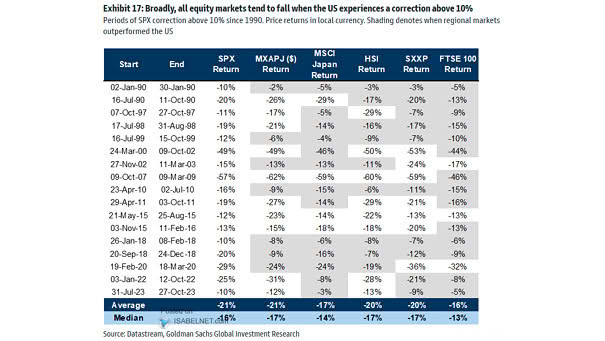
Periods of S&P 500 Correction Above 10%

Periods of S&P 500 Correction Above 10% Due to the U.S. stock market’s dominant position, a correction exceeding 10% frequently triggers a domino effect across global equity markets, as investors react to heightened uncertainty and risk aversion. Image: Goldman Sachs Global Investment Research

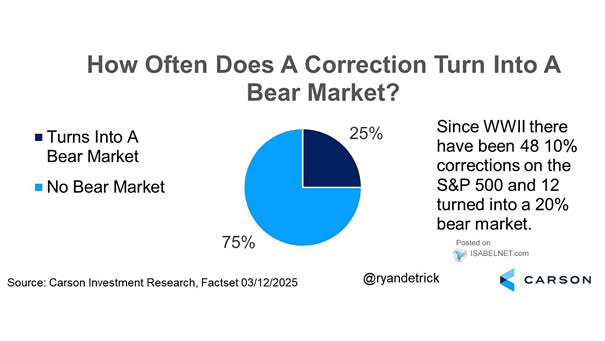
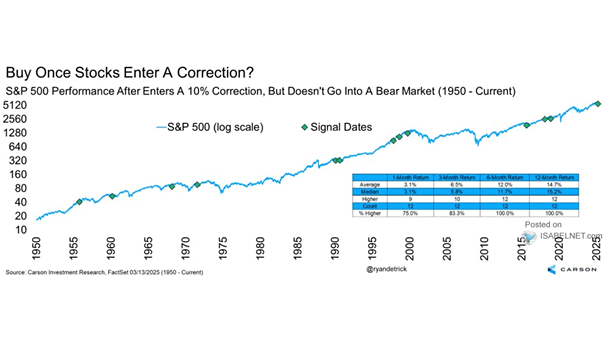
How Often Does a Correction Turn into a Bear Market?

How Often Does a Correction Turn into a Bear Market? Historically, a 10% correction rarely leads to a 20% bear market without economic downturns, earnings declines, or rate hikes. With no very serious adverse indicators currently, a bear market seems unlikely in the near term. Image: Carson Investment Research
ISABELNET Cartoon of the Day

ISABELNET Cartoon of the Day As U.S. stocks tumble, bears are writing eulogies for the market. Bulls, on the other hand, are buying the dip like there’s no tomorrow, which is ironically what bears foresee! Happy Friday, Everyone! 😎

ISABELNET Cartoon of the Day

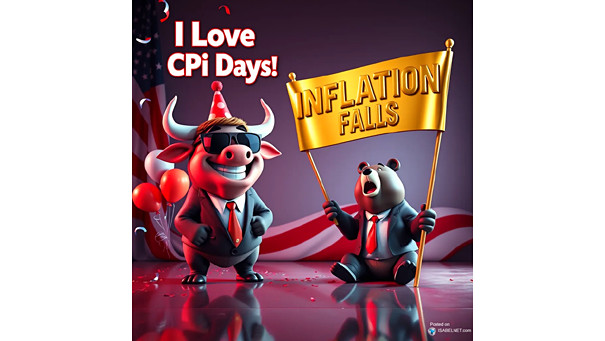
ISABELNET Cartoon of the Day February’s CPI inflation drops to 2.8%, beating the 2.9% forecast. On CPI days, bulls are like kids in a candy store, while bears sit in the corner, sulking like they forgot their party hats! Happy Great Day, Everyone! 😎