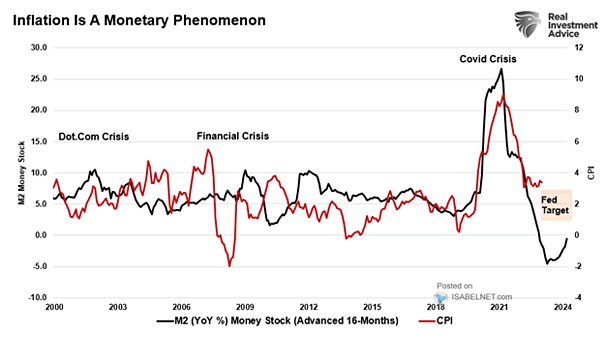
M2 Money Supply and CPI Inflation
M2 Money Supply and CPI Inflation The significant decline in money supply growth is one of the factors contributing to the contraction of inflation in the United States. Image: Real Investment Advice
M2 Money Supply and CPI Inflation The significant decline in money supply growth is one of the factors contributing to the contraction of inflation in the United States. Image: Real Investment Advice

M2 Annual % ROC (Advanced 12-Months) vs. GAAP Earnings (Leading Indicator) The significant decline in M2 growth puts GAAP earnings at risk. Image: Real Investment Advice
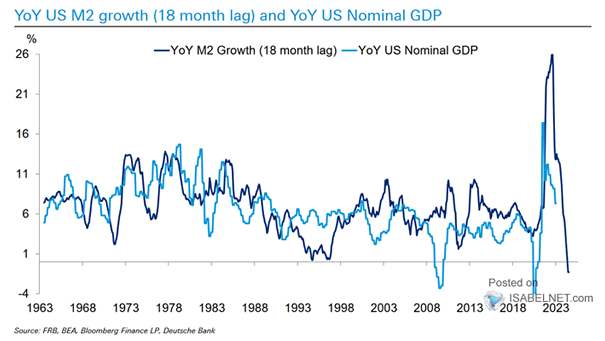
M2 Growth vs. U.S. Nominal GDP The sharp contraction in M2 growth could be a cause for concern when it comes to U.S. nominal GDP growth. Image: Deutsche Bank
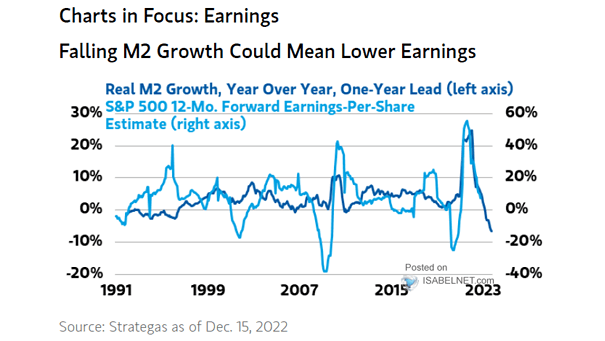
EPS – Real M2 Growth vs. S&P 500 12-Month Forward Earnings-Per-Share Estimate The decline in real M2 growth does not bode well for S&P 500 earnings. Image: Morgan Stanley Wealth Management

Inflation – CPI vs. M2 M2 growth tends to lead CPI by 16 months, suggesting lower U.S. inflation ahead. Image: Morgan Stanley Research
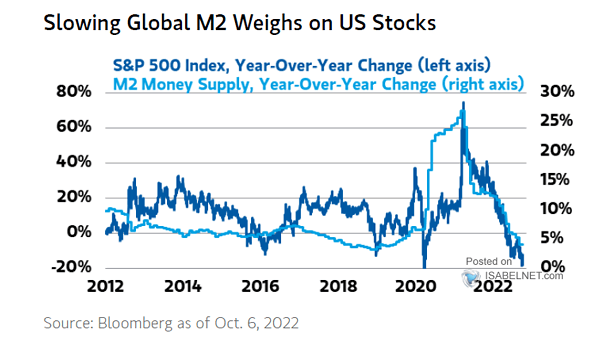
S&P 500 Index vs. M2 Money Supply Global M2 money supply growth has a significant impact on U.S. stocks. Image: Morgan Stanley Wealth Management
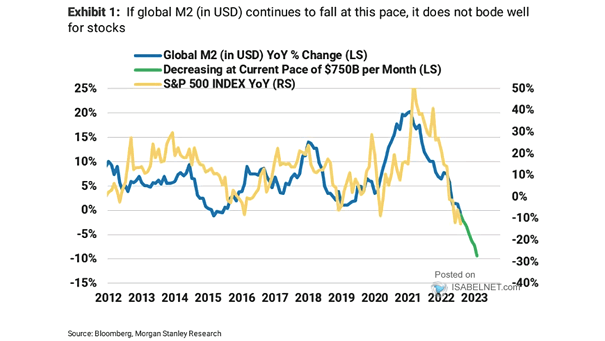
Global M2 and S&P 500 Index The decrease in global liquidity is potentially bad news for U.S. equity returns. Image: Morgan Stanley Research
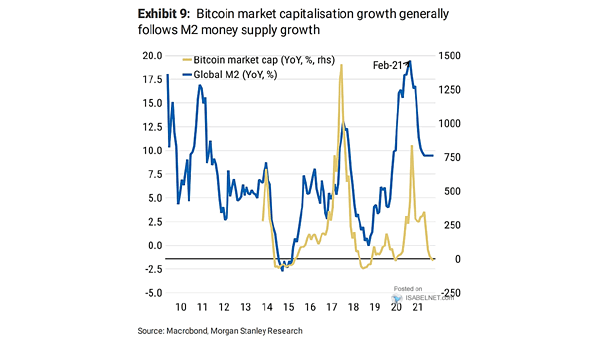
Bitcoin Market Capitalization and Global M2 Money Supply Bitcoin could fall if global M2 money supply continues to slow. Image: Morgan Stanley Research
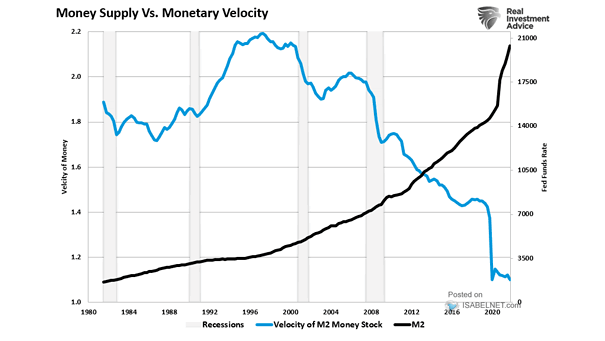
M2 – Money Supply vs. Monetary Velocity Is printing more money good for the U.S. economy? Despite strong M2 growth, money velocity has declined. Image: Real Investment Advice
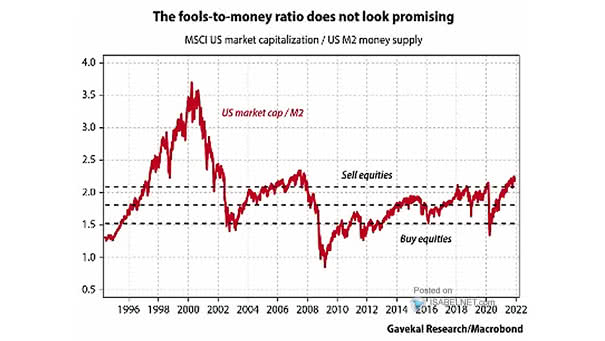
Valuation – MSCI U.S. Market Capitalization / U.S. M2 Money Supply Should investors take a cautious approach to the U.S. stock market? Image: Gavekal, Macrobond
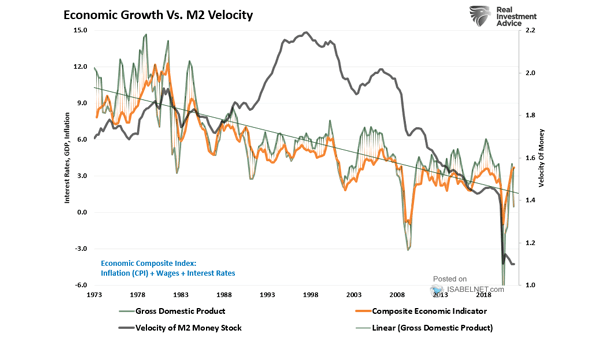
Economic Growth vs. M2 Velocity The decline in economic growth has coincided with a collapse in M2 velocity Image: Real Investment Advice