S&P 500 Bear Markets
S&P 500 Bear Markets S&P 500 bear markets tied to recessions don’t end before the recession starts. Those without a recession are rare and usually short. Image: TS Lombard
S&P 500 Performance After Enters a 10% Correction, But Doesn’t Go into a Bear Market Historically, when the S&P 500 falls 10% without entering a bear market, it’s a potential buying opportunity. Since 1950, it has always been higher 6 and 12 months later, with a median 12-month return of 15.2%. Image: Carson Investment Research
How Often Does a Correction Turn into a Bear Market? Historically, a 10% correction rarely leads to a 20% bear market without economic downturns, earnings declines, or rate hikes. With no very serious adverse indicators currently, a bear market seems unlikely in the near term. Image: Carson Investment Research
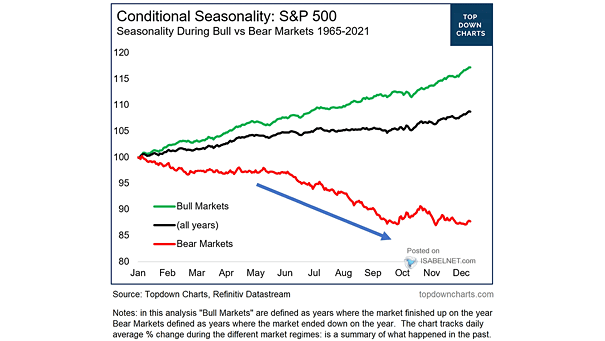
S&P 500 – Seasonality During Bull vs. Bear Markets The sell-in-May effect may be more relevant in bear markets. In bull markets, it may be seen as a missed opportunity for potential gains, given the positive momentum and upward trends typically observed in the market. Image: Topdown Charts
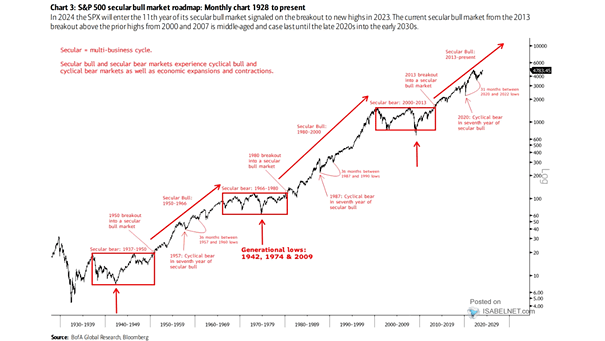
Structural Bull and Bear Markets Structural bear markets can be very painful for investors, as they can lead to prolonged periods of market decline and economic hardship. Image: Morgan Stanley Wealth Management
Peak-to-Trough Declines in Historical Bear Markets Since 1929 A new bull market in U.S. stocks has officially begun, marking the end of the bear market. Image: BofA US Equity & US Quant Strategy
Bear Market – List of Indicators That Have Typically Occured Before Market Bottom Only 50% of signposts have been triggered vs. 80% before prior market bottoms. Image: BofA US Equity & Quant Strategy Click the Image to Enlarge
Recessionary Bear Markets – S&P 500 Total Return Recessionary bear market lows can present good buying opportunities for long-term investors. Image: BofA Research Investment Committee
Fed Funds Rate vs. Recessionary Bear Market Lows Fed rate cuts are historically not bullish for the S&P 500. Image: BofA Research Investment Committee
Secular Bull Markets vs. Secular Bear Markets – S&P 500 / Gold Despite occasional market fluctuations and concerns about overvaluation, the S&P 500 is still in a secular bull market. Image: Morgan Stanley Research
S&P 500 Index – Bull vs. Bear Market Will the S&P 500 return to its all-time high as it remains in a long-term trending bull market? Image: Real Investment Advice