Bonds Flows
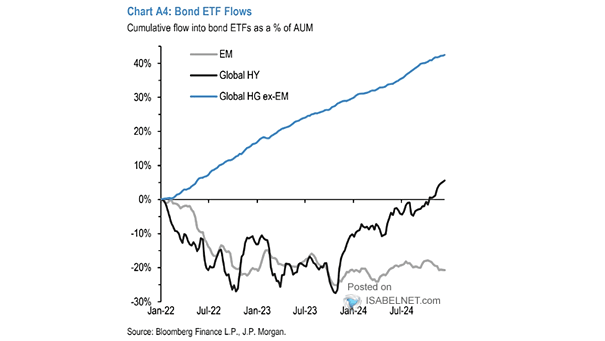
Bonds Flows Since January 2024, there has been a notable trend of strong inflows into bond ETFs, particularly high-yield bonds, driven by favorable yield conditions and an overall “risk-on” sentiment in the market. Image: J.P. Morgan
Bonds Flows Since January 2024, there has been a notable trend of strong inflows into bond ETFs, particularly high-yield bonds, driven by favorable yield conditions and an overall “risk-on” sentiment in the market. Image: J.P. Morgan
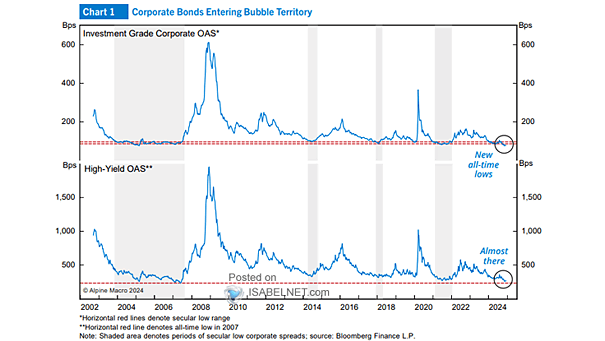
U.S. Corporate Bond Spreads U.S. corporate bond spreads are currently at historically tight levels, suggesting potential bubble-like conditions. While a major correction is not guaranteed, several factors indicate rising risks in the first half of 2025. Image: Alpine Macro

High-Yield Bond Returns 2024 has proven to be a terrific year for low-quality high yield investments, particularly within the CCC-rated cohort, which has seen returns exceeding 16%, as economic resilience exceeded expectations. Image: Morgan Stanley Wealth Management
Equity, Bond, FX and Oil Volatility Premiums Volatility premiums have significantly declined across asset classes after the U.S. elections. As election results become known, market uncertainty diminishes, leading to lower volatility premiums and increased stability. Image: Deutsche Bank Asset Allocation
U.S. Bond Yields The era of ultra-low interest rates that followed the 2008 financial crisis should be seen as a historical anomaly. It is unlikely that U.S. bond yields will return to their post-crisis lows. Image: Gavekal, Macrobond
IG Bond Flows Investment-grade corporate bond funds continue to attract investors, resulting in the biggest 5-week inflow. Image: BofA Global Investment Strategy
Spread Between BBB-Rated Corporate Bond Yield and 90-Day U.S. Treasury Bill Yield The recent increase in the spread between IG credit yield and cash yield marks a significant shift from a 43-year low. Should investors favor U.S. Treasury bills over IG bonds? Image: BofA Global Investment Strategy
U.S. Treasury Bond Future – 10Y Futures Positions Speculators have significantly increased their short positions in U.S. Treasury 10Y futures, reflecting a strong bearish sentiment among traders. Image: Deutsche Bank Asset Allocation
U.S. Long Term Government Bonds (+15y) Rolling 10-Year Annualized Returns Long-dated U.S. Treasury 10-year returns are currently nearing 62-year lows, raising questions about the potential for better returns in the future. Image: BofA Global Investment Strategy
Equities vs. Bonds Recent trends suggest that the risk/reward profile of bonds, particularly U.S. Treasuries, has become more favorable compared to equities. Image: Gavekal, Macrobond
Flows into Equity and Bonds Funds Substantial inflows into equity and bond funds are fueled by investor optimism regarding falling inflation and the potential for interest rate cuts by the Fed. Image: Deutsche Bank Asset Allocation