S&P 500 Quarterly Margin

S&P 500 Quarterly Margin Growth in the high-margin tech sector, economies of scale, network effects, and supportive financial and regulatory environments—key structural shifts—have pushed the S&P 500’s profit margins to nearly a four-year high. Image: Deutsche Bank Asset Allocation

U.S. Net Margin Debt

U.S. Net Margin Debt So far, U.S. margin debt as a share of market capitalization remains elevated, which reflects ongoing confidence in the market. Image: Goldman Sachs Global Investment Research

Margin Debt and MoM Change

Margin Debt and MoM Change The recent three-month, $90 billion decline in margin debt is not characteristic of what is typically observed at market tops, where margin debt tends to rise or peak amid speculative excess. Image: Fundstrat Global Advisors, LLC

Profit Margins within S&P 500 Names

Profit Margins within S&P 500 Names Profit margins in the S&P 500 are elevated. As AI adoption accelerates, it is likely to have a transformative impact on profit margins across industries, with the tech sector leading this trend. Image: Goldman Sachs Global Investment Research

Consensus Estimated Margin Growth

Consensus Estimated Margin Growth Slower economic growth and rising costs are expected to lead to a decline in S&P 500 margin estimates later this year. Image: Goldman Sachs Global Investment Research

S&P 500 Profit Margin

S&P 500 Profit Margin Profit margin growth in the S&P 500 is broadening, extending beyond mega-caps and the tech sector. This trend is expected to continue in 2025, indicating a healthier and more diverse market outlook. Image: Societe Generale Cross Asset Research

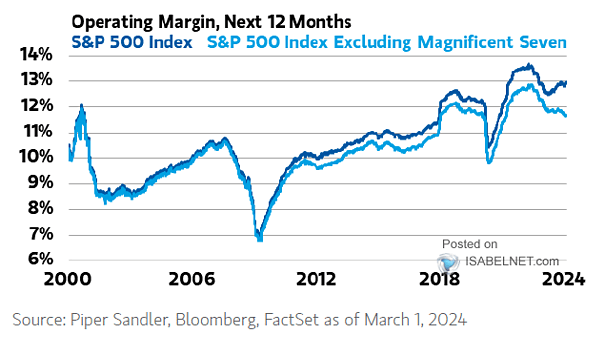
S&P 500 Index – Estimated Next 12-Month Operating Margin

S&P 500 Index – Estimated Next 12-Month Operating Margin The decline in S&P 500 operating margins excluding the Magnificent Seven persists, suggesting that margin headwinds could remain challenging. Image: Morgan Stanley Wealth Management
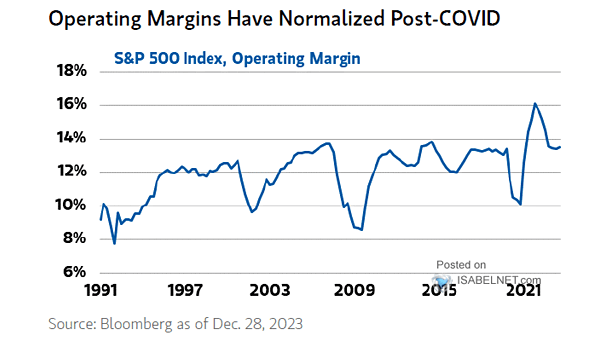
S&P 500 Operating Margin

S&P 500 Operating Margin After the COVID-19 pandemic, the operating margins of companies in the S&P 500 have returned to a state of normalcy, leading to a positive trend of improved profitability and cash flows for these companies. Image: Morgan Stanley Wealth Management

S&P 500 – Margin Debt vs. Long-Term Trend

S&P 500 – Margin Debt vs. Long-Term Trend A rise in the ratio of margin debt to the S&P 500 market cap could indicate a bullish outlook for the U.S. stock market, potentially signaling confidence in the market’s upward trajectory. Image: Topdown Charts

S&P 500 and 12-Month Rate of Change in Margin Debt

S&P 500 and 12-Month Rate of Change in Margin Debt The rise in margin debt in June and July can be seen as a bullish signal for U.S. equities, indicating increased optimism and risk appetite among investors. Image: BofA Global Research Click the Image to Enlarge