S&P 500 Equity Risk Premium
S&P 500 Equity Risk Premium With the U.S. equity risk premium at low levels, investors face a difficult landscape in which the risks of equity investments may not be sufficiently rewarded. Image: BCA Research
Risk Appetite Indicator for Different Asset Classes Investors have sharply shifted toward risk aversion due to escalating tariff policies and eroding market visibility. Image: Goldman Sachs Global Investment Research
What Investors Consider the Biggest Risk to Markets Right Now The risk of a trade war triggering a global recession is a pressing concern for investors, as it threatens economic growth, financial stability, and market confidence. Image: Yahoo Finance
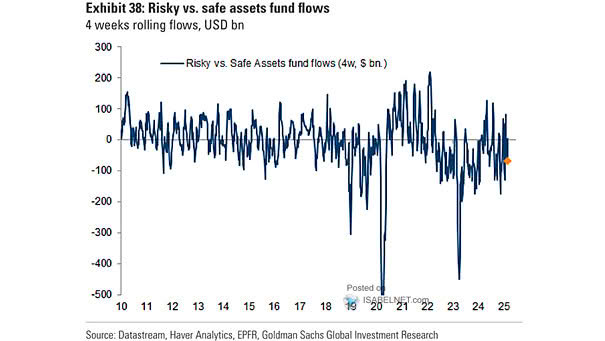
Risky vs. Safe Assets Fund Flows The ongoing preference for safe assets over risky ones indicates investor wariness about market conditions and a focus on capital preservation in uncertain times. Image: Goldman Sachs Global Investment Research
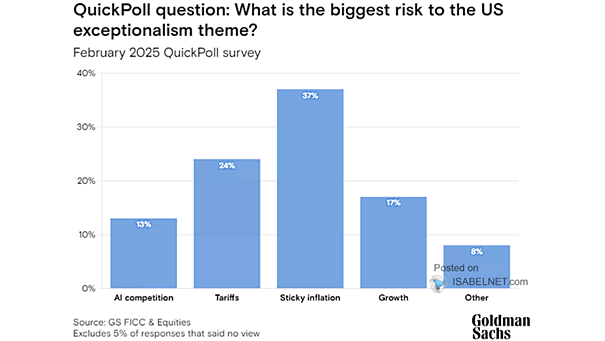
Survey – What Is the Biggest Risk to the U.S. Exceptionalism Theme? While the U.S. economy has shown resilience, a recent survey highlights sticky inflation as the biggest risk to U.S. exceptionalism. Image: Goldman Sachs Global Investment Research
S&P 500 Equity Risk Premium With the S&P 500 equity risk premium hitting multi-decade lows, investors may find bonds more appealing than stocks. Image: Goldman Sachs Global Investment Research
Equity Risk Premium The equity risk premium, at the 94th percentile from 2010 and at the 67th percentile from 2000, suggests that investors may not be receiving adequate compensation for the risks associated with investing in U.S. stocks. Image: J.P. Morgan Equity Macro Research
FMS Investors – Biggest “Tail Risk” Concerns about geopolitical conflict have risen among FMS investors, with 33% now viewing it as the biggest “tail risk” for the global economy, primarily due to its potential negative impact on financial markets and investments. Image: BofA Global Fund Manager Survey
Sentiment – Global Equity Risk-Love The Global Equity Risk-Love indicator, currently at the 68th percentile, has moved out of the euphoria territory, allowing for potential upside as we approach year-end. Image: BofA Predictive Analytics
FMS Investors – Net % Taking Higher than Normal Risk Levels In September, FMS risk appetite has significantly decreased, reaching a 11-month low. This decline reflects growing concerns among FMS investors regarding economic stability and market conditions. Image: BofA Global Fund Manager Survey
Sentiment – Global Risk Demand Index The Morgan Stanley Global Risk Demand Index indicates that investors’ risk appetite is very low, which can often be seen as a contrarian indicator, where extreme pessimism might signal a potential rebound in equity markets. Image: Morgan Stanley