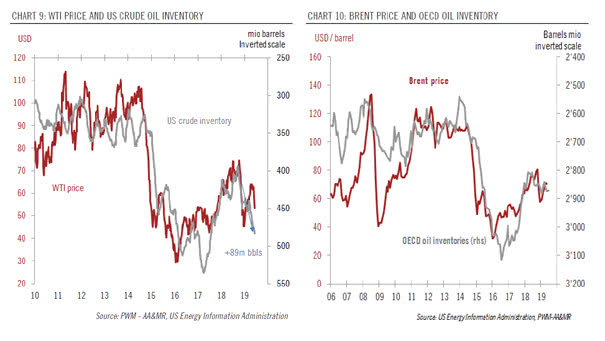
WTI Price and Brent Price vs. Oil Inventory
WTI Price and Brent Price vs. Oil Inventory Oil inventories suggest that the price of oil is currently fairly priced. Image: Pictet Wealth Management
WTI Price and Brent Price vs. Oil Inventory Oil inventories suggest that the price of oil is currently fairly priced. Image: Pictet Wealth Management
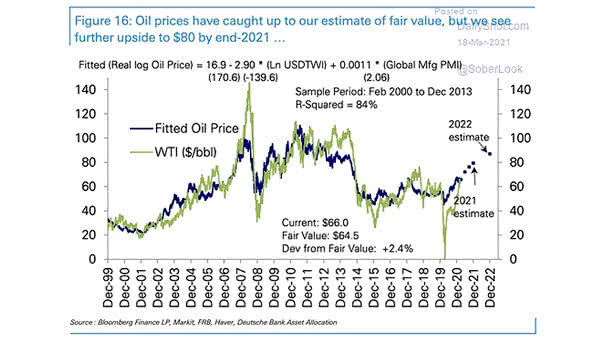
Oil Price Fair Value Oil is trading more than 50% above its estimate of medium-term fair value. Outside the 2022 shock peak, the market has rarely looked this stretched, leaving plenty of room for a pullback if conditions normalize. Image: Deutsche Bank Asset Allocation
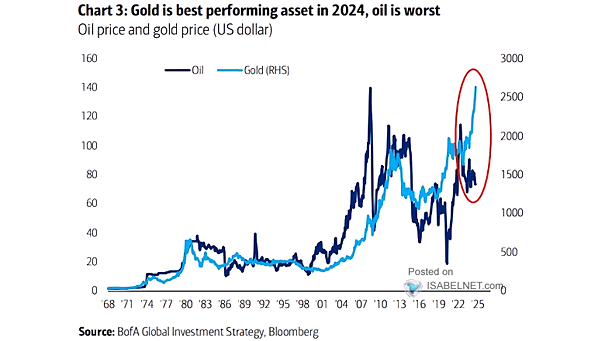
Gold vs. Oil vs. Fed Pricing After moving opposite to oil in March and April, gold diverged in May and is now trading more in line with Fed rate expectations. Image: Deutsche Bank Research
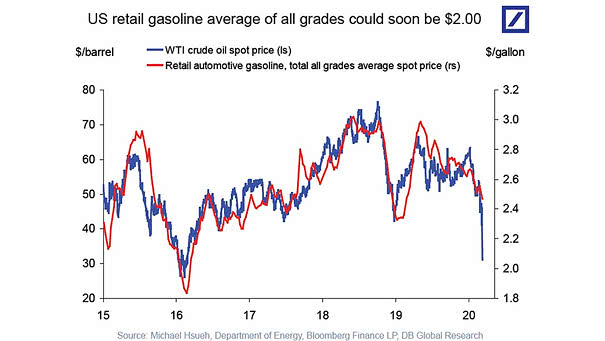
Retail Gasoline Price Change Between February 23 and April 27, 2026 The Middle East conflict is sending fuel costs soaring across Asia, with gasoline prices in Southeast Asia up 37% since the war began. In the U.S., prices have surged 42%, a sharp rise that is hard to ignore. Image: J.P. Morgan Commodities Research
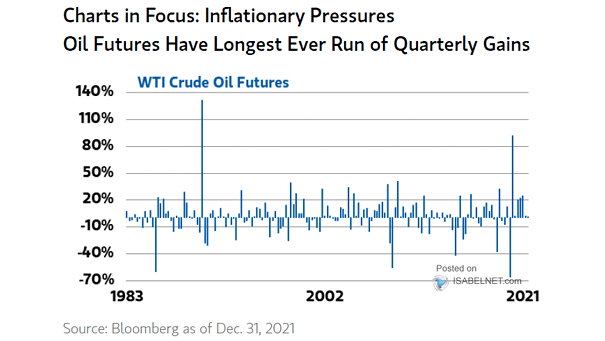
Difference between Front-End Brent Crude Oil Futures and 6-Month Brent Futures Markets are betting the Middle East conflict will be short‑lived. Oil futures signal tight near‑term supply but confidence that disruptions will fade quickly. But markets tend to price in calm faster than reality delivers. Image: Deutsche Bank
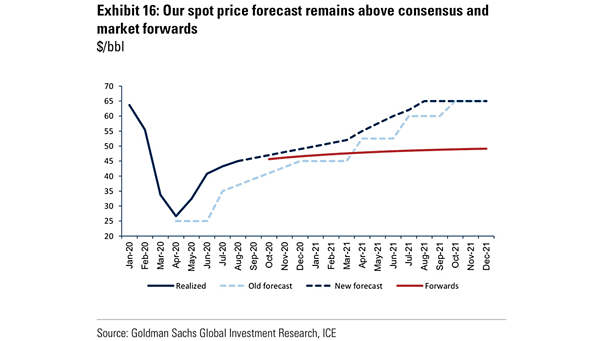
Brent Oil Price Forecast Goldman Sachs has lifted its 2026 oil price forecast, now seeing Brent crude averaging $85 a barrel and WTI at $79, as disruptions in the Strait of Hormuz keep energy markets on edge. Image: Goldman Sachs Global Investment Research
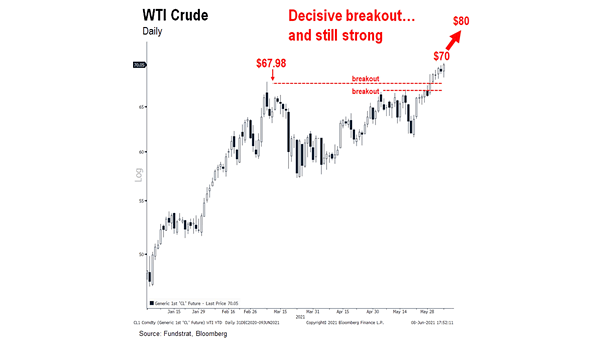
Global Crude Oil Export Global crude exports have tumbled as conflict flares across the Middle East, rattling supply routes. Analysts see several weeks of disruption but some relief ahead if tensions cool. Image: J.P. Morgan Commodities Research
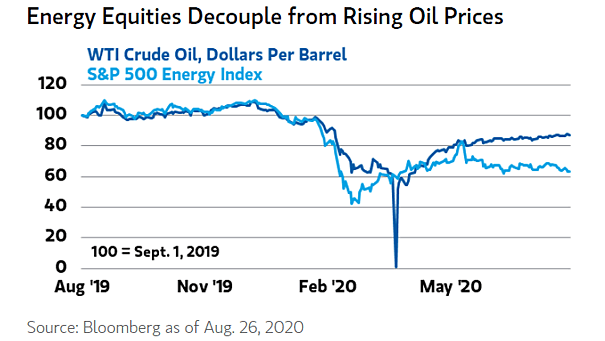
Brent Crude Oil vs. S&P 500 Index A short-term spike in oil prices may cause market jitters, but only a sustained, significant increase would meaningfully affect U.S. stocks and the broader economy; currently, economic and equity impacts remain limited. Image: Bloomberg
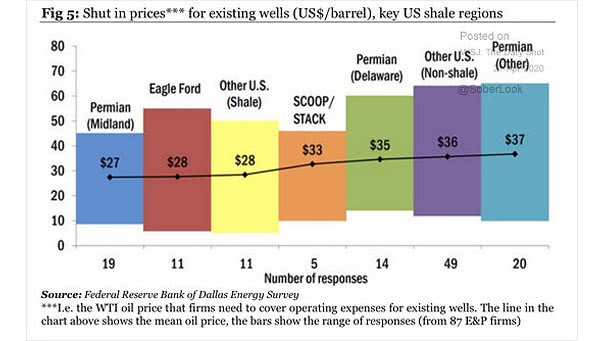
Breakeven Prices for Existing U.S. Oil Wells Breakeven prices for existing U.S. oil wells highlights that the current WTI oil price is too low for oil companies to make a decent return. Image: Federal Reserve Bank of Dallas Energy Survey
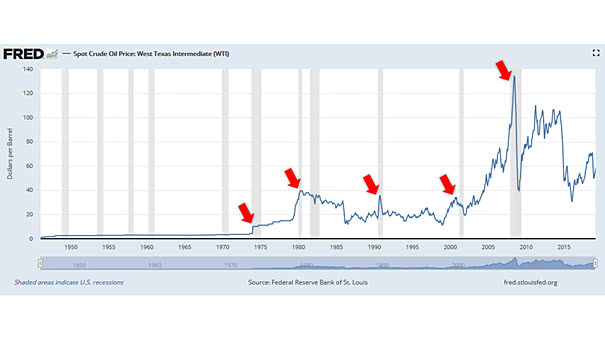
Does Surging Oil Prices Cause Recession? Historically, a rise oil prices can cause recession because high inflation tends to lead to higher interest rates. But nowadays, oil shale production in the US limits the rise in oil prices and makes it possible to avoid a future crisis like the one in 2008.