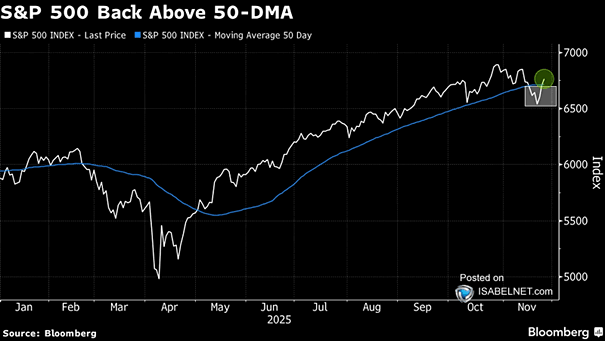
S&P 500 at the Start of a Presidential Term

S&P 500 at the Start of a Presidential Term The S&P 500 experienced its worst start to a U.S. presidential term in decades after the president’s inauguration on January 20, 2025. Hopes tied to tax cuts and deregulation faded fast as trade-war fears took center stage. Image: Bloomberg
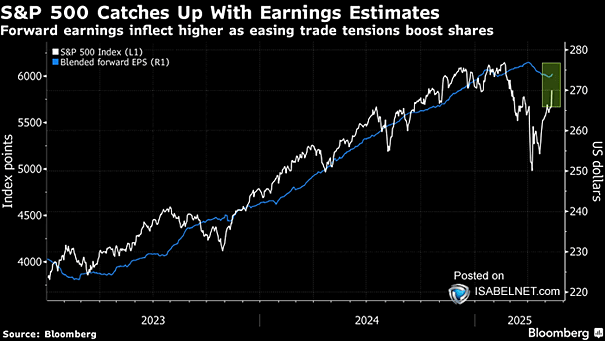
S&P 500 Index and Blended Forward EPS

S&P 500 Index and Blended Forward EPS Citigroup strategists raised their year-end S&P 500 target to 6,600 points, up from 6,300, expecting that tax cuts introduced in July 2025 will counterbalance the negative impact of tariffs on U.S. companies. Image: Bloomberg

S&P 500 Index Around Election Day – 2016 vs. 2024

S&P 500 Index Around Election Day – 2016 vs. 2024 Trump’s 2024 win sparks investor optimism, reminiscent of 2016, with promises of tax cuts and deregulation. Wall Street’s post-election party is so wild, even the bears are buying drinks for the bulls! Image: Ned Davis Research

Share of Passive vs. Active Equity Funds

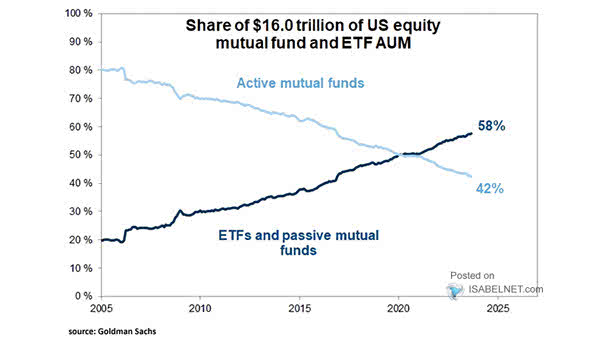
Share of U.S. Equity Mutual Fund and ETF AUM Passive U.S. equity funds surpassed active ones in 2020. Investors prefer them due to their lower fees, potential tax benefits, and the belief that active fund managers cannot consistently outperform the market. Image: Goldman Sachs Global Investment Research

Flows by Year into Active vs. Passive Funds

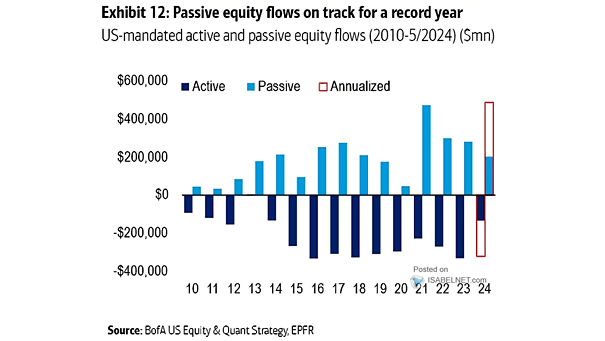
Flows by Year into Active vs. Passive Funds Passive funds are growing in popularity as investors prioritize lower fees, potential tax advantages, and doubt active fund managers’ ability to consistently outperform the market. As a result, active funds are facing capital outflows. Image: BofA US Equity & Quant Strategy

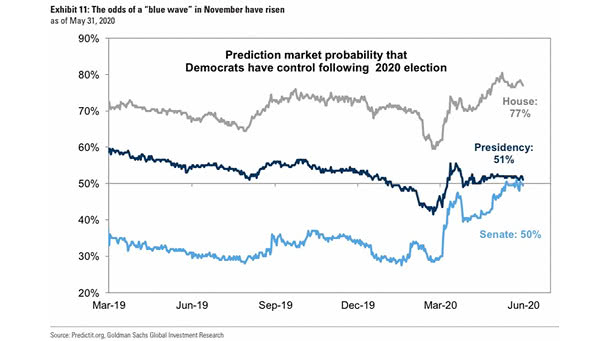
Prediction Market Probability That Democrats Have Control Following 2020 Election

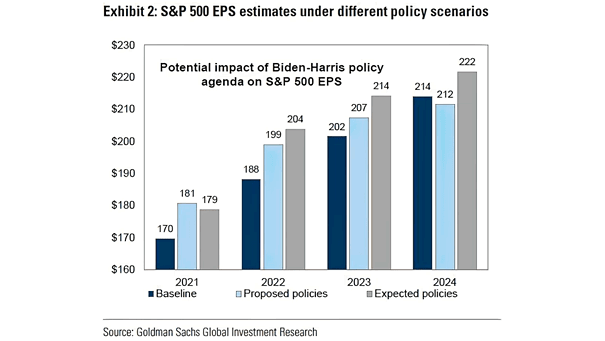
Prediction Market Probability That Democrats Have Control Following 2020 Election According to Goldman Sachs, the odds of a “blue wave” in November have risen and could lift the effective S&P 500 tax rate from 18% back to 26%, reducing the 2021 EPS forecast from $170 to $150. Image: Goldman Sachs Global Investment Research

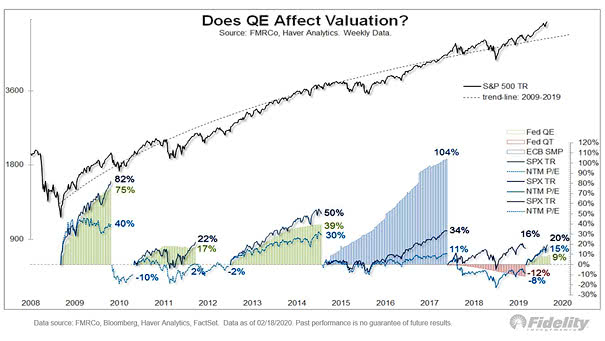
Does Quantitative Easing Affect Valuation?

Does Quantitative Easing Affect Valuation? More fundamentally, low interest rates, high margins, low taxes, buybacks & free cash flow drive stocks higher. Image: Fidelity Investments

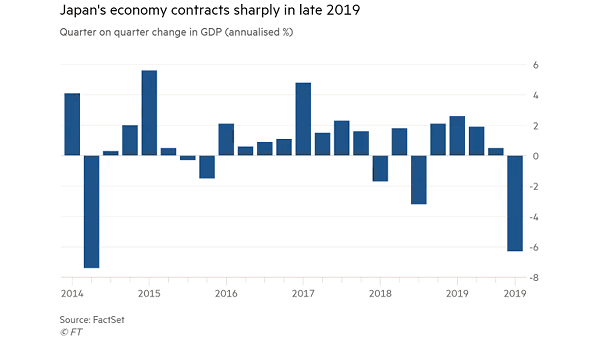
Japan GDP

Japan GDP Japan’s economy shrunk at a 6.3% annual rate in late 2019 after sales-tax hike. Image: Financial Times