S&P 500 Return During Recessions
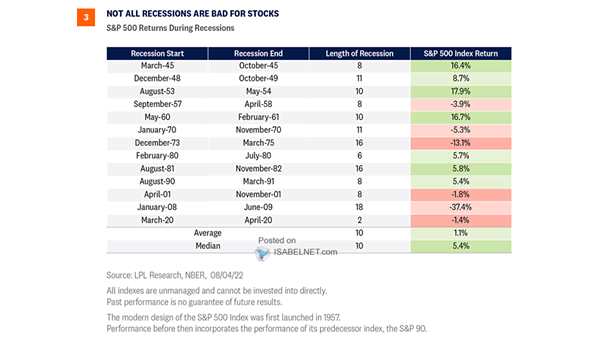
S&P 500 Return During Recessions Historically, a mild recession is not necessarily bad for U.S. stocks. Image: LPL Research
S&P 500 Return During Recessions Historically, a mild recession is not necessarily bad for U.S. stocks. Image: LPL Research
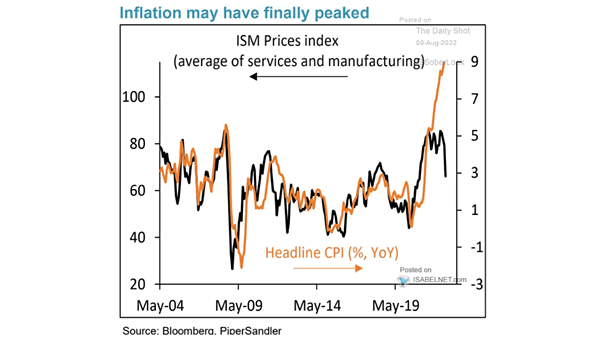
Inflation – ISM Prices Index vs. U.S. Headling CPI The ISM Prices Index suggests that U.S. inflation may have peaked. Image: Piper Sandler
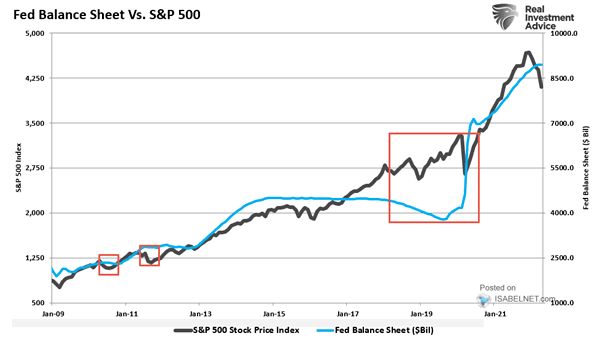
Fed Balance Sheet vs. S&P 500 Should U.S. equity investors be worried as the Fed reduces its balance sheet to combat inflation? Image: Real Investment Advice
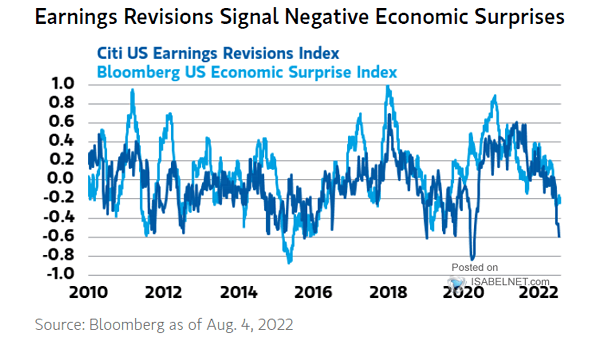
Citi U.S. Economic Surprise Index vs. S&P 500 12-Month Earnings Surprise U.S. earnings revisions suggest negative economic surprises. Image: Morgan Stanley Research
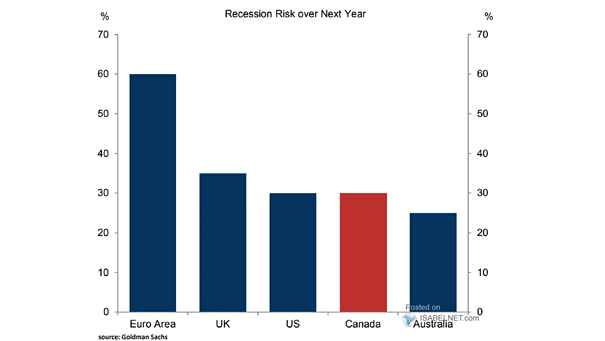
Recession Risk Over Next Year Goldman Sachs’s recession risk in the United States stands at 30% over the next year. Image: Goldman Sachs Global Investment Research
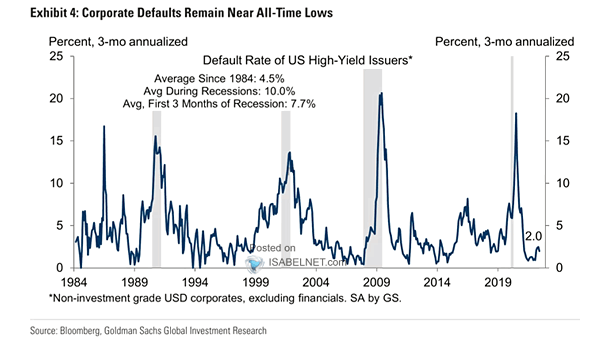
Default Rate of U.S. High-Yield Issuers U.S. corporate defaults are still near all-time lows, which is good news. Image: Goldman Sachs Global Investment Research
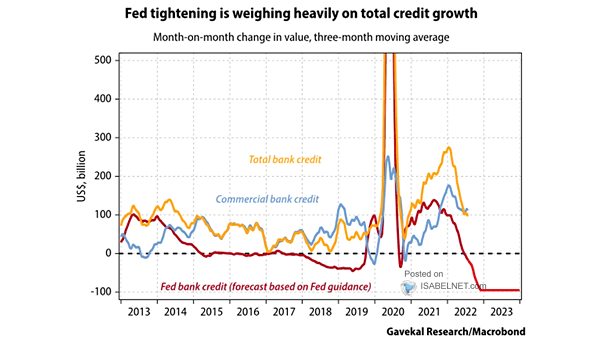
Fed Tightening and Total Credit Growth Fed tightening monetary policy does not bode well for credit growth. Image: Gavekal, Macrobond
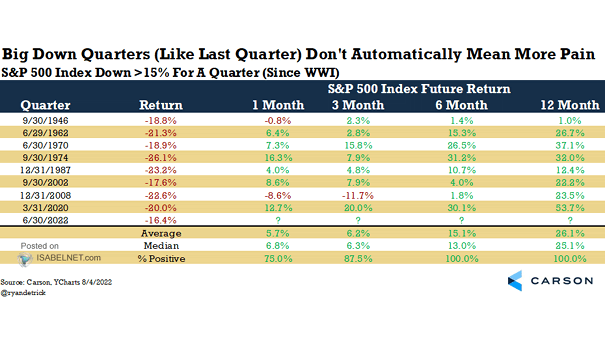
S&P 500 Index Down > 15% for a Quarter Big down quarters tend to be bullish for U.S. stocks over 3, 6 and 12 months. Image: Carson Investment Research
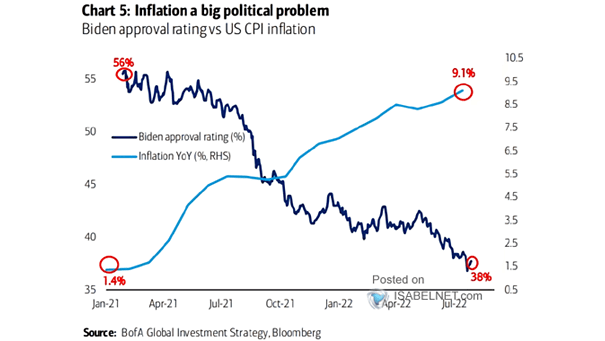
President Biden’s Approval Rating vs. CPI Inflation Inflation continues to weigh on President Biden’s approval rating. Image: BofA Global Investment Strategy
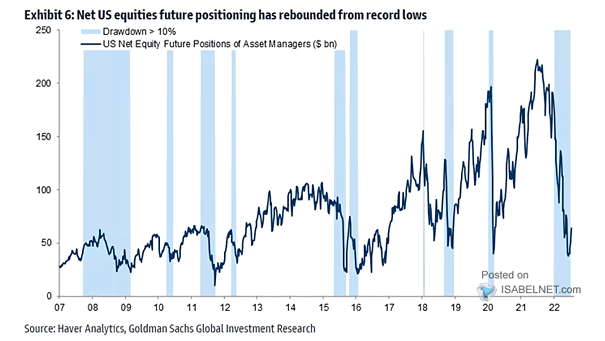
U.S. Net Equity Future Positions of Asset Managers and Drawdown > 10% When will the U.S. equity bear market be over? Image: Goldman Sachs Global Investment Research
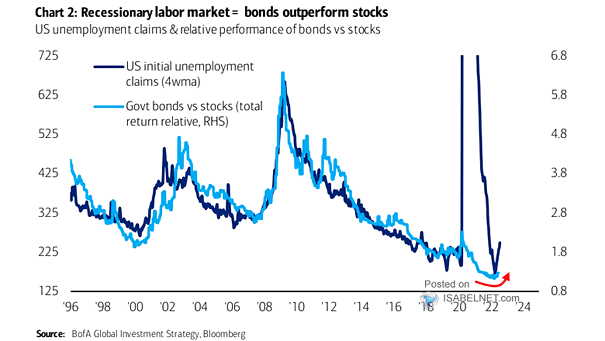
U.S. Initial Unemployment Claims and Relative Performance of Bonds vs. Stocks Bonds tend to outperform stocks when U.S. initial unemployment claims rise. Image: BofA Global Investment Strategy