S&P 500 Performance After 90-90 Days

S&P 500 Performance After 90-90 Days The NYSE “90/90 day” on Friday—when 90% of volume and stocks rose—is rare and bullish. Since 1980, such days often precede strong market gains, with the S&P 500 rising over 90% of the time a year later, averaging 23% gains.

S&P 500 Return After the Fed Waits Between 5-12 Months to Cut

S&P 500 Return After the Fed Waits Between 5-12 Months to Cut Since 1970, whenever the Fed has waited between 5 and 12 months to cut rates, the US stock market has delivered positive returns 90.9% of the time over the following 12 months, with a median gain of 14.5%—giving bulls plenty of reason to…

Valuations – Spread of S&P 500 Minus S&P 500 Equal Weight

Valuations – Spread of S&P 500 Minus S&P 500 Equal Weight The significant valuation gaps between the cap-weighted and equal-weighted S&P 500 result from the high valuations and growth expectations of large companies, which emphasize market concentration and investment risks. Image: Bloomberg

Typical Path of S&P 500 Bottom-Up Consensus EPS Estimate

Typical Path of S&P 500 Bottom-Up Consensus EPS Estimate While positive earnings revisions have been strong recently, this momentum is likely to slow, though it probably won’t fall below the usual historical trend of downward revisions. Image: Goldman Sachs Global Investment Research

MOVE Index and Discretionary Investors Equity Positioning

MOVE Index and Discretionary Investors Equity Positioning Over the past few years, discretionary positioning has exhibited a strong inverse correlation with rates volatility, though this pattern can fluctuate based on market conditions and investor behavior. Image: Deutsche Bank Asset Allocation

Gold – Global Central Bank Holdings

Gold – Global Central Bank Holdings Central bank gold demand cycles respond to global economic and political factors. Recently, demand has increased amid financial instability, currency trust concerns, inflation, sanctions, and geopolitical conflicts. Image: Goldman Sachs Global Investment Research

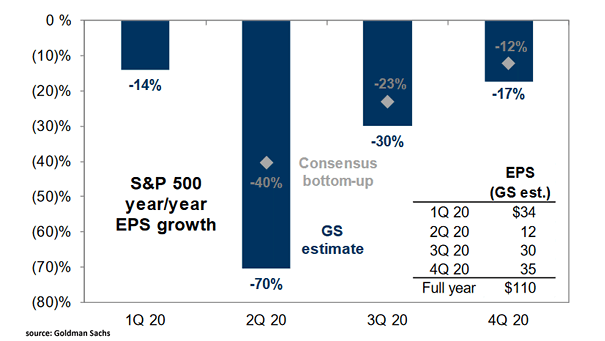
S&P 500 EPS Growth

S&P 500 EPS Growth Analysts project 7% year-over-year earnings growth for the S&P 500 in both Q3 and Q4 of 2025. Image: Goldman Sachs Global Investment Research

Median 1-Year U.S. Inflation by Party

Median 1-Year U.S. Inflation by Party Inflation expectations in the U.S. over the coming 12 months differ sharply along partisan lines, with Republicans anticipating low inflation and Democrats expecting it to rise significantly. Image: Fundstrat Global Advisors, LLC

U.S. Tariff Costs

U.S. Tariff Costs Goldman Sachs forecasts that by October 2025, U.S. businesses will absorb just 8% of Trump-era tariff costs—down from 64%—while the share borne by U.S. consumers rises to 67%. This shift is expected to drive consumer prices higher. Image: Goldman Sachs Global Investment Research

NFIB Confidence vs. U.S. Small-Cap Stocks

NFIB Confidence vs. U.S. Small-Cap Stocks The NFIB Small Business Survey’s annual rate of change closely mirrors U.S. small-cap stock performance, making the NFIB index a key economic indicator for investors in this market segment. Image: Real Investment Advice
S&P 500 vs. Trend Line Growth

S&P 500 vs. Trend Line Growth Long-term trend charts show the S&P 500 trading significantly above its historical growth trajectory, with valuations at elevated levels—implying that U.S. equities are overvalued by traditional measures. Image: Ned Davis Research