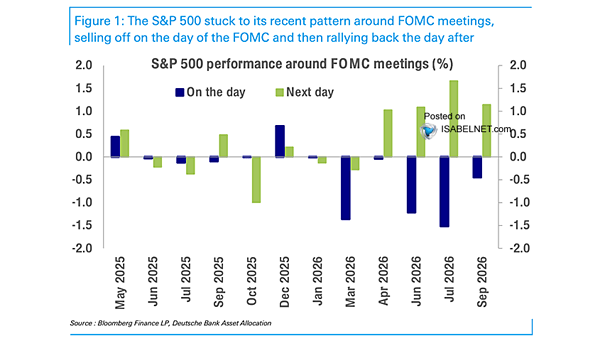
S&P 500 Performance Around FOMC Meetings
S&P 500 Performance Around FOMC Meetings The S&P 500 sold off again after the FOMC meeting last week, only to rally the next day, as investors refocused on what matters most: earnings. Image: Deutsche Bank…
S&P 500 Performance Around FOMC Meetings The S&P 500 sold off again after the FOMC meeting last week, only to rally the next day, as investors refocused on what matters most: earnings. Image: Deutsche Bank…
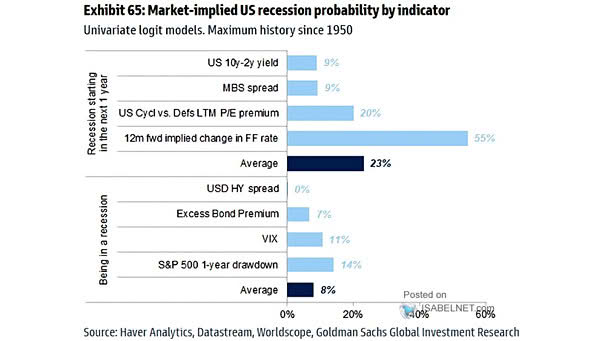
Market-Implied Probability of a Recession Starting Within 1 Year and Market-Implied Probability of Being in a Recession At just 12%, market-implied recession odds for the next year remain below their long-term average, leaving a supportive…
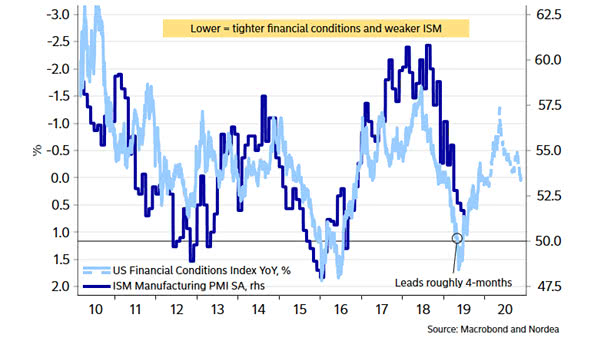
Global Financial Tightness Indicator vs. ISM Manufacturing PMI SA Tighter financial conditions are starting to hit manufacturing sentiment and order flow. If the squeeze persists, the ISM Manufacturing PMI could weaken further, adding pressure to…
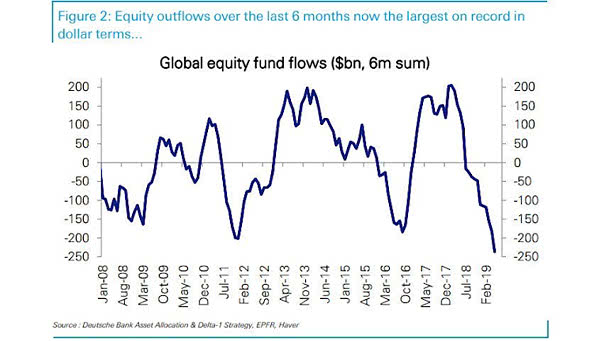
Net Flows into Global Equity Funds Global equity funds have enjoyed strong inflows this year, though weekly flows have grown noticeably more volatile in recent weeks. Image: Goldman Sachs Global Investment Research
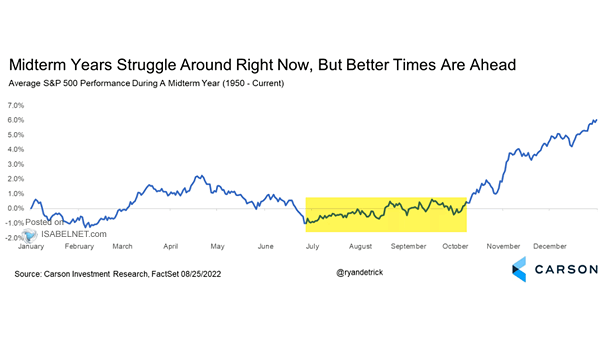
S&P 500 Performance in Midterm Years September has often been challenging for U.S. stocks in midterm years. But October and November have historically been the best months, with risk appetite usually returning as election uncertainty…
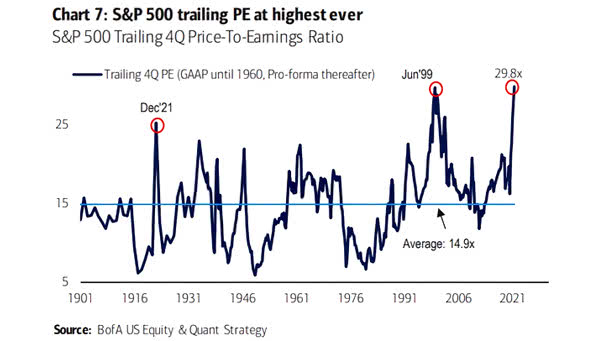
Valuation – S&P 500 Trailing P/E: Current vs. Average Bull-Market Extremes At 26 times trailing earnings, the S&P 500 stands well above its historical average and many previous bull-market peaks, leaving little room for bad…
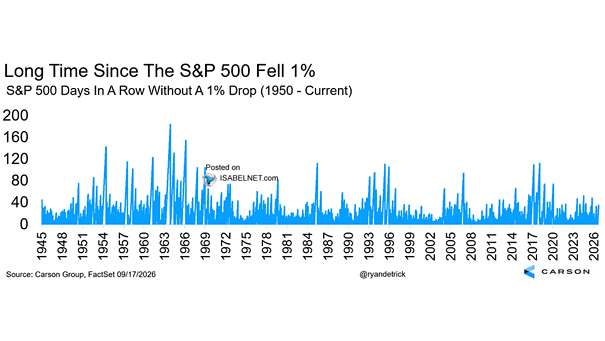
S&P 500 Days in a Row without a 1% Drop Thirty-five trading days without a 1% decline have left the S&P 500 unusually calm. Historically, stretches of such low volatility have been more common in…
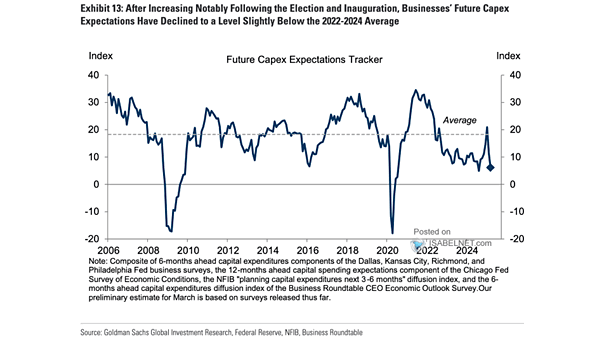
Hyperscaler Capex US hyperscalers are on track to spend $806 billion this year, with annual capex projected to reach $1.234 trillion by 2027. That kind of spending points to an AI infrastructure supercycle, not just…
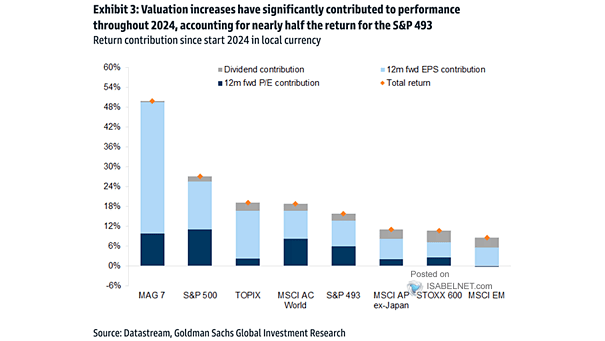
Percentage Contribution of Returns Between Dividends, Earnings and Valuation Earnings, not multiple expansion, have driven global equities since 2025. That makes the rally more durable and less dependent on falling rates or a renewed surge…
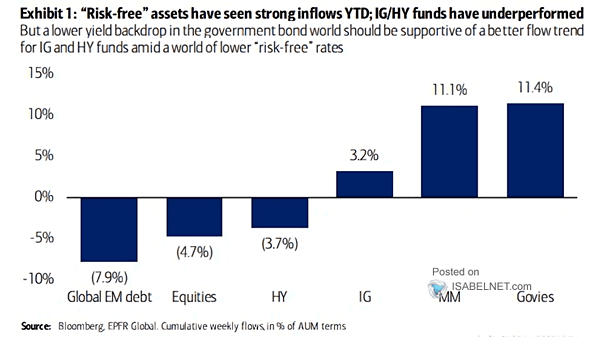
Cumulative Flows Equity inflows have been exceptionally strong this year. Bond demand has held up just as well, even as yields have climbed. Image: Deutsche Bank Asset Allocation
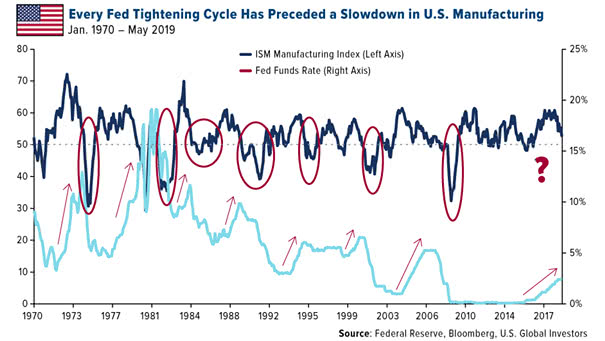
Number of Rate Hikes per Fed Tightening Cycle, 1994 to 2023 Since 1994, the Fed has gone through six tightening cycles. Five lasted for years and involved at least six rate hikes. But with real…