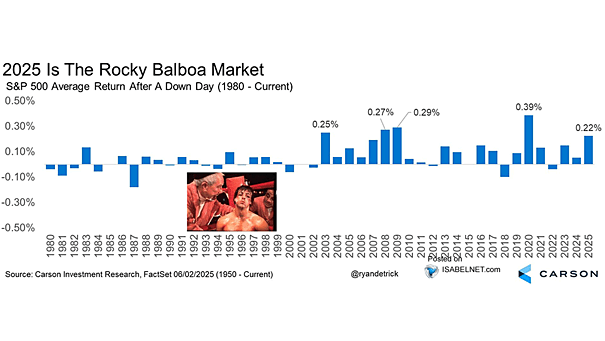
S&P 500 Average Return After a Down Day
S&P 500 Average Return After a Down Day The year 2025 stands out for the S&P 500, especially because of its resilience following daily declines. Since January, it has rebounded by an average of 0.32%…
S&P 500 Average Return After a Down Day The year 2025 stands out for the S&P 500, especially because of its resilience following daily declines. Since January, it has rebounded by an average of 0.32%…
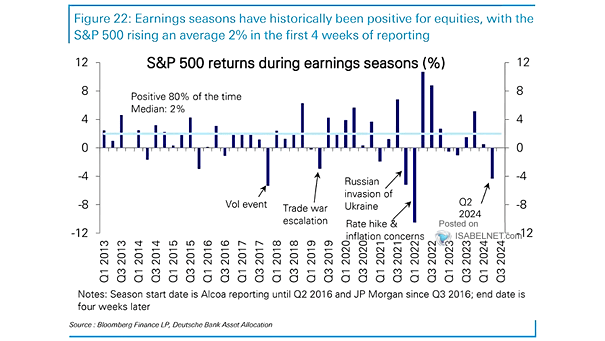
S&P 500 Returns During Earnings Seasons During earnings season, the S&P 500 usually rallies, delivering a median return of 2.0% in the first four weeks, fueled by positive earnings surprises that strengthen investor confidence. Image:…
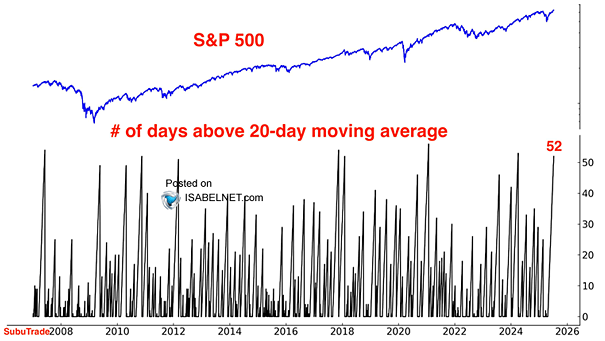
S&P 500 and Number of Days Above 20-Day Moving Average While the S&P 500’s extended period above its 20-day moving average signals strong momentum, historical patterns and technical indicators point to a potential pullback or…
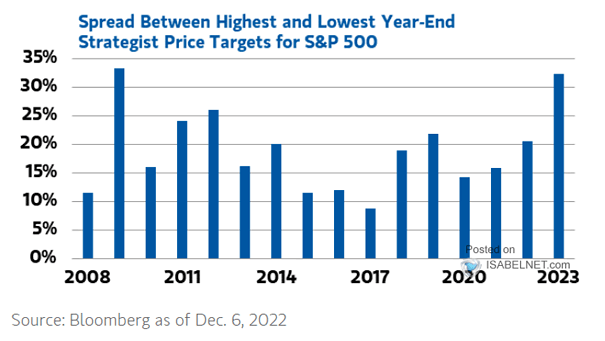
Distribution of Strategist Forecats for S&P 500 Year-End 2025 Index Level Goldman Sachs’ 6600 year-end target for the S&P 500 reflects a confident view on the market’s trajectory, driven by expected Fed easing and strong…
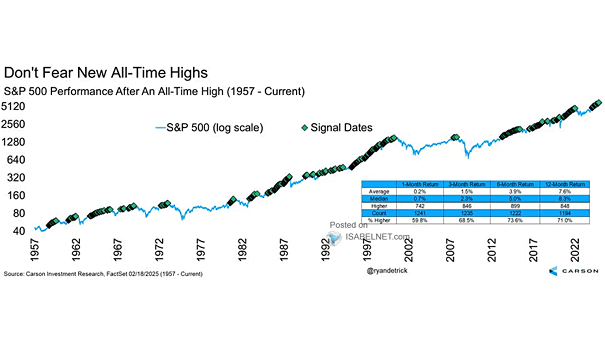
S&P 500 Returns After New All-Time Highs Since 1990, despite periods of volatility, the S&P 500 has typically continued rising after new all-time highs, with a median 12-month gain of 13.5% and positive returns more…
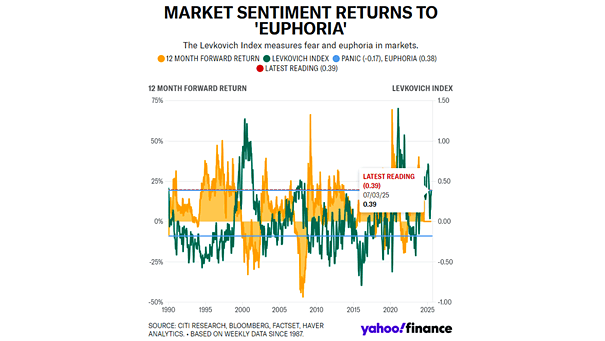
Market Sentiment – Levkovich Index The Levkovich Index, or Panic/Euphoria Model, is currently at “euphoria,” indicating strong investor optimism. This often serves as a contrarian signal that equities may face downward pressure over the next…
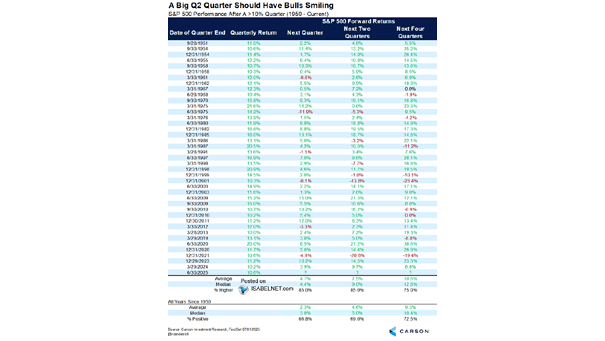
S&P 500 Performance After a >10% Quarter Since 1950, when a quarter’s return exceeds 10%, the next quarter typically performs better than average—gaining 4.7% on average compared to the overall average of 2.3%, and posting…
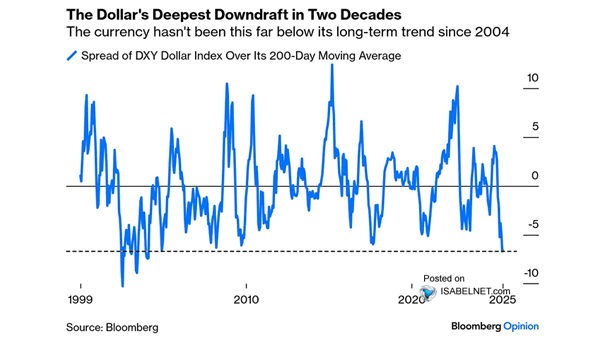
U.S. Dollar and 200-Day Moving Average The DXY dollar’s current position well below its 200-day moving average marks a rare bearish phase, the likes of which have not been seen in two decades, signaling a…
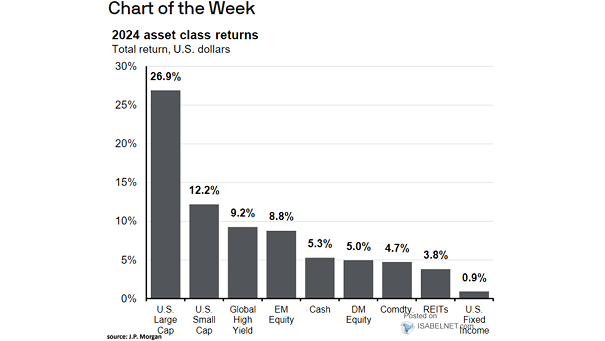
Asset Class Returns Diversified portfolios demonstrated strong resilience during the U.S. stock market drawdowns in the first half of 2025 by cushioning losses and providing more stable returns. Image: J.P. Morgan Asset Management
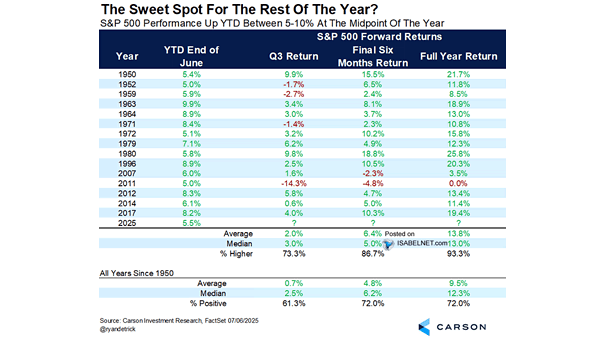
S&P 500 Performance Up YTD Between 5-10% at the Midpoint of the Year Since 1950, when the S&P 500 has been up between 5% and 10% by mid-year, the full-year performance has been positive 93%…
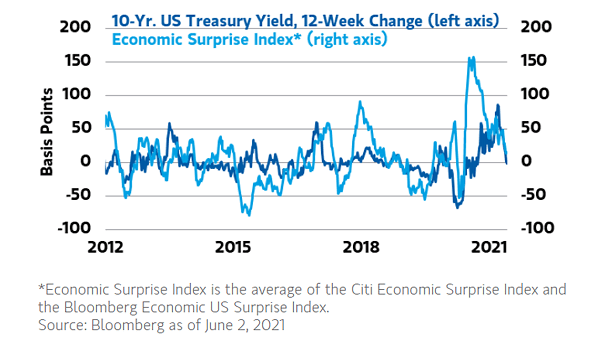
U.S. 10-Year Treasury Yield and Economic Surprise Index Weakening U.S. economic data and evolving fiscal conditions have led Goldman Sachs to revise down Treasury yield forecasts, anticipating a more accommodative monetary policy with earlier and…