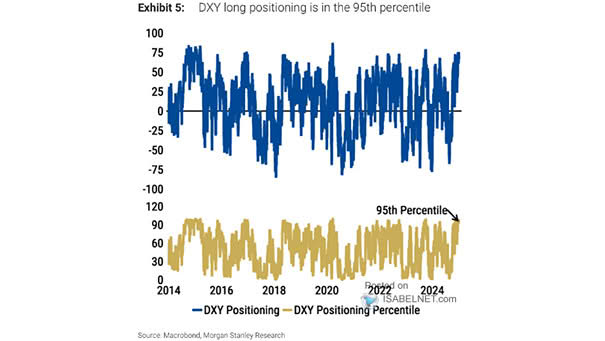
U.S. Dollar Index Positioning

U.S. Dollar Index Positioning The U.S. Dollar Index long positioning being in the 95th percentile indicates an extremely bullish sentiment towards the U.S. dollar, potentially indicating that it is overvalued. Image: Morgan Stanley Research

ISABELNET Cartoon of the Day

ISABELNET Cartoon of the Day It’s inflation day, and bulls are happier than a kid in a candy store—except this time, the candy costs twice as much! Happy “Hump” Day, Everyone! 🐫🐪😎

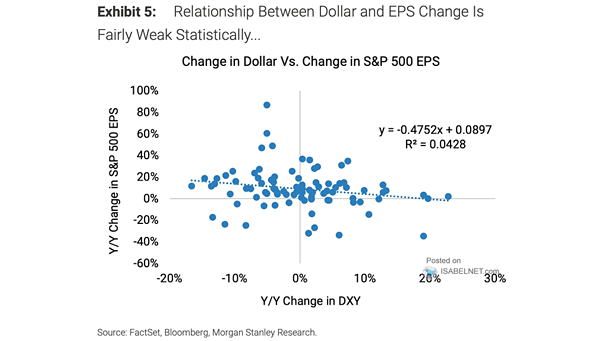
Change in U.S. Dollar vs. Change in S&P 500 EPS

Change in U.S. Dollar vs. Change in S&P 500 EPS While there are instances where the U.S. Dollar and S&P 500 EPS may move in tandem, the overall statistical relationship is weak. Image: Morgan Stanley Research
Survey – U.S. Inflation and EU Inflation

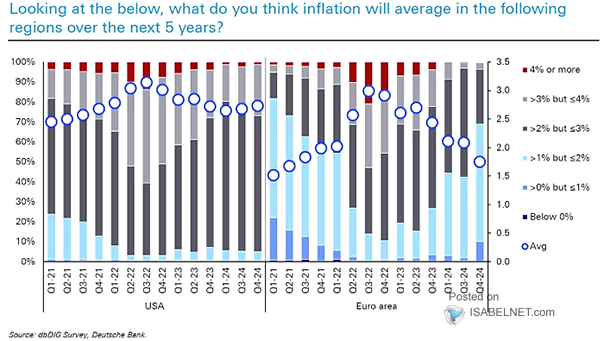
Survey – U.S. Inflation and EU Inflation Inflation expectations are diverging sharply between the United States and Europe. While inflation in the U.S. shows signs of recovery, European expectations have notably declined, dipping below 2% for the first time since late 2021. Image: Deutsche Bank

ISABELNET Cartoon of the Day

ISABELNET Cartoon of the Day Ignoring climate risks in your portfolio is like wearing a parka in a sauna—you might feel cozy now, but you’re in for a sweaty surprise later! Have a Great Day, Everyone! 😎

Currency Futures Positioning

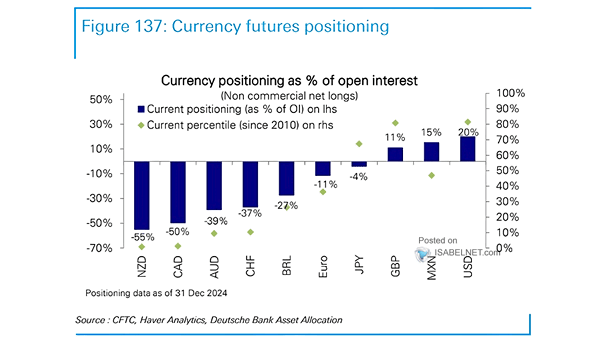
Currency Futures Positioning Despite already high U.S. dollar positioning, Goldman Sachs has upgraded its forecast for the U.S. dollar, expecting it to rally by about 5% in the next 12 months. Image: Deutsche Bank Asset Allocation

ISABELNET Cartoon of the Day

ISABELNET Cartoon of the Day The S&P 500 took a dive last week with a 1.94% loss. It seems bulls are feeling a bit under the weather—maybe too much partying at market highs! Have a Great Week, Everyone! 😎

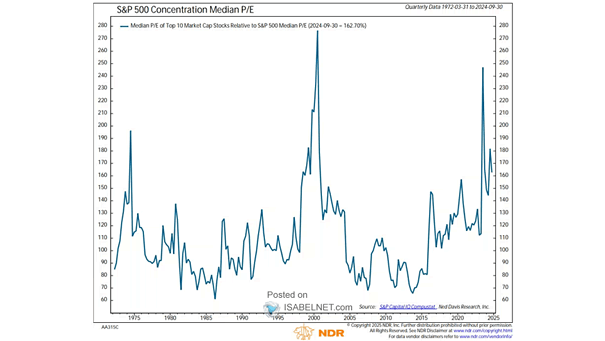
Valuation – S&P 500 Concentration Median P/E

Valuation – S&P 500 Concentration Median P/E While the current median P/E of the top 10 stocks relative to the S&P 500 median P/E is historically high, it is still below the peaks seen during major market bubbles like the dot-com era and the Nifty Fifty period. Image: Ned Davis Research