FMS Net % Expecting Stronger Economy vs. S&P 500

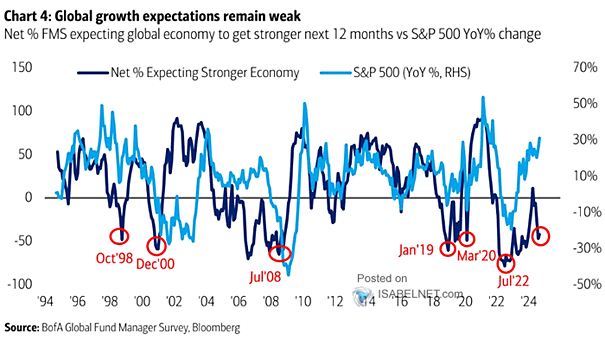
FMS Net % Expecting Stronger Economy vs. S&P 500 FMS investors remain pessimistic, anticipating a weak global economy over the next 12 months, resulting in a widening gap between their macroeconomic views and the performance of U.S. equities. Image: BofA Global Fund Manager Survey
When Will the U.S. Economy Go into Recession?

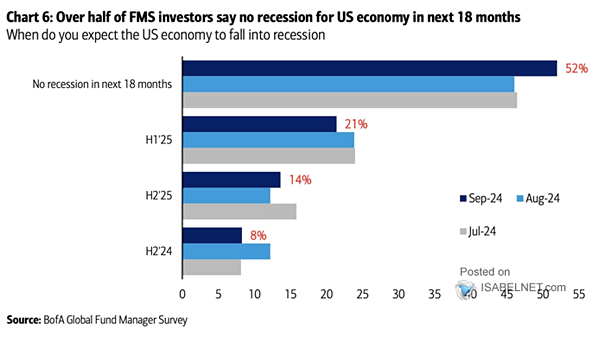
When Will the U.S. Economy Go into Recession? The majority of FMS investors do not currently expect a U.S. recession in the next 18 months, while only 8% foresee one in the second half of 2024 and 35% predict a recession in 2025. Image: BofA Global Fund Manager Survey
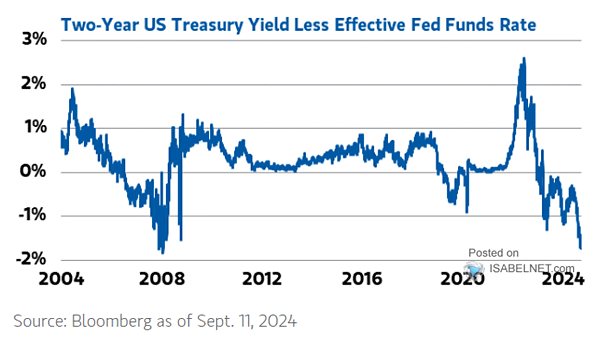
2-Year U.S. Treasury Yield – Fed Funds Rate

2-Year U.S. Treasury Yield – Fed Funds Rate The current spread between the 2-year U.S. Treasury yield and the federal funds rate suggests that the bond market perceives the Federal Reserve’s monetary policy as tight. Image: Morgan Stanley Wealth Management

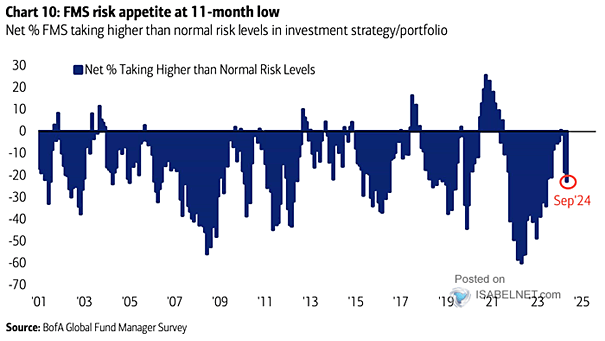
FMS Investors – Net % Taking Higher than Normal Risk Levels

FMS Investors – Net % Taking Higher than Normal Risk Levels In September, FMS risk appetite has significantly decreased, reaching a 11-month low. This decline reflects growing concerns among FMS investors regarding economic stability and market conditions. Image: BofA Global Fund Manager Survey
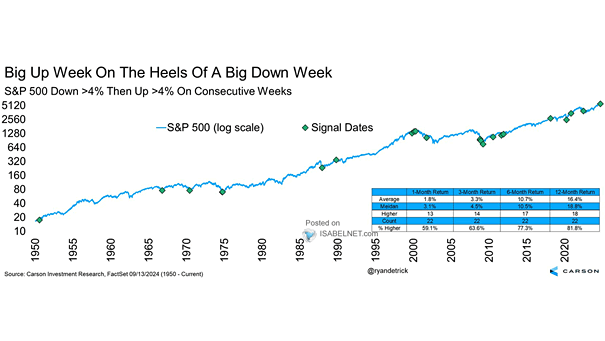
S&P 500 Down >4% Then Up >4% on Consecutive Weeks

S&P 500 Down >4% Then Up >4% on Consecutive Weeks When the S&P 500 experiences a drop of more than 4% in one week followed by a rise of more than 4% the next week, historical data indicates a bullish trend over the next 12 months, with a median gain of 18.8% since 1950. Image:…

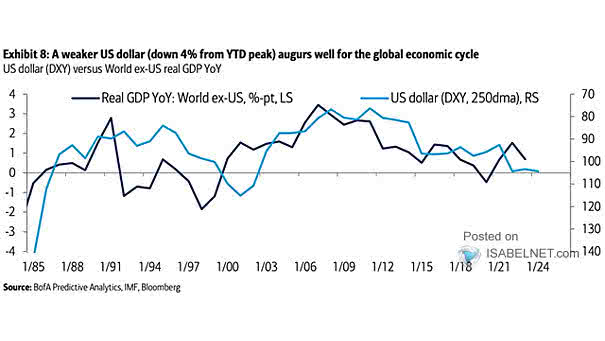
U.S. Dollar Index and Rest of the World GDP

U.S. Dollar Index and Rest of the World GDP A weaker U.S. dollar typically bodes well for the global economy by boosting growth prospects, improving trade dynamics, and encouraging investment in international markets. Image: BofA Predictive Analytics

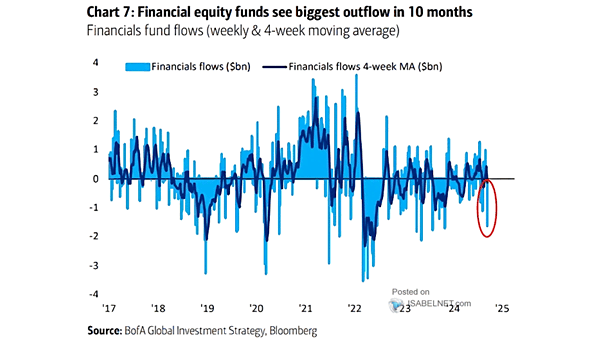
Weekly Financials Flows

Weekly Financials Flows Outflows from financial equity funds highlight a cautious approach from investors, reflecting broader economic concerns and market volatility. Image: BofA Global Investment Strategy

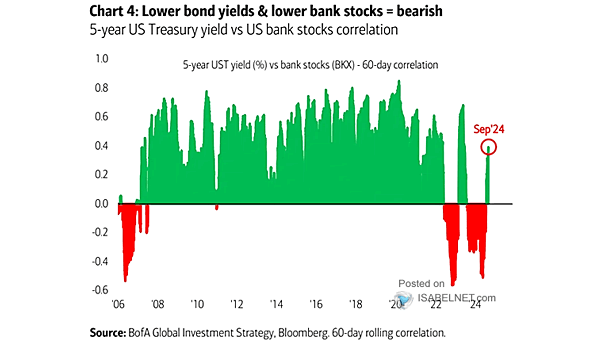
5-Year U.S. Treasury Yield vs. Bank Stocks Correlation

5-Year U.S. Treasury Yield vs. Bank Stocks Correlation The combination of higher bond yields and rising bank stocks is often often viewed as a sign of a bullish market environment. Image: BofA Global Investment Strategy

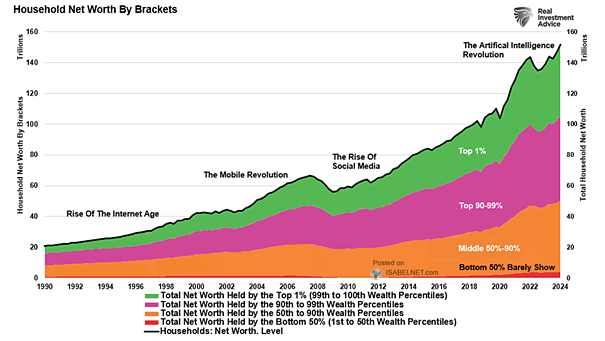
Inequality – Inflation Adjusted U.S. Household Net Worth by Brackets

Inequality – U.S. Household Net Worth by Brackets The widening wealth gap in the U.S. reflects deep-rooted structural issues that have persisted for decades. While some groups have gained, the overall trend indicates a growing divide that challenges economic mobility and social equity. Image: Real Investment Advice

Elections – U.S. Voting Age Population

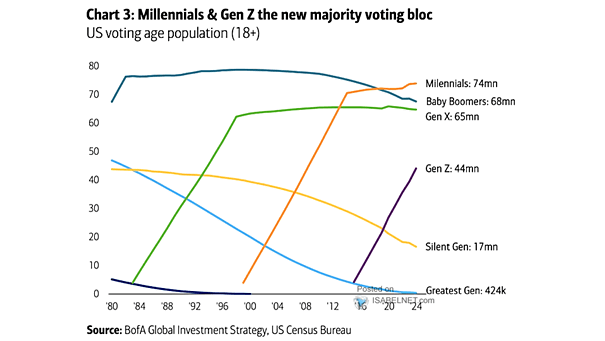
Elections – U.S. Voting Age Population Younger generations, specifically Millennials and Generation Z, are projected to become the new majority voting bloc in the upcoming 2024 U.S. presidential election, marking a significant generational shift in the electorate. Image: BofA Global Investment Strategy

U.S. ISM Manufacturing PMI vs. 10-Year U.S. Treasury Yield

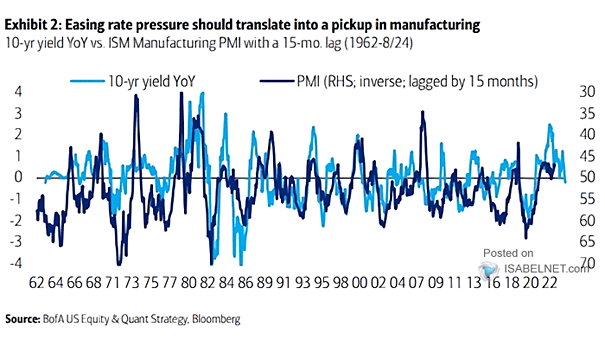
U.S. ISM Manufacturing PMI vs. 10-Year U.S. Treasury Yield Easing rate pressure is projected to facilitate a recovery in U.S. manufacturing as financial conditions improve, inflation declines, and both domestic and foreign demand strengthen. Image: BofA US Equity & Quant Strategy