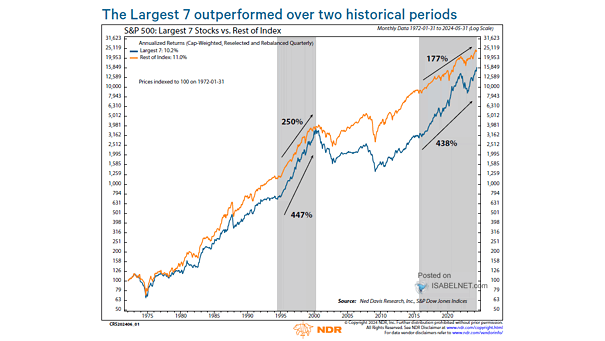
S&P 500 – Largest 7 Stocks vs. Rest of Index

S&P 500 – Largest 7 Stocks vs. Rest of Index Investing heavily in the largest seven U.S. stocks in a portfolio tends to underperform the rest of the S&P 500 index over the long term, potentially leading to a negative alpha. Image: Ned Davis Research
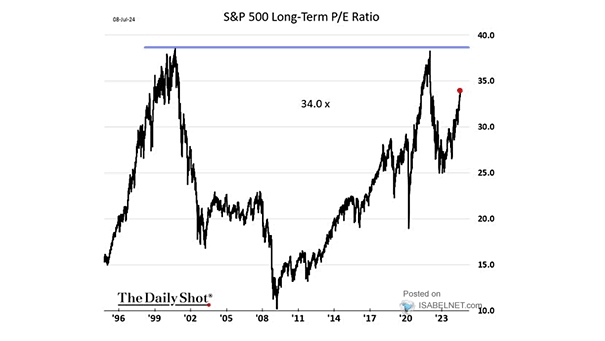
Valuation – S&P 500 Long-Term P/E Ratio

Valuation – S&P 500 Long-Term P/E Ratio Valuation, particularly in the context of the S&P 500’s long-term P/E ratio, is a significant consideration for investors. The high current ratio suggests potential overvaluation. Image: The Daily Shot

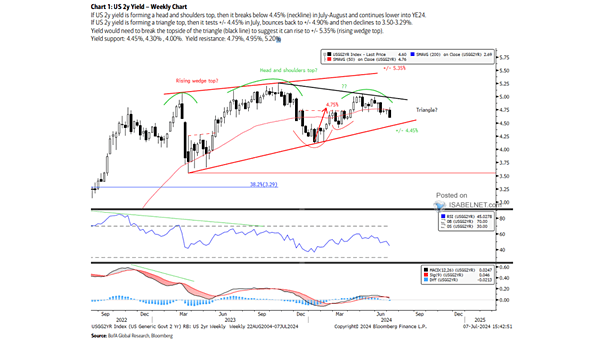
U.S. 2-Year Treasury Yield – Weekly Chart

U.S. 2-Year Treasury Yield – Weekly Chart Technical analysis suggests that the 2-year U.S. Treasury yield is projected to decline by the end of 2024, with a potential target between 3.50% and 3.29%. Image: BofA Global Research

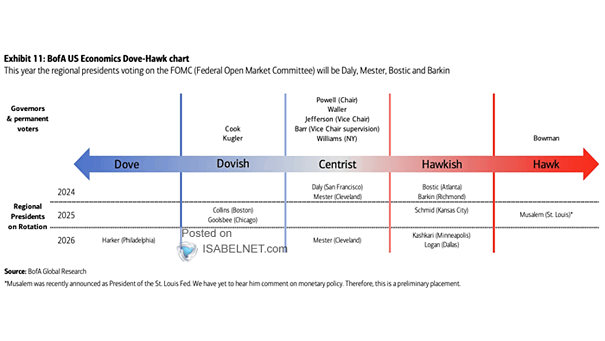
Fed – The Distribution of FOMC Voters

Fed – The Distribution of FOMC Voters Should investors bet for a hawkish Fed policy tone in 2025, as the central bank remains focused on its fight against persistent inflation, even if it means risking some economic pain? Image: BofA Global Research

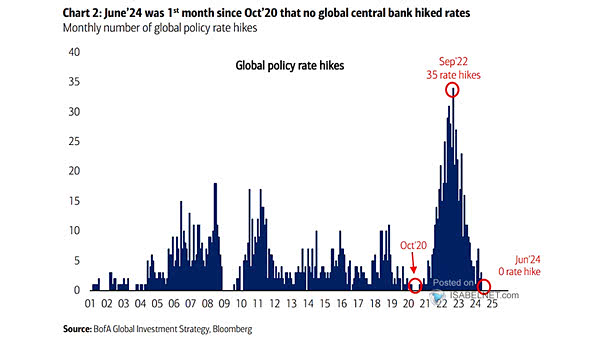
Global Policy Rate Hikes

Global Policy Rate Hikes In June 2024, for the first time since October 2020, no major central banks around the world raised interest rates, marking a significant shift in global monetary policies. Image: BofA Global Investment Strategy

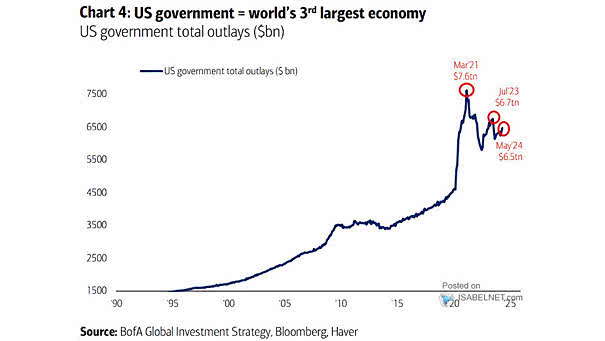
U.S. Government Total Outlays

U.S. Government Total Outlays U.S. federal government spending has risen sharply since the 2020s, sparking debates about fiscal responsibility and the long-term implications for the U.S. economy. Image: BofA Global Investment Strategy

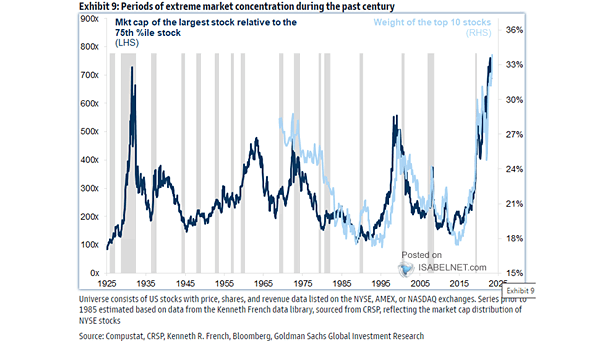
Top 10 Stocks as % of S&P 500

Top 10 Stocks as % of S&P 500 In recent years, there has been a substantial rise in concentration among the top 10 companies in the S&P 500, which has raised concerns about potential risks to investors. Image: Goldman Sachs Global Investment Research

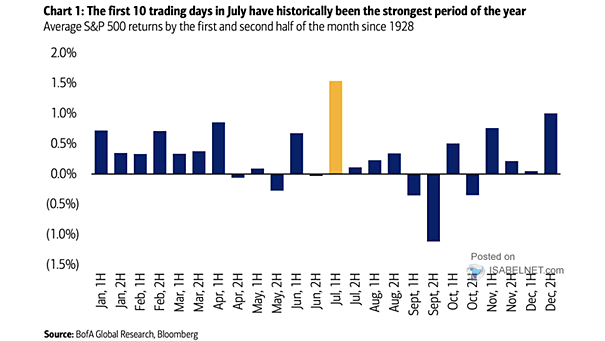
Average S&P 500 Returns by the First and Second Half of the Month

Average S&P 500 Returns by the First and Second Half of the Month Seasonality is a useful statistical tool, but not a crystal ball for predicting future market movements. Past patterns indicate that the U.S. stock market has often demonstrated strength in the first half of July. Image: BofA Global Research

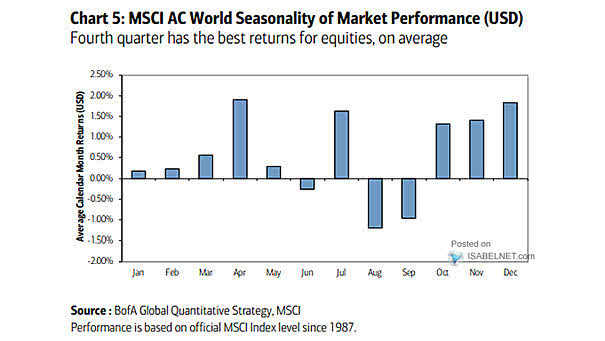
Seasonality Trends in MSCI AC World Index (Global Equities)

Seasonality Trends in MSCI AC World Index (Global Equities) July has historically been a strong month for global equities, offering opportunities for investors to capture potential gains. Image: BofA Global Quantitative Strategy