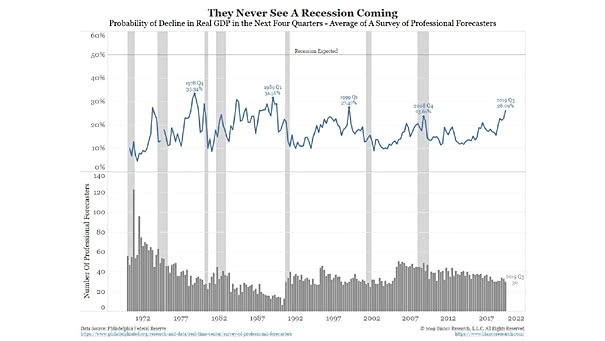
Economists Never See A Recession Coming
Economists Never See A Recession Coming This chart shows that economists are not good at predicting U.S. recessions. Image: Bianco Research
Economists Never See A Recession Coming This chart shows that economists are not good at predicting U.S. recessions. Image: Bianco Research
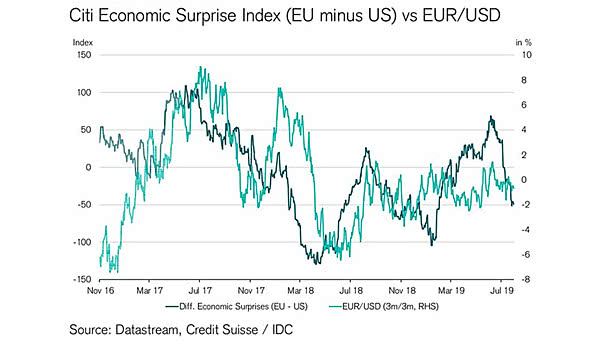
Citi Economic Surprise Index vs. EUR/USD Weaker European growth relative to the U.S. could weaken Euro/U.S. Dollar. Image: Credit Suisse
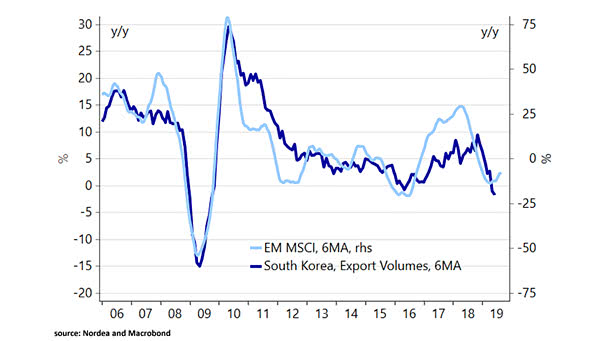
MSCI Emerging Markets and South Korea Export Volumes Less export volumes are not good news for emerging markets. Image: Nordea and Macrobond
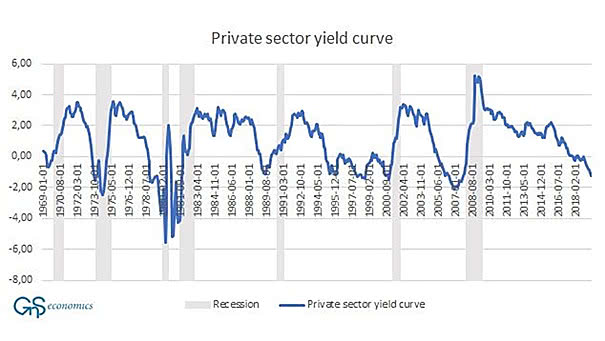
U.S. Private Sector Yield Curve Currently, the U.S. private sector yield curve (20-year Baa bonds/bank prime rate) is the most inverted since October 2007. Image: GnS Economics
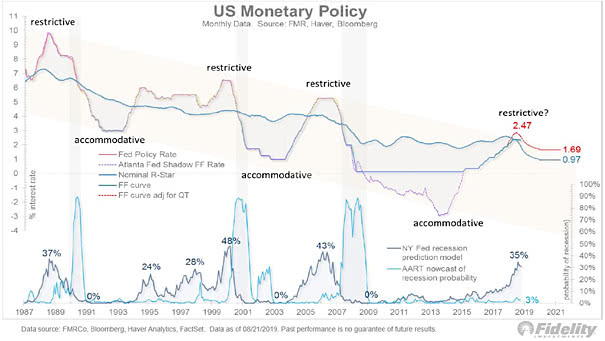
U.S. Monetary Policy and Recession This chart shows the U.S. monetary policy and two recession forecasting models over time (Fed policy rate, Atlanta Fed shadow Fed funds rate, nominal R-Star, Fed funds curve). Image: Fidelity Investments
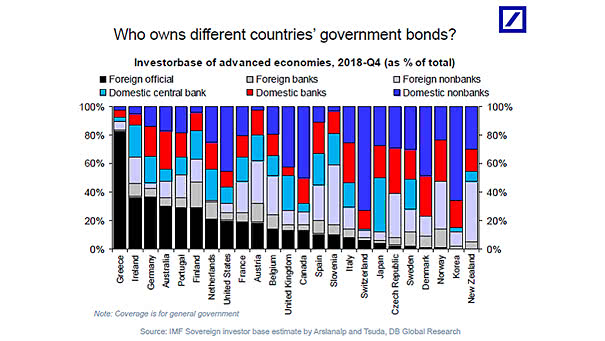
Who Owns Different Countries’ Government Bonds? About 70% of the U.S. national debt is owned by domestic government, institutions investors and the Federal Reserve. Image: Deutsche Bank Global Research
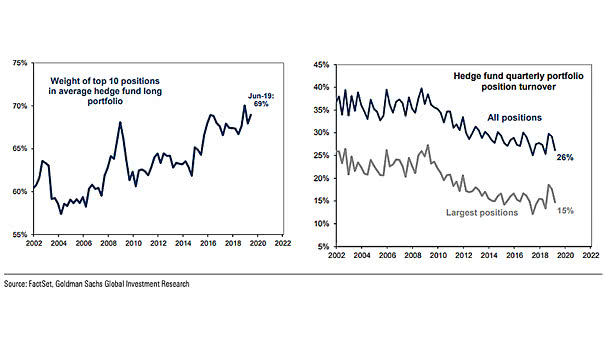
Hedge Fund Portfolio Density and Turnover Hedge fund portfolio density has steadly increased, and fund turnover has declined over the past decade. High concentration risk can lead to high losses and affect the financial system. Image: Goldman Sachs
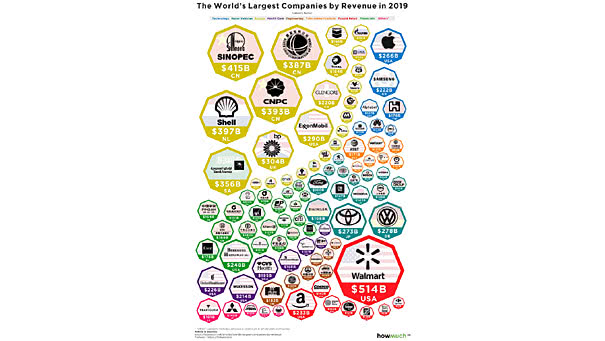
World’s Largest Companies by Revenue The visualization presents the top 100 companies making the most money in 2019 Image: howmuch.net
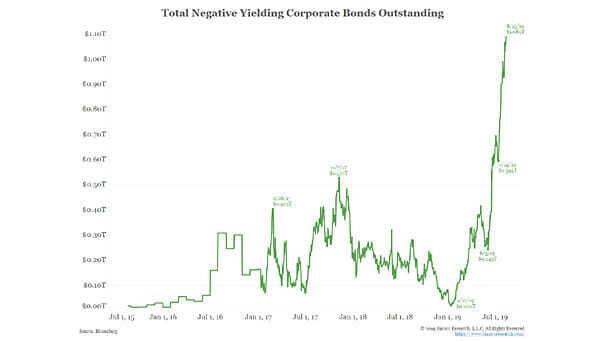
Total Negative Yielding Corporate Bonds Outstanding Negative-yielding corporate debt passed $1 trillion in market value. Investors face significant risk should rates start to rise. Image: Bianco Research
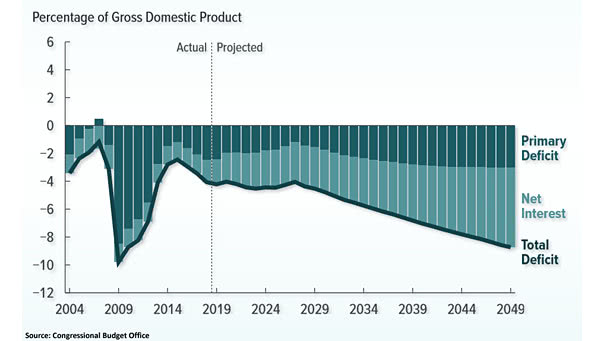
U.S. Long-Term Budget Outlook Large budget deficits over the next 30 years could boost federal debt to unprecedented levels. Image: Congressional Budget Office
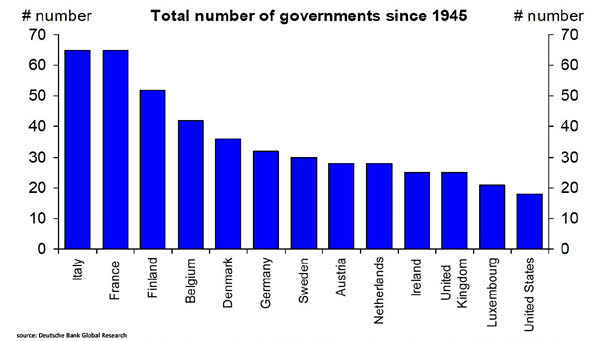
Total Number of Governments since 1945 Italy and France have the largest number of governments since 1945, while the U.S. and Luxembourg have the smallest number. Image: Deutsche Bank Global Research