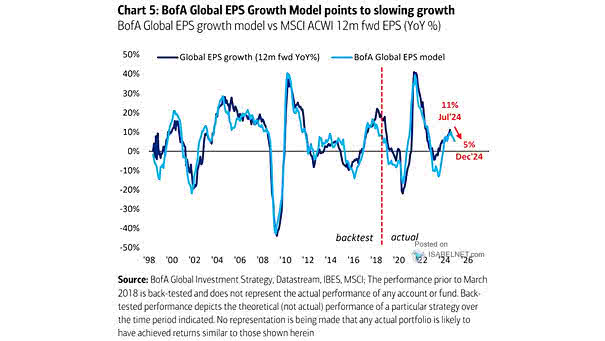
Global EPS Model vs. Consensus EPS
Global EPS Model vs. Consensus EPS BofA indicates a trend of slowing growth in its global earnings per share model, reflecting a shift toward a more cautious economic outlook. Image: BofA Global Investment Strategy
Real GDP and Inflation The U.S. economy has avoided recessions and stagflations 90% of the time, inspiring confidence in investors and showcasing the country’s commitment to long-term economic stability and growth. Image: BofA US Equity & Quant Strategy
G3 Real Core Retail Sales Since 2019, real core retail sales in the United States have risen significantly, while Germany has seen stagnant growth and Japan has witnessed a decline, reflecting differing economic conditions and consumer behaviors. Image: BofA Global Research
Range of U.S. GDP YoY Growth Forecasts and Maximum Error over 12-Month Prior While the U.S. economy may avoid a recession in 2024, U.S. GDP forecast dispersion remains at high levels, highlighting the inherent uncertainty and volatility in the current economic landscape. Image: BofA Global Research
LEI 6-Month ROC vs. S&P 500 EPS Annual % Change The 6-month annual rate of change of the Leading Economic Index is highly correlated with S&P 500 earnings growth. Should U.S. equity investors remain cautious? Image: Real Investment Advice
Global GDP – OECD Forecasts OECD forecasts 4.2% global growth in 2021, as global economic outlook remains uncertain. Image: Financial Times
Leading Indicators Are Improving Globally Leading economic indicators have been improving throughout 2019. This may suggest that global growth is back on track. Image: Richardson Wealth
Major Central Bank Balance Sheets and Emerging Market Equities Chart suggesting that the growth in G3 central bank balance sheets is positive for emerging market equities. Image: Oxford Economics
Consumer Spending Contribution to U.S. GDP Consumer spending, which accounts for about 70% of the U.S. economy, is driving GDP growth solo. Image: Oxford Economics
ISM Non-Manufacturing Index, ISM Manufacturing Index and U.S. GDP U.S. ISM indices suggest a slowdown in the US growth rate, but not an imminent recession. Image source: ING Economics
Advanced Economies – Global GDP Forecast for 2020 Oxford Economics thinks that IMF’s new global GDP growth forecasts for 2020 are too optimistic. Image: Oxford Economics