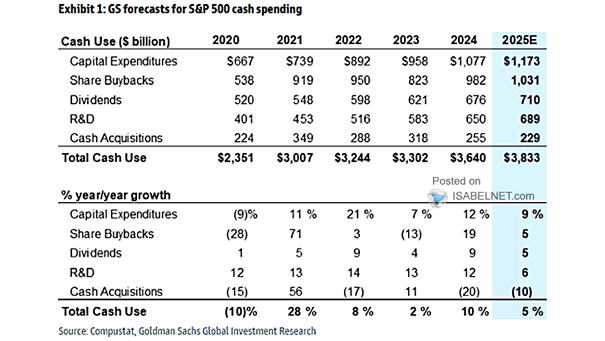
Hyperscaler Year/Year Cash Spending Growth

Hyperscaler Year/Year Cash Spending Growth Hyperscalers are ramping up AI spending, leaving less capacity for buybacks and dividends. The trade-off is weaker near-term payouts in exchange for longer-term upside. Image: Goldman Sachs Global Investment Research
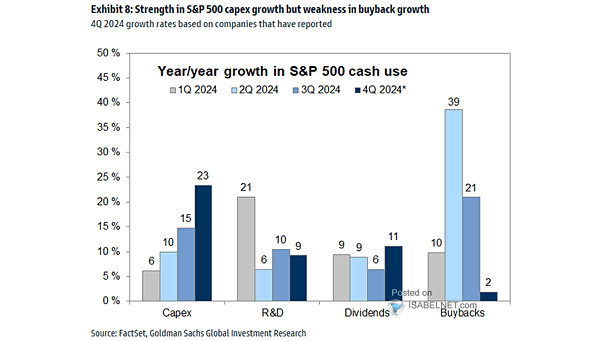
YoY Growth in S&P 500 Cash Use

YoY Growth in S&P 500 Cash Use S&P 500 companies are shifting cash to capex, led by AI, while buybacks stall. The result may be weaker EPS support and a thinner cushion for stock prices.…

10-Year U.S. Treasury Yields vs. New Fed Chair

10-Year U.S. Treasury Yields vs. New Fed Chair 10-year U.S. Treasury yields often push higher in the first six months after a new Fed chair takes office, as markets adjust to a new policy regime.…

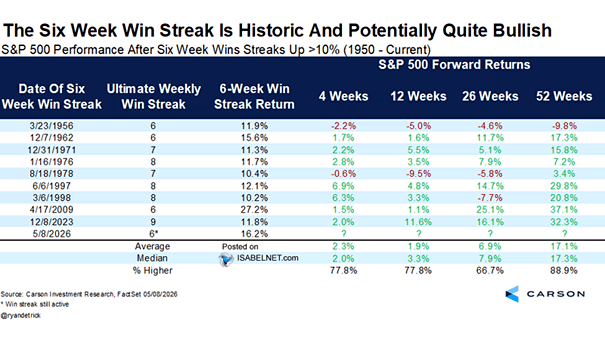
S&P 500 Performance After Six Week Wins Streaks Up >10%

S&P 500 Performance After Six Week Wins Streaks Up >10% Six weeks up and more than 10% higher. Historically, that combination has been a tailwind for U.S. stocks, delivering average 12-month returns of 17.1% since…

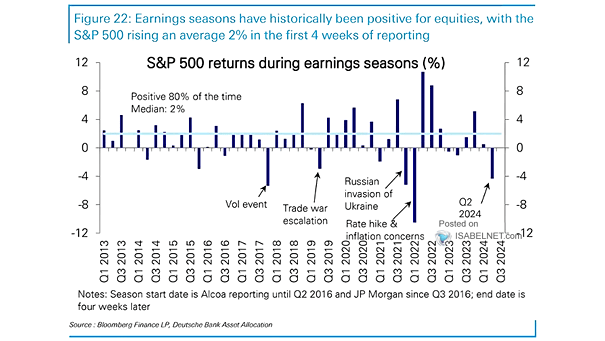
S&P 500 Returns During Earnings Seasons

S&P 500 Returns During Earnings Seasons During earnings season, the S&P 500 typically rallies, posting a median gain of 2% over the first four weeks. This time, the index is up nearly four times that…

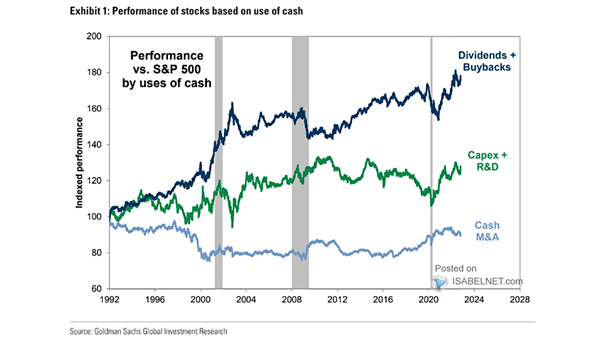
Performance vs. S&P 500 by Uses of Cash

Performance vs. S&P 500 by Uses of Cash U.S. companies that return the most cash to shareholders through dividends and buybacks have outperformed the S&P 500 since 1992. The outperformance usually reflects stronger fundamentals and…

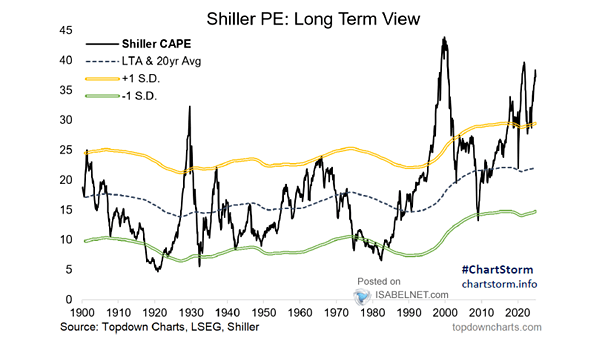
S&P 500 Valuation – Shiller CAPE Ratio

S&P 500 Valuation – Shiller CAPE Ratio Shiller CAPE puts U.S. stocks back in the stratosphere, great on the way up, unforgiving on the way down. From these levels, history argues for lower returns and…

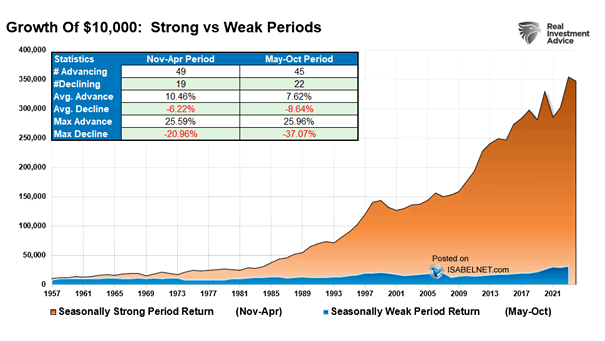
S&P 500 Returns – Strong vs. Weak Periods

S&P 500 Returns – Strong vs. Weak Periods U.S. stocks tend to lose some of their edge over the summer, with May to October often lagging the stronger November to April period. Even so, seasonality…