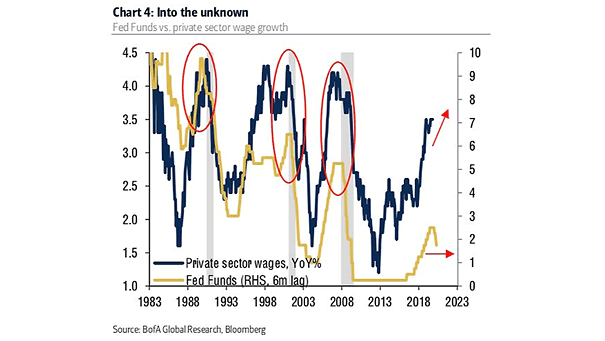
Fed Funds vs. Private Sector Wage Growth
Fed Funds vs. Private Sector Wage Growth The last three U.S. economic expansions ended with the Federal Reserve hiking to curb wage growth, but not this time. That’s quite bullish. Image: BofA Global Research
Fed Funds vs. Private Sector Wage Growth The last three U.S. economic expansions ended with the Federal Reserve hiking to curb wage growth, but not this time. That’s quite bullish. Image: BofA Global Research
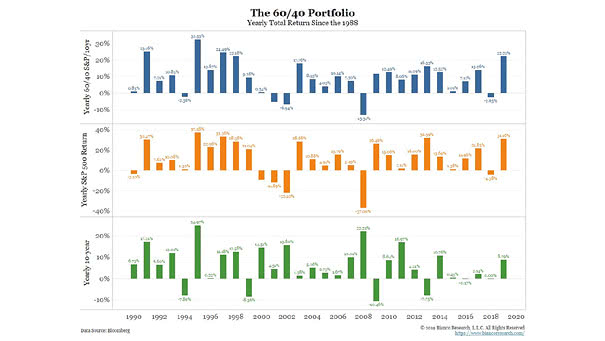
60/40 Portfolio Yearly Total Return The 60/40 portfolio gains more than 22% this year and is on pace for its best year since 1997. Image: Bianco Research Click the Image to Enlarge
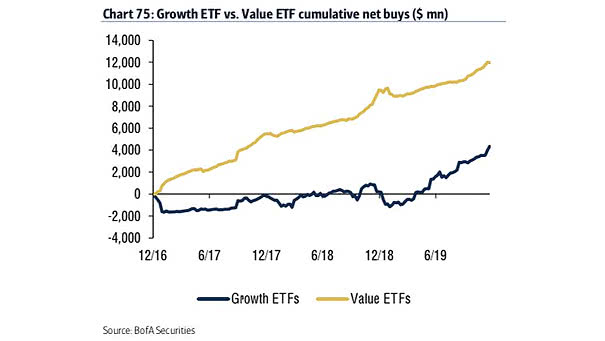
Cumulative Flows into Growth ETF vs. Value ETF Performance has been in favor of growth this year, despite flow into value. Image: BofA Securities
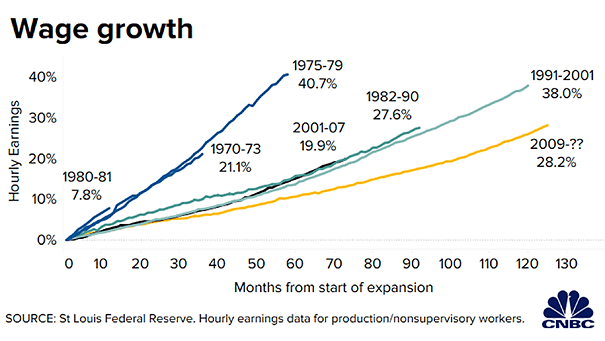
U.S. Wage Growth and Business Cycles Despite the U.S. economic expansion is now the longest in history, wage growth has been much slower during this business cycle than in previous cycles. Image: CNBC
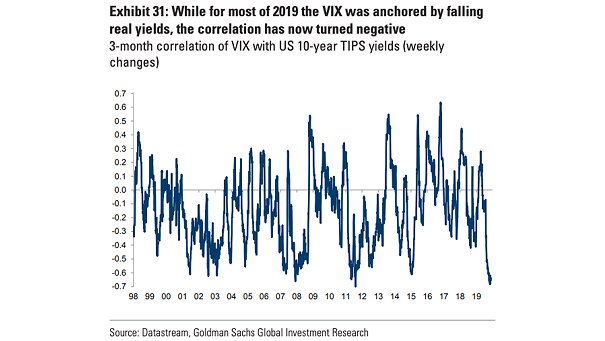
Correlation of VIX with U.S. 10-Year TIPS Yields The correlation of the VIX with U.S. 10-year TIPS yields has turned negative, as it was during the dot-com bubble burst, the Great Financial Crisis, the European…
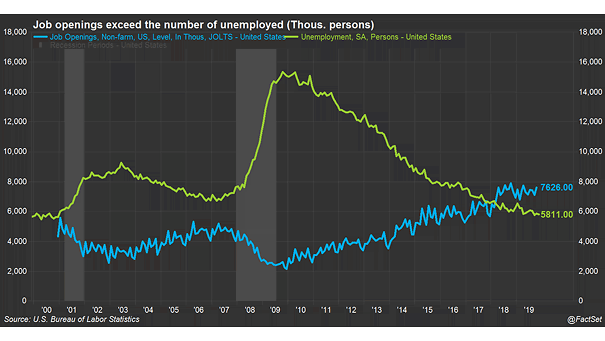
U.S. Job Openings and Unemployment The U.S. labor market is very tight. There are still more open jobs than unemployed workers. Image: FactSet
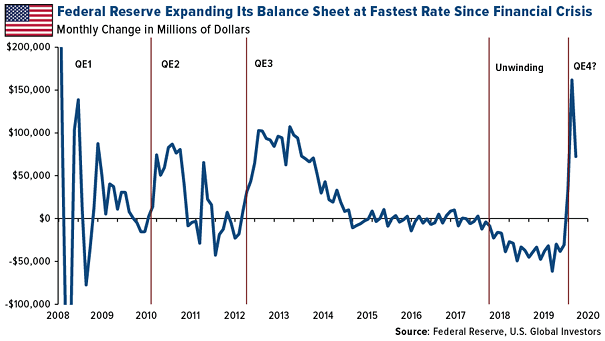
Federal Reserve’s Balance Sheet and “Not QE” Welcome to “Not-QE”. The Fed’s balance sheet is expanding at fastest rate since the Great Financial Crisis. Image: US Global Investors
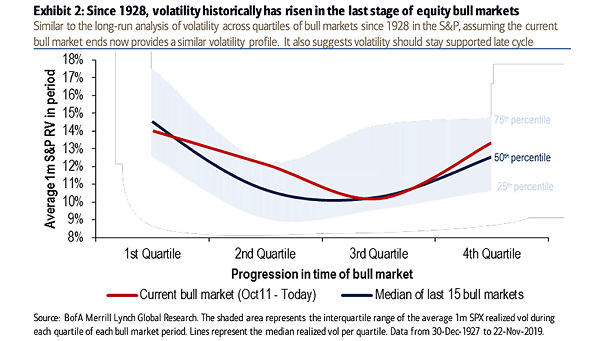
Volatility and Equity Bull Markets Since 1928, when equities are still rising, volatility tends to increase in the last stage of bull markets. Image: BofA Merrill Lynch Global Research
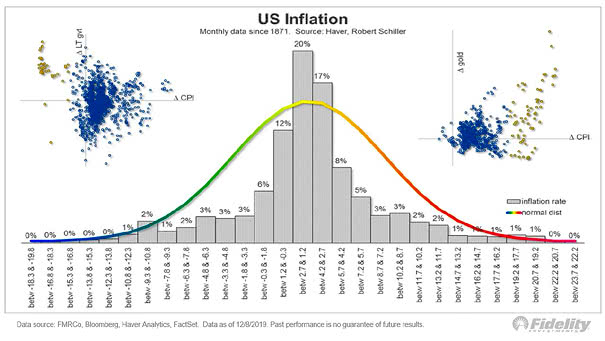
Distribution of U.S. Inflation Rate Is inflation really dead? It may not be dead forever. This great chart shows that the distribution of the U.S. inflation rate has been fairly good since 1871. Image: Fidelity…
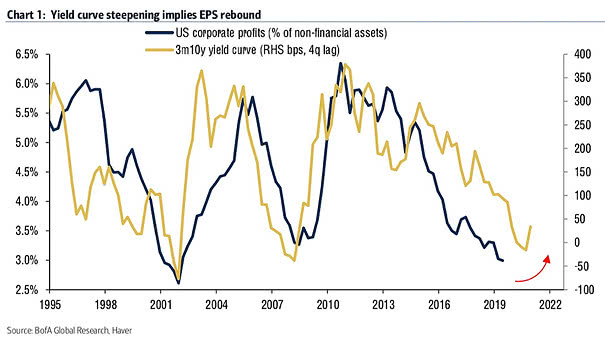
U.S. Corporate Profits and 10Y-3M Yield Curve While the divergence between large-cap profits and the rest of the economy is the widest on record, the steepening yield curve suggests an earnings rebound. Image: BofA Global…
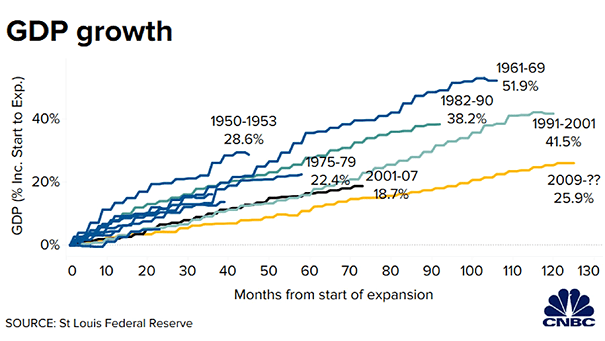
U.S. GDP Growth and Business Cycles Despite the current U.S. economic expansion is the longest ever, GDP growth has been much slower during this business cycle than in previous cycles. Image: CNBC