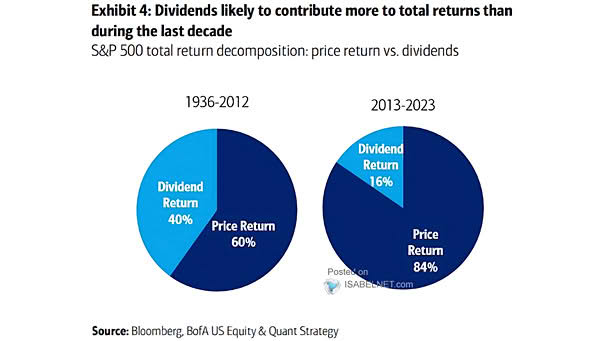
Decomposition of S&P 500 Total Returns

Decomposition of S&P 500 Total Returns According to BofA, dividends are expected to play a larger role in S&P 500’s total returns in the future than they have over the past decade. Image: BofA US Equity & Quant Strategy
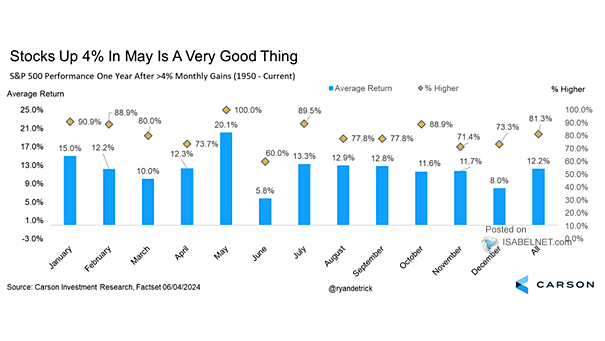
S&P 500 Performance One Year After >4% Monthly Gains

S&P 500 Performance One Year After >4% Monthly Gains Since 1950, the S&P 500 has never been lower a year after a monthly gain of over 4% in May. This period has been particularly profitable for investors, with an average gain of 20.1%. Image: Carson Investment Research

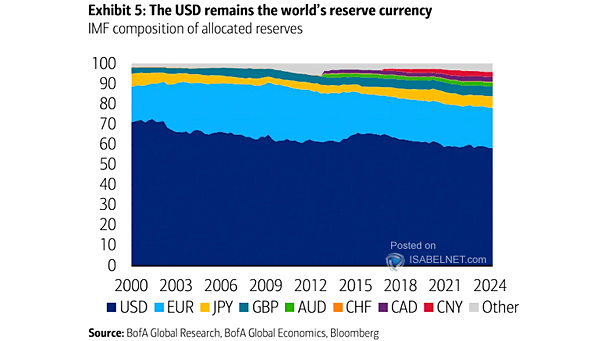
The U.S. Dollar As A Reserve Currency

The U.S. Dollar As A Reserve Currency While the U.S. dollar’s status as the world’s reserve currency may evolve and share influence with other currencies, it is expected to remain a dominant currency for the foreseeable future. Image: BofA Global Research

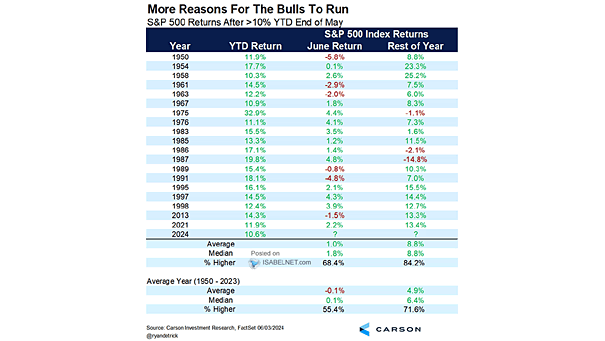
S&P 500 Returns After >10% YTD End of May

S&P 500 Returns After >10% YTD End of May Bulls smile when the S&P 500 index has gained more than 10% after the first five months of the year, as the average return for the rest of the year has been 8.8% since 1950. Image: Carson Investment Research

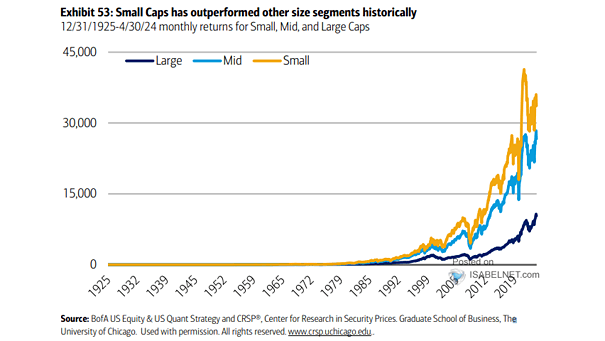
Returns for Small, Mid, and Large Caps

Returns for Small, Mid, and Large Caps U.S. small caps have a track record of outperforming larger companies over extended periods, with potential for a resurgence in performance based on valuation, profitability, and historical trends. Image: BofA US Equity & Quant Strategy
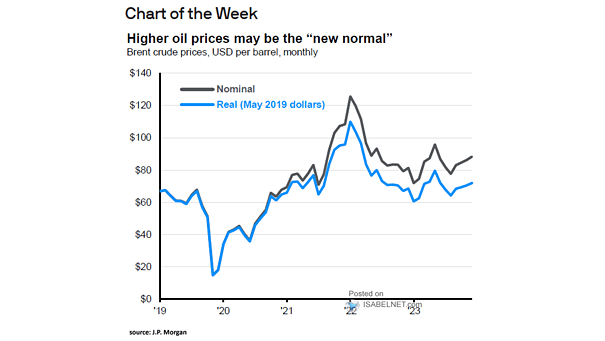
Brent Oil Price

Brent Oil Price Brent crude oil prices remain high relative to their levels five years ago, before the pandemic, reflecting past inflation’s impact. Image: J.P. Morgan

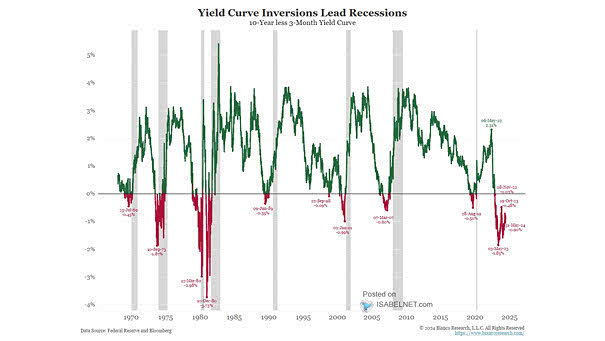
The 10Y-3M Yield Curve

The 10Y-3M Yield Curve Although the U.S. 10Y-3M yield curve is not on the verge of uninverting, historical data suggests that the “uninversion” of the yield curve has been a reliable indicator of an impending recession. Image: Bianco Research

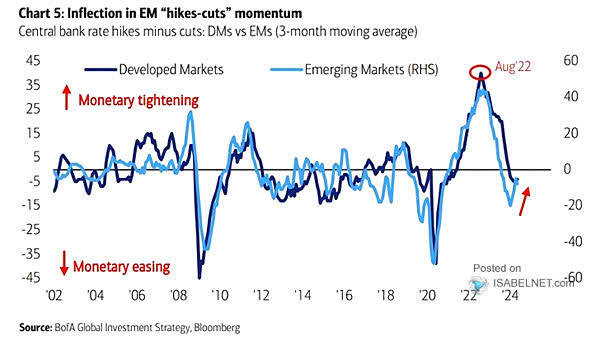
Interest Rates – Central Bank Policy Rate Hikes vs. Cuts

Interest Rates – Central Bank Policy Rate Hikes vs. Cuts Emerging market central banks typically take the lead in initiating monetary tightening and easing cycles. In 2024, their approach has shifted away from aggressive easing. Image: BofA Global Investment Strategy

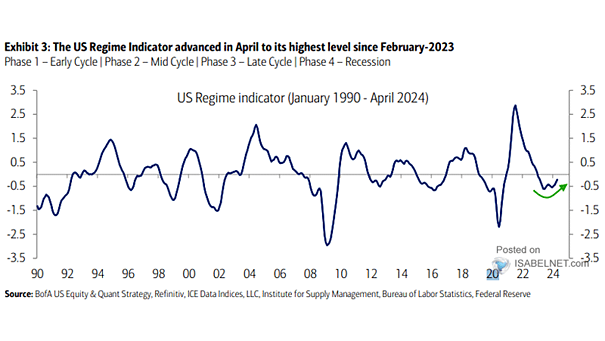
U.S. Regime Indicator

U.S. Regime Indicator In April, the U.S. regime indicator showed improvement, indicating positive signs and encouraging trends, which is great news. Image: BofA US Equity & Quant Strategy
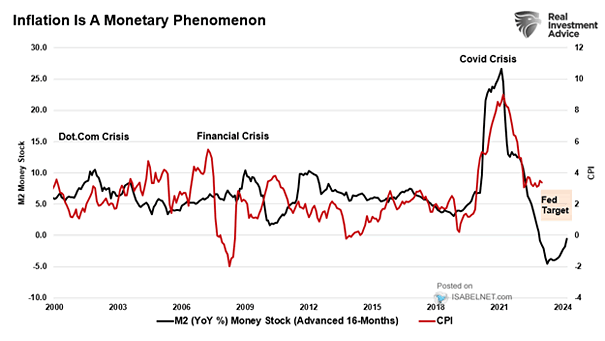
M2 Money Supply and CPI Inflation

M2 Money Supply and CPI Inflation The significant decline in money supply growth is one of the factors contributing to the contraction of inflation in the United States. Image: Real Investment Advice

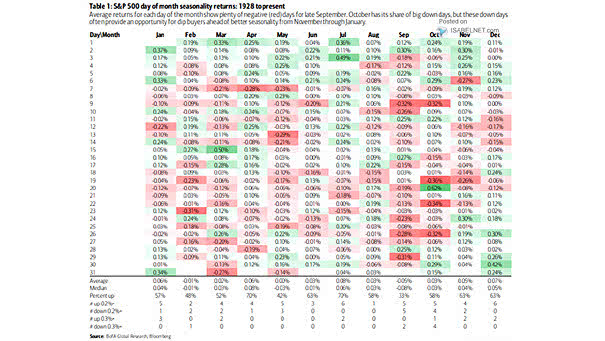
S&P 500 Day of Month Seasonality Returns

S&P 500 Day of Month Seasonality Returns Considering seasonality, it would not be surprising to see a bounce-back in the S&P 500 in early June, as historically, this period has demonstrated a trend of positive returns. Image: BofA Global Research