Relative Performance of Hyperscalers to S&P 500

Relative Performance of Hyperscalers to S&P 500 Hyperscalers have been trapped in a two-year range versus the S&P 500. Now the question is whether they can break out while AI capex returns remain in doubt. Image: Deutsche Bank Asset Allocation
U.S. IG Credit Spread

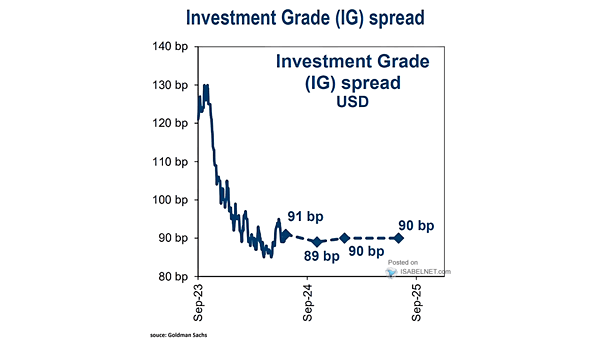
U.S. IG Credit Spread IG credit spreads in the U.S. have widened lately, particularly across tech, as the market demands a higher premium for AI-driven capex, heavy debt supply, rising leverage, and uncertain returns. Image: Goldman Sachs Global Investment Research

Weekly Net Flow to U.S. Bitcoin ETFs

Weekly Net Flow to U.S. Bitcoin ETFs U.S.-listed Bitcoin ETFs posted their strongest weekly inflows since April, attracting $850 million after a hack that refocused attention on the risks of holding digital assets. Image: Bloomberg

Hyperscaler Capex

Hyperscaler Capex U.S. hyperscaler capex is now expected to reach $799 billion this year, then rise to $1.068 trillion in 2027 and $1.301 trillion in 2028. This is starting to look less like a cycle than a structural reset. Image: Goldman Sachs Global Investment Research

S&P 500 Performance Since 2025

S&P 500 Performance Since 2025 After spending two months stuck in a narrow range, the S&P 500 broke decisively higher during earnings season. Investors had been underpositioned for the strength of earnings and were now scrambling to catch up. Image: Deutsche Bank Asset Allocation
S&P 500 Performance After ≥ 12% Over the First 150 Trading Days of the Year

S&P 500 Performance After ≥ 12% Over the First 150 Trading Days of the Year The S&P 500 has gained 12% or more in its first 150 trading days on 22 occasions since 1950. While 3-month returns tended to cool after such strong runs, performance usually improved over the following 6 to 12 months. Image:…

S&P 500 Trend Channel

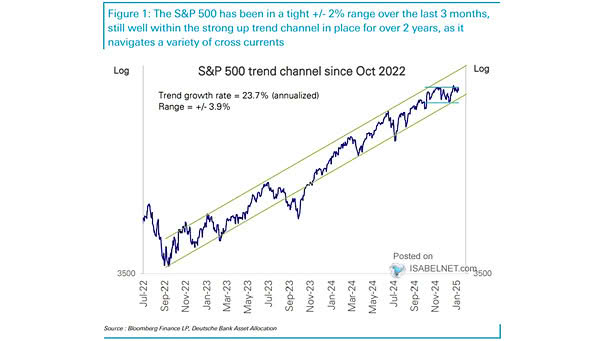
S&P 500 Trend Channel The sharp rally has brought the S&P 500 back to the bottom of its nearly four-year uptrend channel. If buyers defend the level, the rally could have further room to run. Image: Deutsche Bank Asset Allocation
Forward S&P 500 Returns After Prior Breakouts to New Highs Beat the Average Day

Forward S&P 500 Returns After Prior Breakouts to New Highs Beat the Average Day Over the past ten years, when the S&P 500 has broken to a new high after at least two months without one, the 12‑month forward return has averaged 16.4%. Fear, in this case, has been a poor strategist. Image: Real Investment…

S&P 500 Index Max Pullback per Calendar Year

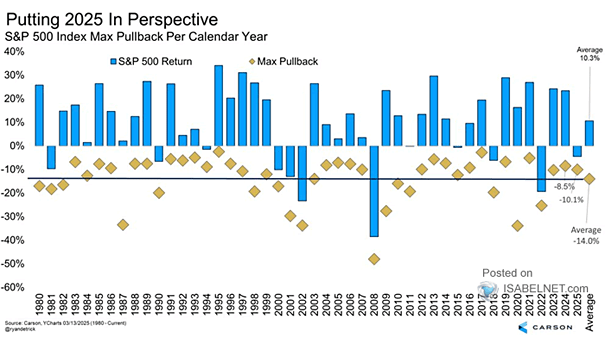
S&P 500 Index Max Pullback per Calendar Year March’s 9% pullback may already be the year’s deepest. If so, the market has less room for another major selloff. Back-to-back drawdowns of that size are rare, giving bulls a reason to stay optimistic. Image: Carson Investment Research

Global Monetary Policy Stimulus and Global Manufacturing PMI

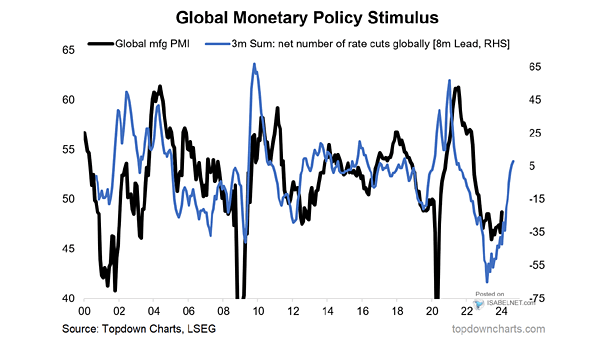
Global Monetary Policy Stimulus and Global Manufacturing PMI 2026 belonged to global growth, but the wind is turning. Inflation is firming, putting rate hikes back in play. The road into 2027 looks slower and bumpier. Image: Topdown Charts

S&P 500 Annual vs. Intra-Year Returns

S&P 500 Annual vs. Intra-Year Returns Most years, the S&P 500 gives up 5% to 10%. With March’s double-digit drop already in the books, the next move lower may be more modest. Back-to-back big drawdowns don’t happen often. Image: Real Investment Advice