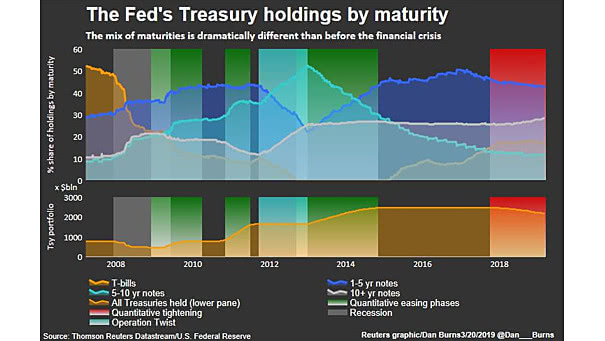
The Fed’s Treasury Holdings by Maturity
The Fed’s Treasury Holdings by Maturity Nice chart showing the Fed’s Treasury holdings by maturity before and after the financial crisis. Image: Reuters
The Fed’s Treasury Holdings by Maturity Nice chart showing the Fed’s Treasury holdings by maturity before and after the financial crisis. Image: Reuters
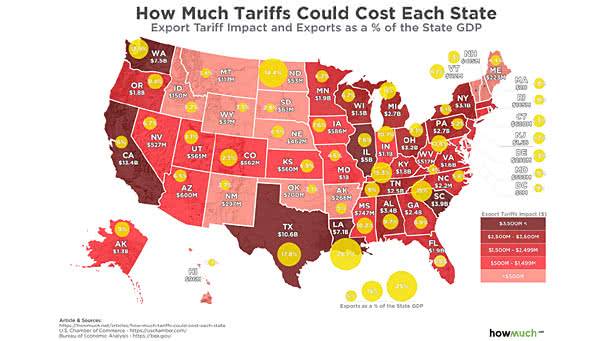
How Much Tariffs Could Cost Each State? This chart shows how much each state would be affected by China’s export tariffs. Image: howmuch.net
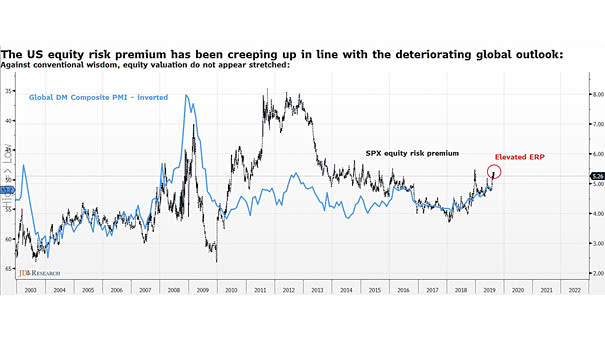
S&P 500 Equity Risk Premium and Global DM Composite PMI Nice chart showing that the equity risk premium of the S&P 500 is currently elevated. Image: JDI research
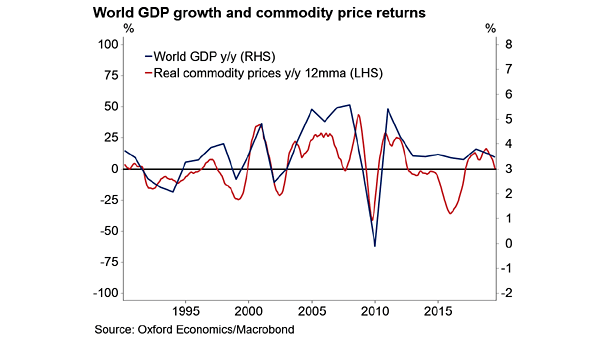
World GDP and Real Commodity Price Returns Interesting chart showing the correlation between world GDP and real commodity price returns. Image: Oxford Economics, Macrobond
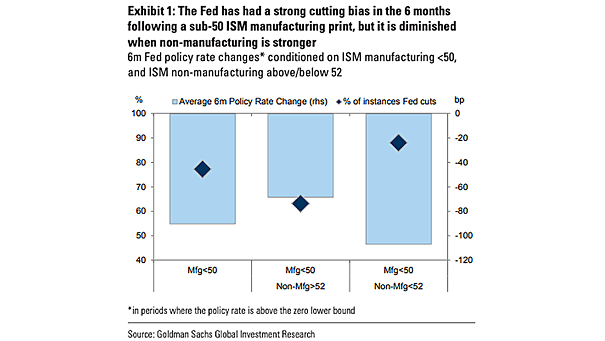
Fed Rate Cut vs. ISM Manufacturing Index and ISM Non-Manufacturing Index Since 1997, when the ISM Manufacturing Index is below 50 and the ISM Non-Manufacturing Index is above 52, the Fed is less aggressive, with about 68bp of easing on average. Image: Goldman Sachs Global Investment Research
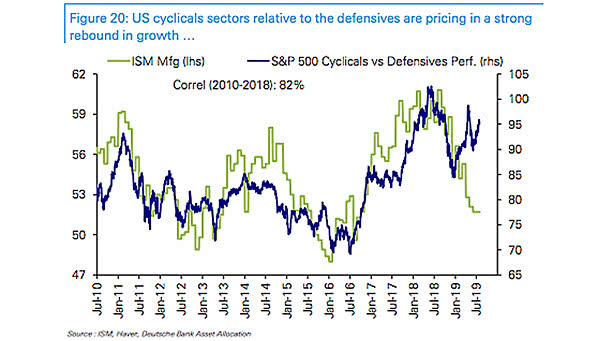
U.S. ISM Manufacturing Index and S&P 500 Cyclicals vs. Defensives Chart showing that U.S. cyclicals sectors relative to defensive sectors are still pricing in a strong rebound in growth (R = 0.82). Image: Deutsche Bank Global Research
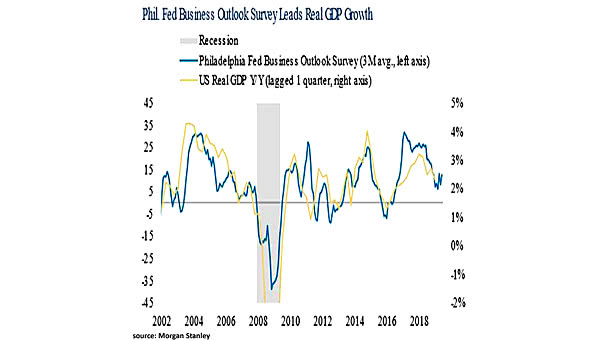
Philly Fed Business Outlook Survey Leads Real U.S. GDP Growth Chart suggesting that the Philly Fed Business Outlook Survey leads real U.S. GDP growth by 3 months. Image: Morgan Stanley Research
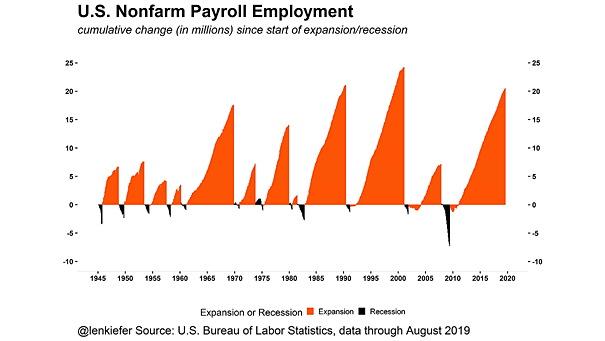
U.S. Nonfarm Payroll Employment During this business cycle, America has added over 20 million jobs. Image: Leonard Kiefer
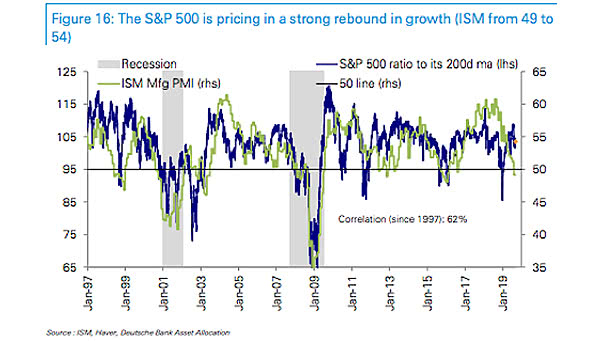
U.S. ISM Manufacturing Index vs. S&P 500 Chart showing that the S&P 500 continues to price in a strong rebound in the ISM, from 49 to 54 (R = 0.62). Image: Deutsche Bank Global Research
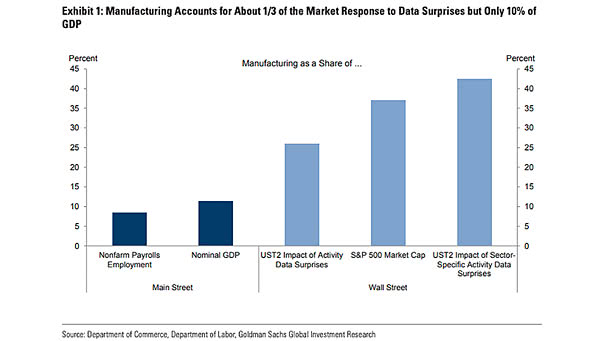
Manufacturing’s Share of the U.S. Economy Manufacturing accounts for only 10% of U.S. GDP, but 25% to 45% of the market response. Image: Goldman Sachs Global Investment Research
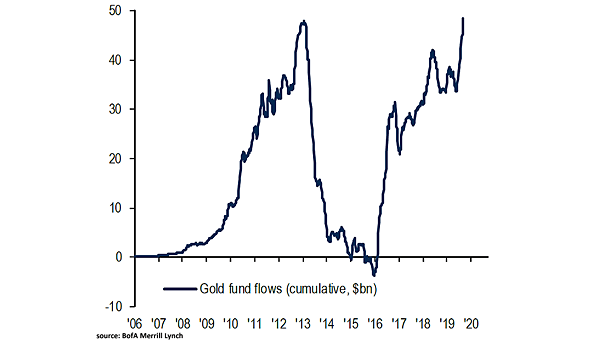
Gold Fund Flows Investors are flooding into gold as fears of a global slowdown mount. Image: BofA Merrill Lynch