Different Type of Bear Markets

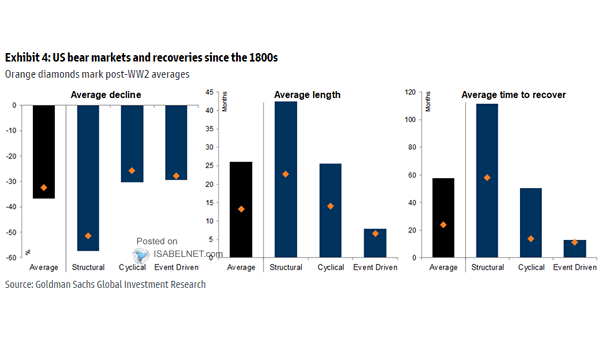
Different Type of Bear Markets While both cyclical and event-driven bear markets tend to drop by approximately 30%, their durations vary. Cyclical bear markets average two years, whereas event-driven ones last about eight months and recover within a year. Image: Goldman Sachs Global Investment Research
S&P 500 Bear Markets

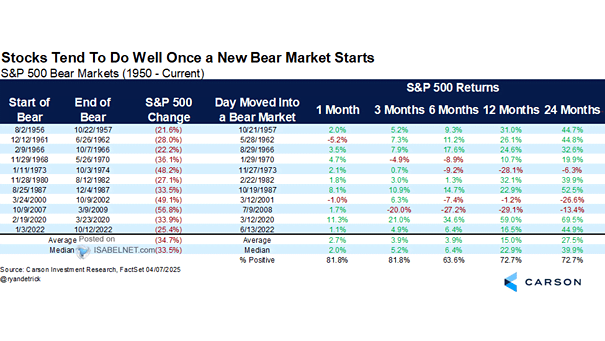
S&P 500 Bear Markets Should the S&P 500 transition into a bear market, history shows that patient investors are often rewarded in the year and two-year windows after the bear market starts. Image: Carson Investment Research

Waterfall Declines in the S&P 500

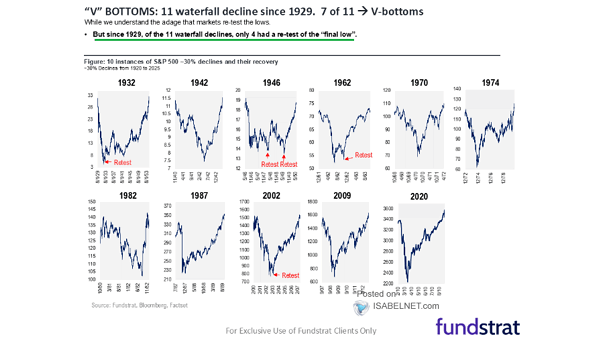
Waterfall Declines in the S&P 500 Contrary to the widespread belief that markets systematically retest lows, analysis of waterfall declines since 1929 reveals that such occurrences are far from consistent. Image: Fundstrat Global Advisors, LLC

S&P 500 and Breadth-Based Stock Market Bottom Signal

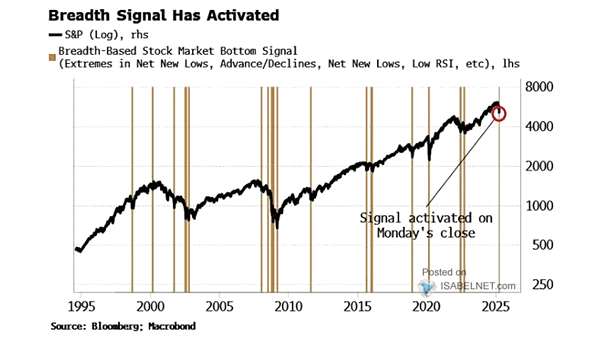
S&P 500 and Breadth-Based Stock Market Bottom Signal A signal indicating a potential market bottom, based on extreme breadth levels, has been triggered. Historically, such signals often precede market turning points but are not infallible and can sometimes appear prematurely. Image: Bloomberg

ISABELNET Cartoon of the Day

ISABELNET Cartoon of the Day If the U.S. trade deficit is a national emergency, then the small-cap and Nasdaq bear markets need life support! Happy “Hump” Day, Everyone! 🐫🐪😎

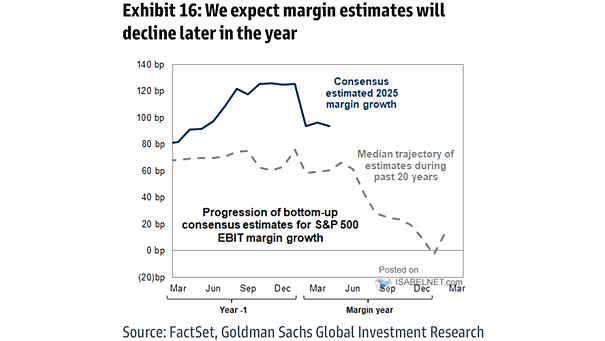
Consensus Estimated Margin Growth

Consensus Estimated Margin Growth Slower economic growth and rising costs are expected to lead to a decline in S&P 500 margin estimates later this year. Image: Goldman Sachs Global Investment Research
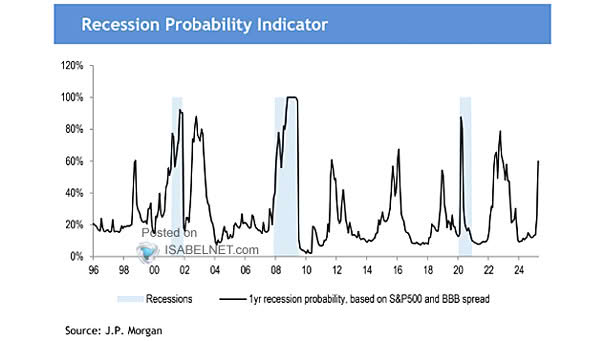
Probability of U.S. Recession

Probability of U.S. Recession The rise in the one-year recession probability based on the S&P 500 and BBB spread is seen as a negative sign, highlighting economic risks that could affect market sentiment and change investment strategies. Image: J.P. Morgan

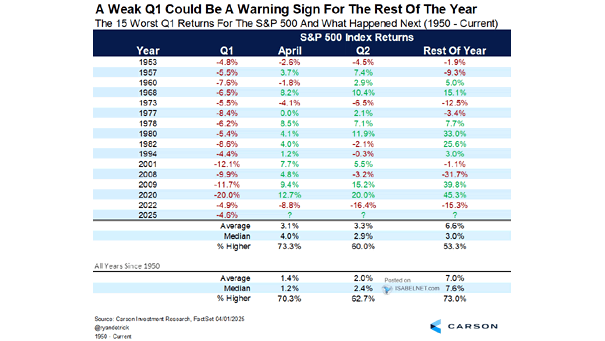
The 15 Worst Q1 Returns for the S&P 500 and What Happened Next

The 15 Worst Q1 Returns for the S&P 500 and What Happened Next A weak Q1 for the S&P 500 often sets the tone for lackluster performance in the remaining quarters, with data showing a median return of just 3.0% for the final three quarters. Image: Carson Investment Research

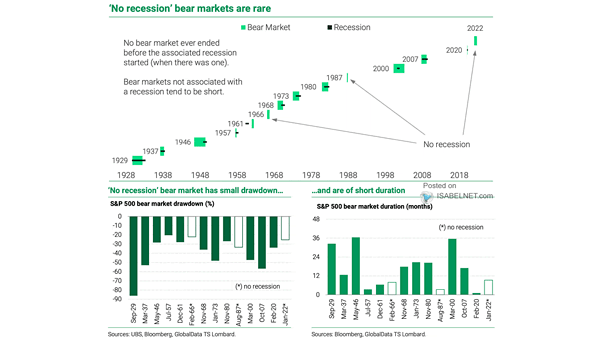
S&P 500 Bear Markets

S&P 500 Bear Markets S&P 500 bear markets tied to recessions don’t end before the recession starts. Those without a recession are rare and usually short. Image: TS Lombard

ISABELNET Cartoon of the Day

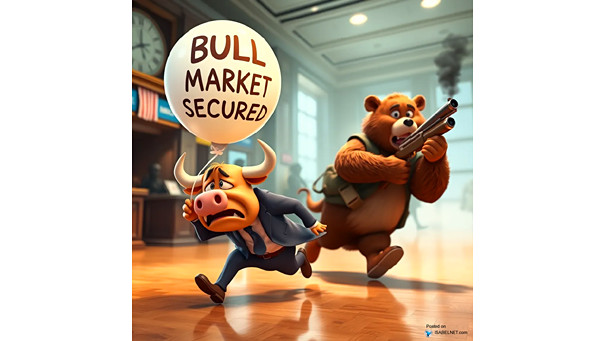
ISABELNET Cartoon of the Day Bull market secured… until it isn’t. In finance, the wise investor always expects the unexpected! Have a Great Day, Everyone! 😎