S&P 500 Bear Markets

S&P 500 Bear Markets S&P 500 bear markets tied to recessions don’t end before the recession starts. Those without a recession are rare and usually short. Image: TS Lombard

S&P 500 Performance After AAII Bears Above 50% Five Straight Weeks

S&P 500 Performance After AAII Bears Above 50% Five Straight Weeks Historically, when bearish sentiment in the AAII poll surpasses 50% for five straight weeks, U.S. stocks have shown an average return of 21% over the next 12 months, with positive returns occurring 100% of the time since 1990. Image: Carson Investment Research

How Often Does a Correction Turn into a Bear Market?

How Often Does a Correction Turn into a Bear Market? Historically, a 10% correction rarely leads to a 20% bear market without economic downturns, earnings declines, or rate hikes. With no very serious adverse indicators currently, a bear market seems unlikely in the near term. Image: Carson Investment Research

S&P 500 Performance After Bear (and Near Bear) Markets End

S&P 500 Performance After Bear (and Near Bear) Markets End Historically, the S&P 500 has consistently rebounded and performed strongly after bear markets. It has consistently delivered positive returns in the first and second year of new bull markets since World War II. Image: Carson Investment Research

S&P 500 – Seasonality During Bull vs. Bear Markets

S&P 500 – Seasonality During Bull vs. Bear Markets The sell-in-May effect may be more relevant in bear markets. In bull markets, it may be seen as a missed opportunity for potential gains, given the positive momentum and upward trends typically observed in the market. Image: Topdown Charts

Months That S&P 500 Index Bear (and Near Bear) Markets End

Months That S&P 500 Index Bear (and Near Bear) Markets End U.S. stocks have demonstrated a tendency to reach their lowest point of decline during the month of October, a pattern that has been observed over time. Image: Carson Investment Research

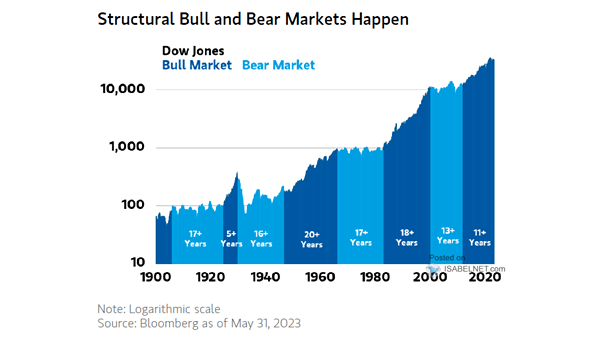
Structural Bull and Bear Markets

Structural Bull and Bear Markets Structural bear markets can be very painful for investors, as they can lead to prolonged periods of market decline and economic hardship. Image: Morgan Stanley Wealth Management