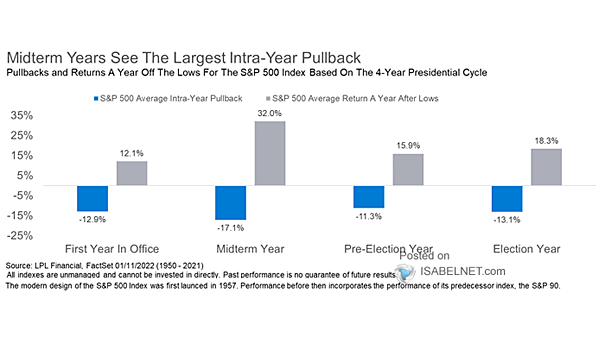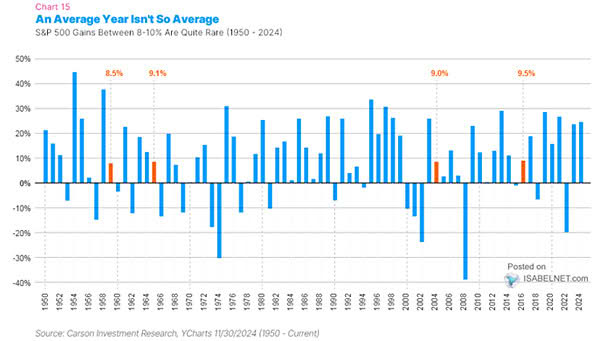
S&P 500 Gains Between 8-10% Are Quite Rare

S&P 500 Gains Between 8-10% Are Quite Rare Going back to 1950, the S&P 500 has rarely delivered average returns in any given year. Will 2026 keep the winning streak alive with another year of double‑digit gains? Image: Carson Investment Research
U.S. Stock Market Concentration

U.S. Stock Market Concentration The U.S. stock market is as concentrated as it has been in decades, but history is full of similar moments, from the railroad boom of 1900 to the dominance of mega-caps in the 1930s and 1960s. Image: Bloomberg

Average Global Policy Rate

Average Global Policy Rate Global central banks moved decisively into rate‑cutting mode through 2025, with analysts expecting further, though more measured, easing in 2026, particularly in the United States. Image: Goldman Sachs Global Investment Research

Price of Gold Forecast

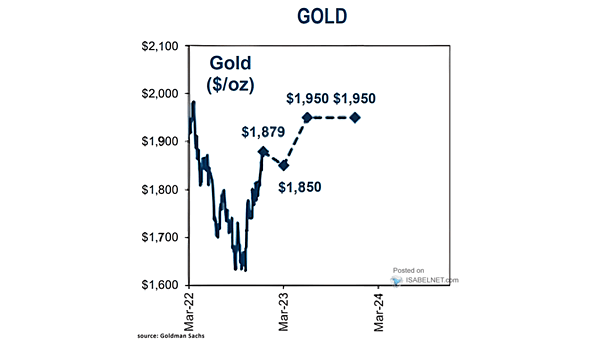
Price of Gold Forecast Analyst forecasts for gold at the end of 2026 cluster near record highs, with most expecting bullion to gain about 7%. A slower climb than last year’s rally and with forecasts spanning a wide range. Image: Financial Times

U.S. Financial Conditions Index and SLOOS

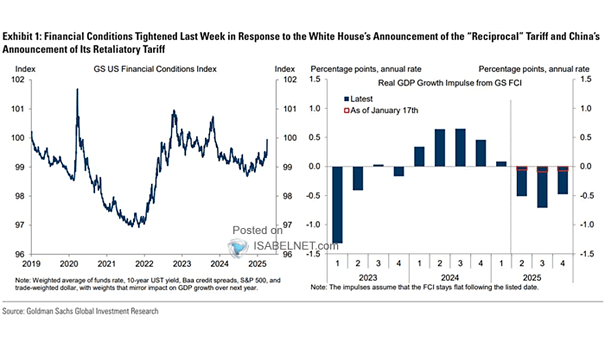
U.S. Financial Conditions Index and SLOOS With financial conditions easing and banks pulling back on loan tightening, the U.S. economy looks poised for stronger investment, hiring, and growth. But those tailwinds could reignite inflation if demand runs ahead of supply. Image: Goldman Sachs Global Investment Research

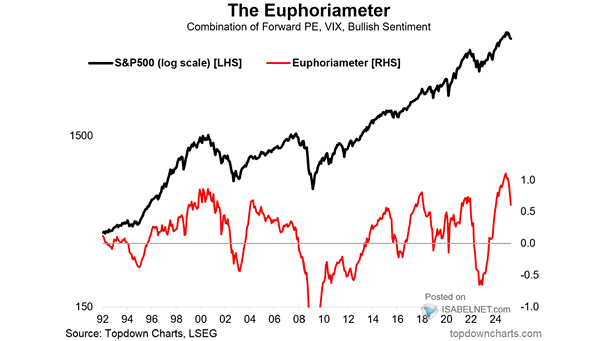
S&P 500 and Combination of Forward PE, VIX, Bullish Sentiment

S&P 500 and Combination of Forward PE, VIX, Bullish Sentiment The Euphoriameter, a composite of forward P/E, the VIX, and bullish sentiment, has cooled from a year ago but is still sitting close to the top of its historical range, flashing an early warning for the market cycle. Image: Topdown Charts

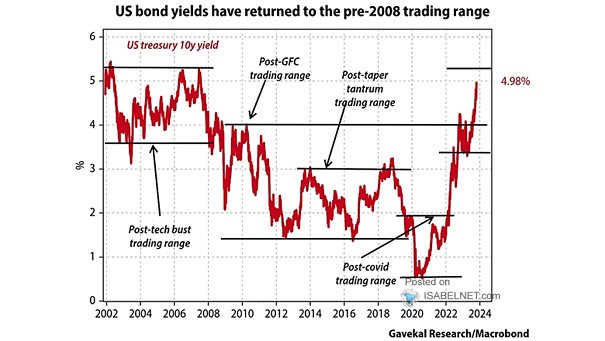
10-Year U.S. Treasury Yield

10-Year U.S. Treasury Yield U.S. Treasuries ended a stellar 2025, but few expect a repeat this year. Lower rates may offer some support, but heavy debt issuance, sticky inflation, and ongoing fiscal spending could keep long-end yields from falling much further. Image: Bloomberg