S&P 500 Quarterly EPS SA vs. S&P 500

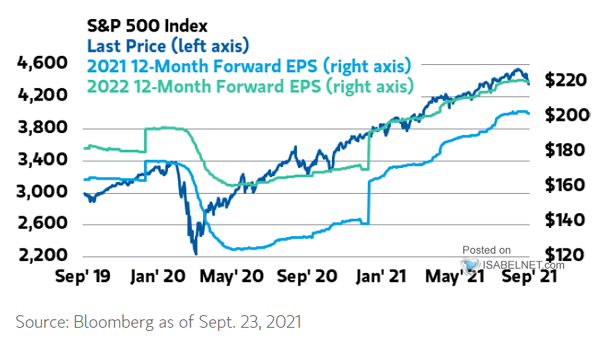
S&P 500 Quarterly EPS SA vs. S&P 500 Despite a strong second quarter of earnings, U.S. stocks have mostly gone nowhere. If the Fed turns more hawkish or rates stay elevated for longer, valuation multiples could still face pressure even as profits keep rising. Image: Deutsche Bank Asset Allocation

S&P 500 Performance Since 2025

S&P 500 Performance Since 2025 The S&P 500 has been trapped in a narrow range for two months, with rotations playing out underneath the surface, reminiscent of the November-to-February period. Image: Deutsche Bank Asset Allocation

Consolidated Equity Positioning

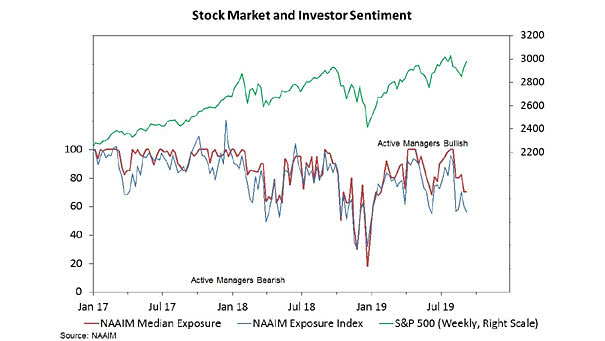
Consolidated Equity Positioning Consolidated equity positioning sits in the 36th percentile, a touch below neutral and far from crowded, leaving some room for upside. Image: Deutsche Bank Asset Allocation

S&P 500 Cap-Weighted Index vs. S&P 500 Equally-Weighted Index

S&P 500 Cap-Weighted Index vs. S&P 500 Equally-Weighted Index Investors looking to trim exposure to AI-fueled volatility may want to consider the equal-weight S&P 500. It beat the cap-weighted index during the dot-com bust and has often held up better when leadership gets narrow. Image: BCA Research

Valuation – S&P 500 NTM P/E

Valuation – S&P 500 NTM P/E At 16 times forward earnings, versus 20 for the benchmark, the equal-weight index is still no bargain, but it looks more attractive relative to the broader market. Image: Goldman Sachs Global Investment Research

Discretionary vs. Systematic Equity Positioning

Discretionary vs. Systematic Equity Positioning Systematic strategies sit in the 70th percentile, still overweight, while discretionary investors are stuck in the 17th percentile, with plenty of room left to add risk. Image: Deutsche Bank Asset Allocation

Average 1-Month S&P 500 Return vs. Change in 10-Year U.S. Treasury Yields

Average 1-Month S&P 500 Return vs. Change in 10-Year U.S. Treasury Yields When U.S. Treasury yields climb fast, the most expensive high-growth stocks often take the biggest hit. A sudden 50 basis point rise in the nominal 10-year yield over a month remains a near-term risk. Image: Goldman Sachs Global Investment Research

Probability of U.S. Recession Over the Next 12 Months

Probability of U.S. Recession In the Next 1 Year The market is pricing in just an 11% chance of a U.S. recession over the next year, while consensus puts the odds closer to 20%, above the historical average. Is the market too complacent about the risk? Image: Goldman Sachs Global Investment Research

Investor Sentiment – U.S. Market Greed/Fear Index

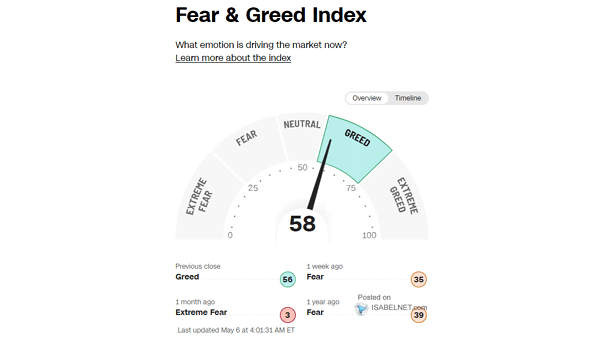
Investor Sentiment – U.S. Market Greed/Fear Index The Greed and Fear Index fell to 69.05, and with the S&P 500 now below its 50-day moving average, near-term downside risk has increased. Image: Real Investment Advice

Index Performance – S&P 500, Nasdaq 100, Russell 2000, Mag 7

Index Performance – S&P 500, Nasdaq 100, Russell 2000, Mag 7 Investors are still rotating out of mega-cap tech. Since late October 2025, the Magnificent Seven have underperformed sharply, while the broader market has proved far more resilient. Image: Deutsche Bank Asset Allocation