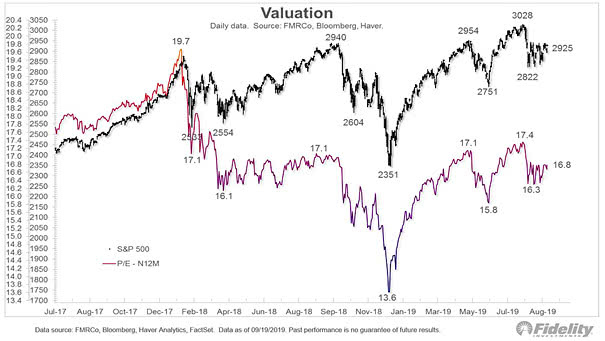
Valuation – S&P 500 Real Value Index

Valuation – S&P 500 Real Value Index Since 1871, the S&P 500 real total returns, dividends reinvested, have averaged 6.9% a year. The U.S. Real Value Index has always mean-reverted — and right now, it is between 10% and 20% above fair value. Image: TS Lombard
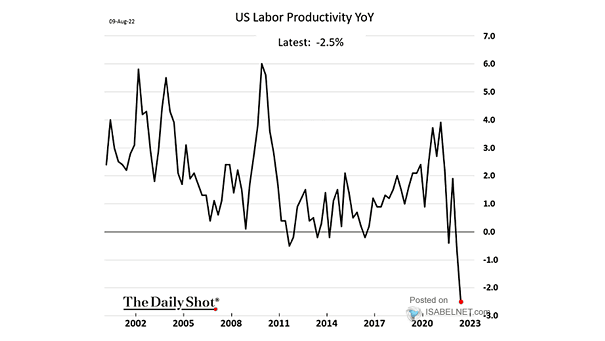
U.S. Labor Productivity

U.S. Labor Productivity A pandemic-driven productivity surge has put U.S. real output per hour 1.7% above its previous trajectory, providing tailwinds to economic performance and keeping the American growth story alive and well. Image: Deutsche Bank

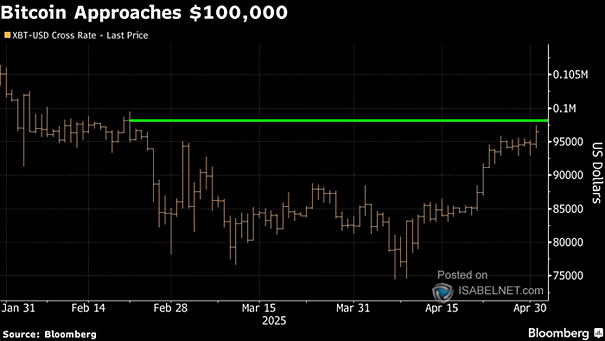
Bitcoin Price and 365-Day Moving Average

Bitcoin Price and 365-Day Moving Average A break below the 365-day moving average puts Bitcoin on the defensive. Add in thin dip demand, margin pressure, and souring sentiment, and the setup looks ripe for institutional players to stay sidelined until clarity emerges. Image: Bloomberg

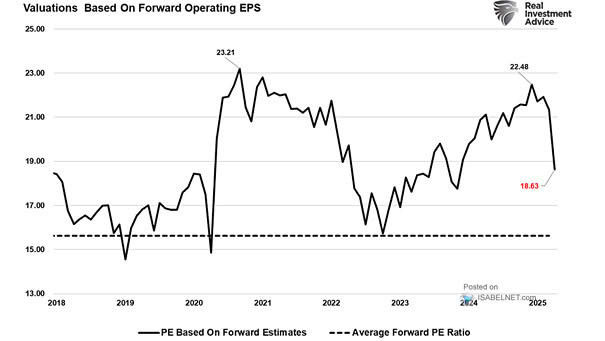
S&P 500 Valuations Based On Forward Operating EPS

S&P 500 Valuations Based On Forward Operating EPS Easy money and low rates could keep pushing S&P 500 multiples higher, but the risk is that earnings won’t rise fast enough to support them. For the moment, liquidity is driving markets far more than fundamentals. Image: Real Investment Advice

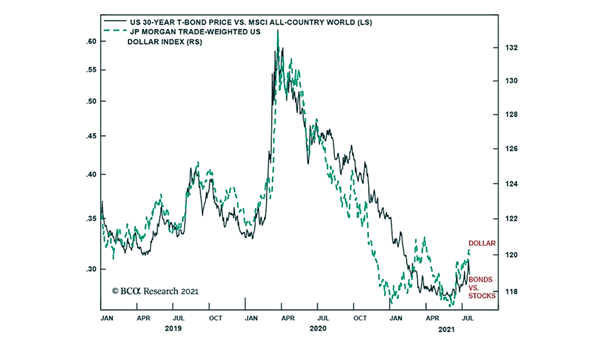
U.S. Broad Nominal Trade-Weighted Dollar and 200-Day Moving Average

U.S. Broad Nominal Trade-Weighted Dollar and 200-Day Moving Average After weeks of drift, the U.S. dollar’s rebound looks more than just noise, with key gauges—like the 200-day moving average—suggesting the move has technical legs, at least in the short run. Image: BCA Research

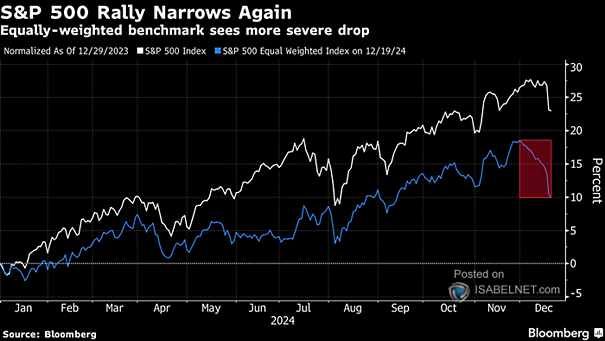
U.S. Equities – S&P 500 Equal Weight Index / S&P 500 Index

U.S. Equities – S&P 500 Equal Weight Index / S&P 500 Index The ratio of the equal-weighted S&P 500 to its cap-weighted version has dropped to its weakest level since May 2003—a stark reminder of how top-heavy this market has become, with a handful of megacaps driving the rally. Image: Bloomberg

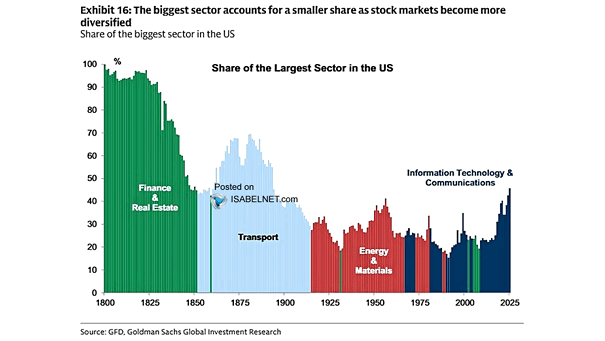
Equity Market and Share of the Biggest Sector in the U.S.

Equity Market and Share of the Biggest Sector in the U.S. History keeps repeating on Wall Street — when diversification fades, sector dominance rises. But it never lasts. Sooner or later, shifts in the economy, technology, or geopolitics bring the rotation full circle. Image: Goldman Sachs Global Investment Research

Valuation – S&P 500 Index Forward P/E Ratio

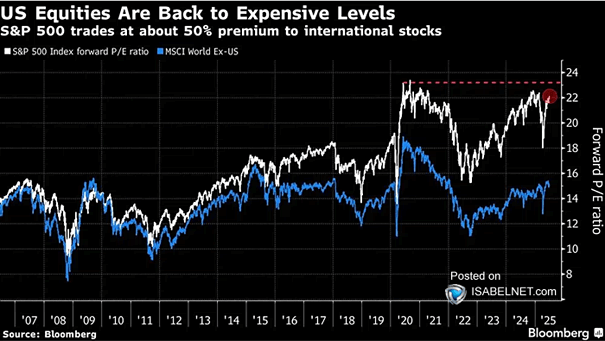
Valuation – S&P 500 Index Forward P/E Ratio The market is no bargain: the S&P 500 sits at 23 times forward earnings, versus 16 on average over two decades, while the Magnificent Seven stretch valuations even further at 31. Image: Bloomberg

Equity Performance – MSCI China vs. MSCI U.S.

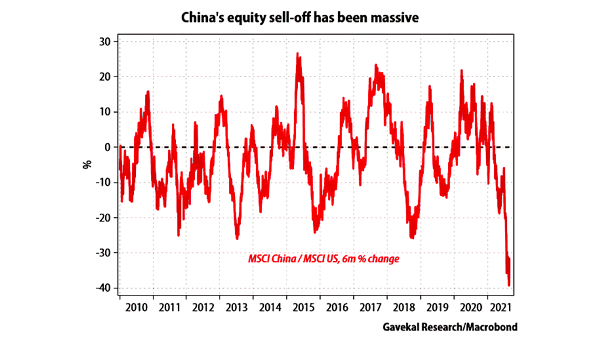
Equity Performance – MSCI China vs. MSCI U.S. Beijing’s early-2024 intervention lit a rocket under Chinese equities, leaving Wall Street in the dust. Fueled by stimulus and growing investor conviction, the rally could stretch further if geopolitical tensions cool. Image: Gavekal, Macrobond

Global Median 10-Year Yield Across All Sample Economies

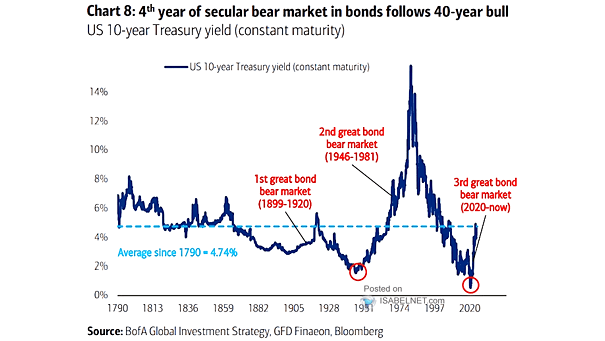
Global Median 10-Year Yield Across All Sample Economies The median 10-year government bond yield has risen from the rock-bottom levels of the pre-Covid years and early pandemic, returning to its long-term historical average — a clear sign of normalization in bond markets. Image: Deutsche Bank

Hyperscaler Capex by Company

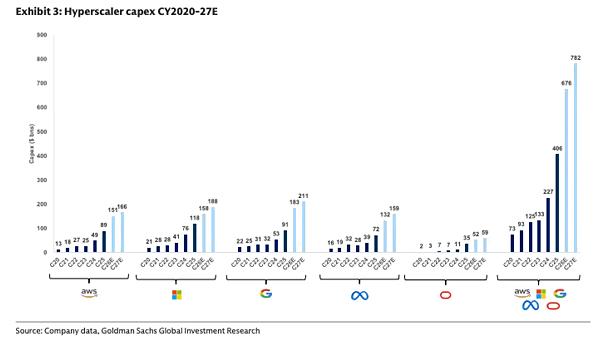
Hyperscaler Capex by Company Goldman Sachs is turning more bullish on hyperscaler spending, hiking its CAPEX outlook after 3Q25 results showed a wave of AI‑ and cloud‑fueled infrastructure growth. Image: Goldman Sachs Global Investment Research