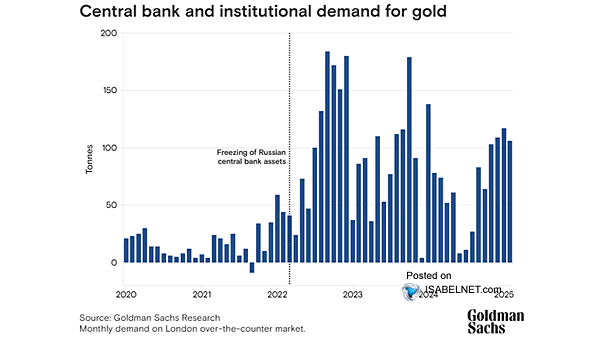
Central Bank and Institutional Demand for Gold

Central Bank and Institutional Demand for Gold Goldman Sachs expects ongoing strong demand from central banks—especially those in emerging markets—to continue boosting gold prices through 2025. Central bank gold purchases have risen fivefold since 2022. Image: Goldman Sachs Global Investment Research
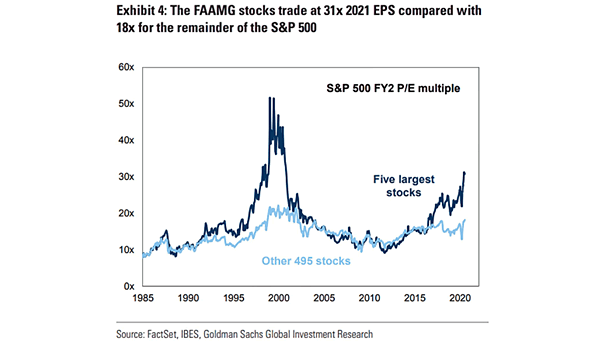
Valuation – S&P 500 Company Actual vs. Modeled FY2 P/E Ratio

Valuation – S&P 500 Company Actual vs. Modeled FY2 P/E Ratio Valuations for the Magnificent Seven now sit slightly below modeled fair value, especially in light of their robust fundamentals and earnings growth. Image: Goldman Sachs Global Investment Research
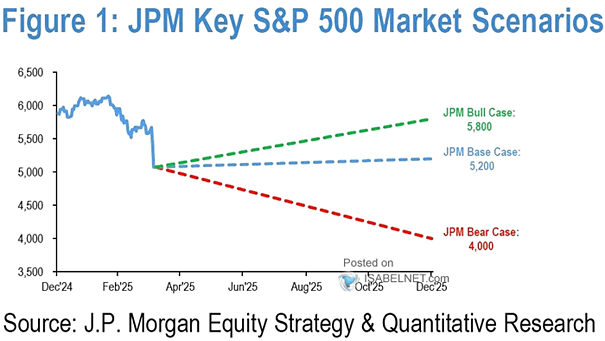
S&P 500 Target for 2025

S&P 500 Target for 2025 In the coming months, robust earnings, a weaker dollar, anticipated Fed rate cuts, and easing recession fears are expected to make U.S. equities a key driver of the global equity rally. Image: Bloomberg

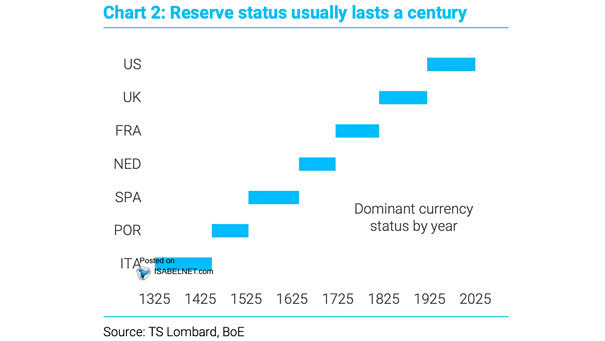
The U.S. Dollar and Reserve Status

The U.S. Dollar and Reserve Status Could the U.S. dollar lose its status as the world’s dominant reserve currency? Historically, leading reserve currencies have held their status for about a hundred years. Image: TS Lombard

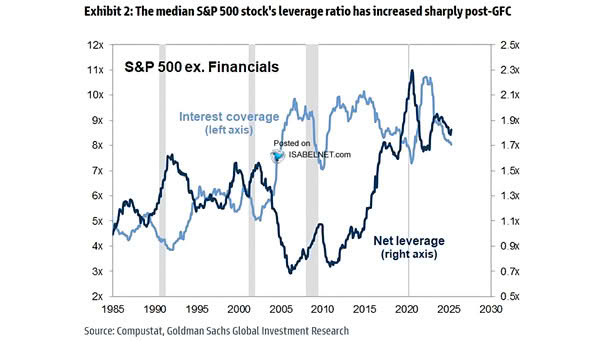
S&P 500 Ex. Financials – Net Leverage and Interest Coverage

S&P 500 Ex. Financials – Net Leverage and Interest Coverage Since the Global Financial Crisis, there has been a sharp increase in the median S&P 500 stock’s leverage ratio, a trend that could have substantial effects on market risk and volatility. Image: Goldman Sachs Global Investment Research
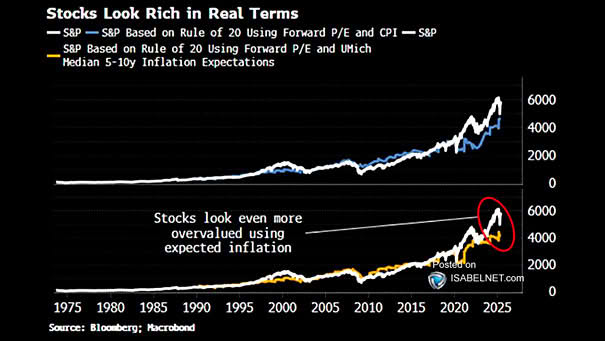
Valuation – S&P 500 Based on Rule of 20

Valuation – S&P 500 Based on Rule of 20 According to the historically reliable “Rule of 20,” the market is fairly valued when the P/E ratio plus the inflation rate equals 20. By this measure, the S&P 500’s fair value is about 4,600 today. Image: Bloomberg

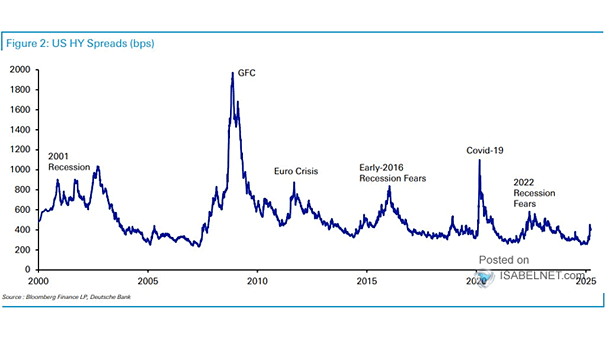
U.S. High Yield Credit Spreads and Recessions

U.S. High Yield Credit Spreads and Recessions U.S. high-yield credit spreads in May 2025 show little evidence of recession fears, remaining well below the levels seen during previous downturns. Image: Deutsche Bank

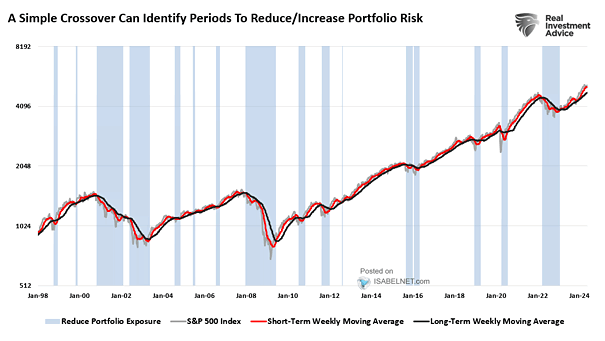
S&P 500 Index and Moving Average Crossover Signal

S&P 500 Index and Moving Average Crossover Signal Using moving average crossovers-particularly on a weekly basis-can be a valuable tool for investors looking to manage risk in their equity portfolios. Image: Real Investment Advice

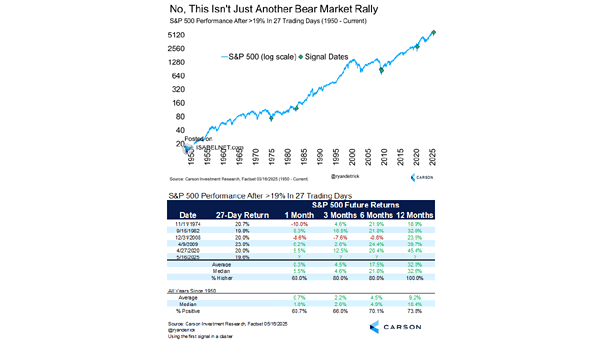
S&P 500 Performance After >19% in 27 Trading Days

S&P 500 Performance After >19% in 27 Trading Days This is more than just another bear market rally, as the S&P 500 has jumped over 19% in 27 trading days. Historically, since 1950, similar rallies have averaged a 32% gain one year later, with positive returns every time. Image: Carson Investment Research