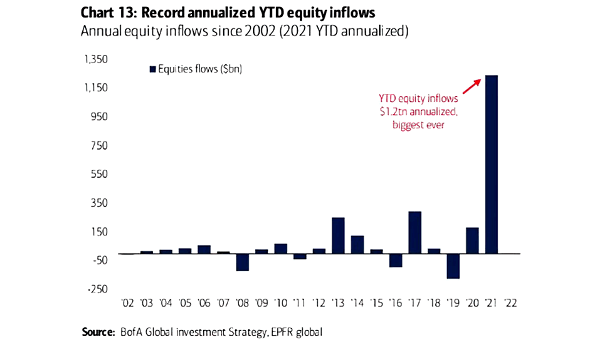
Sector Fund Flows
Sector Fund Flows Over the past 12 months, investors have piled into tech funds on the back of AI fever, chip strength and improving earnings outlooks. Can the momentum hold? Image: Deutsche Bank Asset Allocation
Sector Fund Flows Over the past 12 months, investors have piled into tech funds on the back of AI fever, chip strength and improving earnings outlooks. Can the momentum hold? Image: Deutsche Bank Asset Allocation
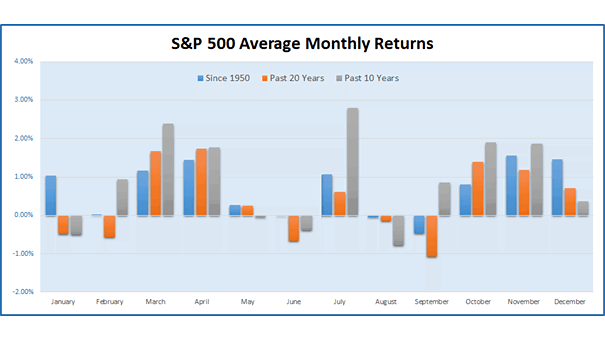
S&P 500 Average Monthly Returns Since 1964 September is typically a weak month for U.S. equities, and midterm years tend to make it worse. Once Election Day passes, uncertainty lifts and markets frequently improve. Image: Real Investment Advice
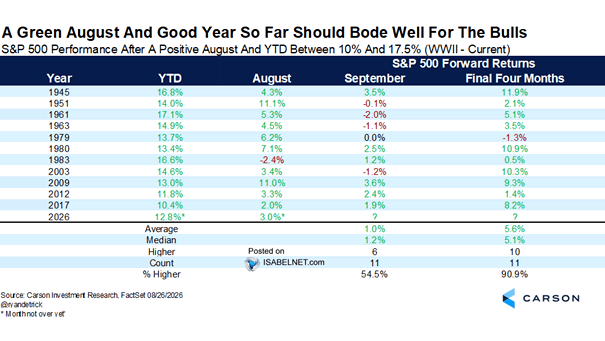
S&P 500 Performance After a Positive August and YTD Between 10% and 17.5% History says this setup is bullish. Since 1945, when August closed in the green with the market up between 10% and 17.5% year-to-date, September through December rallied 91% of the time, with an average 5.6% return. Image: Carson Investment Research
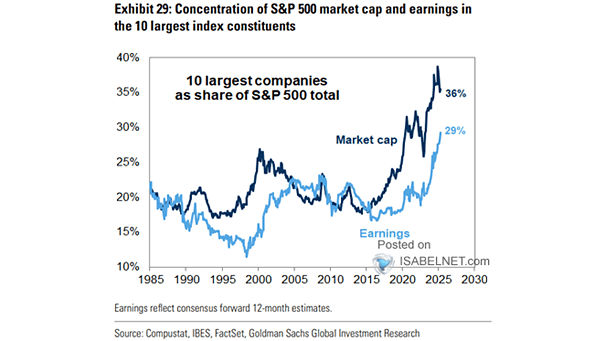
Equity Market Concentration – Market Capitalization of 10 Largest Companies as Share of S&P 500 Total A handful of giants now dominate the S&P 500. The 10 largest stocks account for 40% of the index’s weight and 38% of its earnings, lifting valuations and making the market more vulnerable to sudden swings. Image: Goldman Sachs…
U.S. Equity Market Capitalization Since ChatGPT launched, multiple expansion has contributed 25% of the surge in U.S. market cap, crushing the equity risk premium and leaving little room for error if AI demand or earnings disappoint. Image: BCA Research
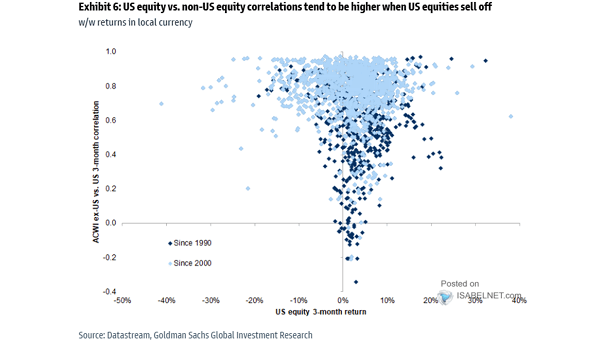
S&P 500 and 10-Year Yield Correlation Daily moves in U.S. stocks and 10-year UST yields have turned sharply negative, eclipsing 2022 levels. But over the past four years, it has been the volatility of rates, not their level, that has driven equity returns. Image: Deutsche Bank Asset Allocation
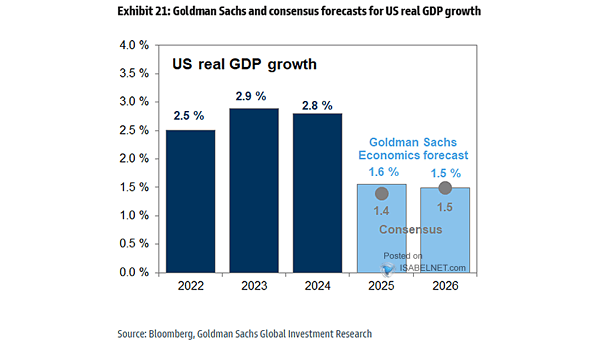
U.S. Real GDP Growth Goldman Sachs isn’t seeing a meaningful deceleration in the US economy, forecasting 2.2% growth in 2026 and 2.1% in 2027, broadly in line with consensus, supported by a resilient labor market. Image: Goldman Sachs Global Investment Research
PHLX Semiconductor Index Intra-Year Declines vs. Calendar Year Returns Every year, the PHLX Semiconductor Index makes investors sit through an average 30% drawdown. But it has closed higher in 20 of the last 31 years. Welcome to the cost of long-term alpha in semis. Image: J.P. Morgan Asset Management
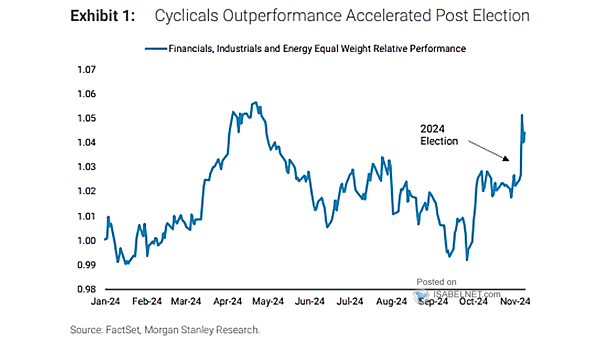
Share of Mutual Funds Outperforming Benchmarks 42% of large-cap mutual funds are beating their benchmarks, still above the long-term average of 37%. The catch? Most managers who beat the market one period can’t do it again the next. Image: Goldman Sachs Global Investment Research
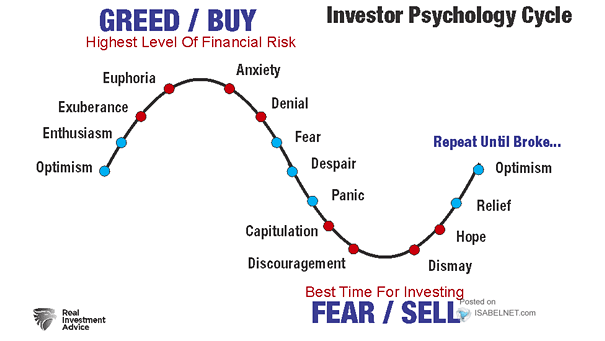
Investor Psychology Cycle When panic hits, markets overshoot to the downside, creating opportunities for contrarians to buy into peak fear. The mirror image? Euphoria, which usually sets up the exit. Image: Real Investment Advice
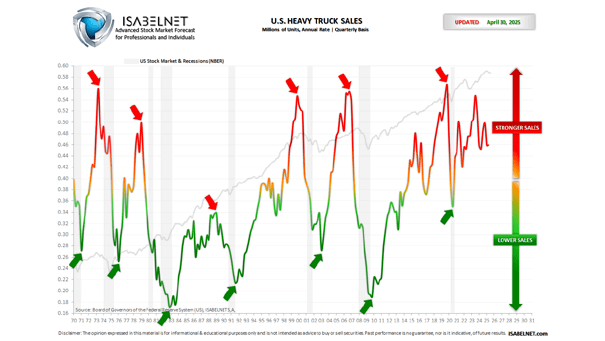
U.S. Heavy Truck Sales and Recessions (Leading Indicator) U.S. heavy truck sales fell in July to 437K (annualized). Before recessions, heavy trucks sales tend to peak and then decline, providing insights into the overall health of the U.S. economy as a leading economic indicator. Click the Image to Enlarge